#Product Trends
Transforming Mattress Recycling in Australia: ENERPAT Door‑Lid Metal Baler Case Study
ENERPAT helps Australian recyclers transform mattress waste into profit with lid-type metal balers—compact springs, cut transport costs, boost steel value.
A large-scale waste management recycler in Australia faced a growing challenge as its business expanded. They wanted to enter the mattress recycling market but were immediately confronted by the bulkiness and entanglement of mattress springs. Transporting these loose springs without processing meant that trucks were mostly carrying air, resulting in prohibitively high shipping costs. The client’s core demand was clear:"We need to find a way to reduce the volume of these springs; otherwise, shipping alone will wipe out our profits."
1. Why Mattress Recycling Is a Valuable Business Opportunity
Before exploring the solution, it is important to understand why mattress recycling has become a critical focus in Australia.
① Mattresses contain multiple high-value materials that can be efficiently recovered through a mattress recycling line:
Steel springs: Recovered as scrap metal for reuse in steel mills.
Foam cores: Repurposed for carpet underlay, insulation, or other secondary applications.
Textile covers and timber bases: Suitable for reuse or energy recovery.
② With rising landfill costs and stricter regulatory emphasis on mattress recycling, Australian recyclers require mattress recycling machines capable of processing large volumes efficiently while maintaining safety and material quality.
2. Challenges Faced by the Recycler
In February 2025, the recycler began preliminary research into high-density mattress spring compression solutions. Their key challenges included:
Low transport efficiency: Loose springs were bulky, resulting in underutilized truck capacity.
Storage inefficiencies: Springs occupied excessive warehouse space.
Worker safety risks: Exposed spring coils posed potential injury hazards.
The client’s objectives were clear: reduce spring volume, increase recovered metal value, improve safety, and comply with regulations.
3. ENERPAT Lid-type Metal Baler Solution for Mattress
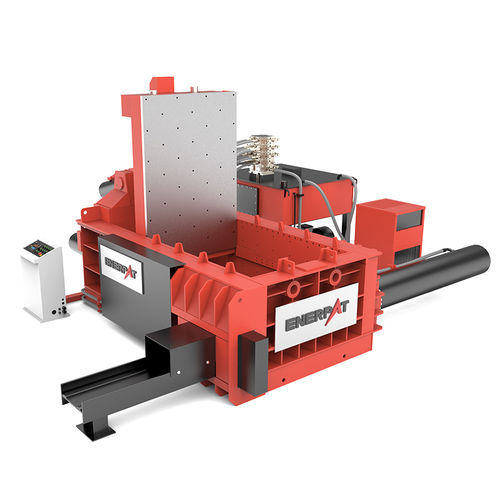
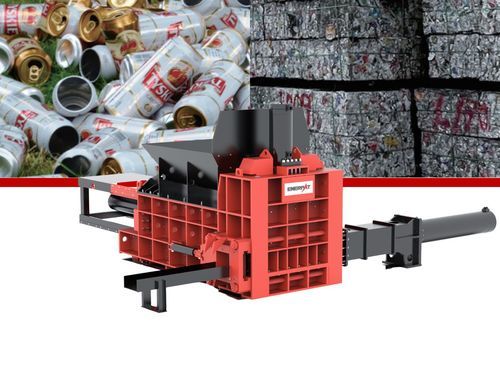
After fully understanding the client’s actual production output and operational scenarios, Enerpat engineer Jimmy accurately recommended Lid-type metal balers, this type offers the following advantages, designed to handle high-volume, resilient materials such as mattress springs. They are perfectly suited to meet the client’s mattress recycling needs:
Key technical features include:
High compression capacity: Hydraulic cold-press technology provides up to 1,500 tons of compression force, reducing mattress spring volume by 85–90%.
Flexible throughput: Electric motor options from 30–300 kW allow efficient operation across medium to large recycling facilities.
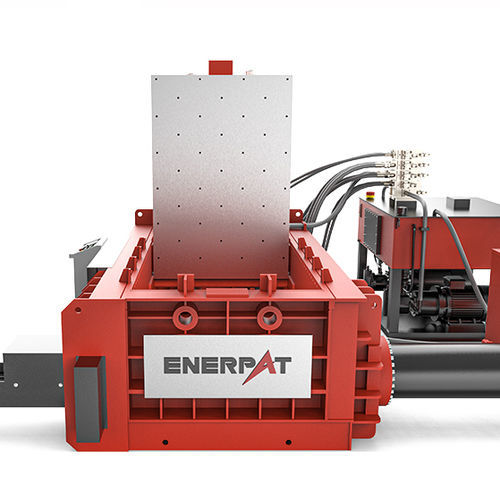
Safety & structure: The door‑lid design contains springs during compression, while intelligent controls and safety interlocks protect operators.
Value uplift & compliance: Dense metal bales improve furnace efficiency for steel mills and meet Australian mattress product stewardship regulations.
Jimmy, ENERPAT’s engineer, recommended two market-tested models to the client:
ABM‑L2014‑250: Suitable for medium processing volumes and sites with limited space, offering stable performance and high cost-effectiveness.
ABM‑L2520‑250: Featuring a larger compression chamber and greater power, ideal for operators planning large-scale processing or future expansion.
When the project officially launched in the second half of the year, the client finally chose the ABM-L2520-250 model.
4. How the Baler Works
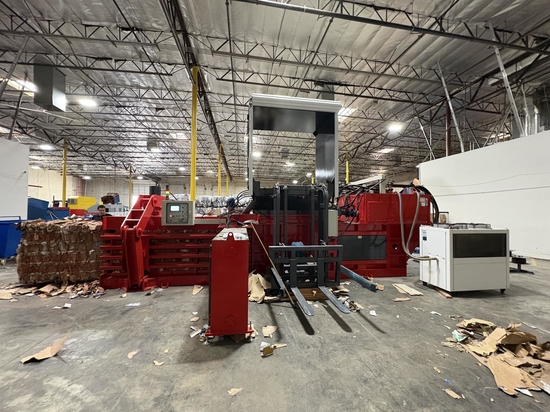
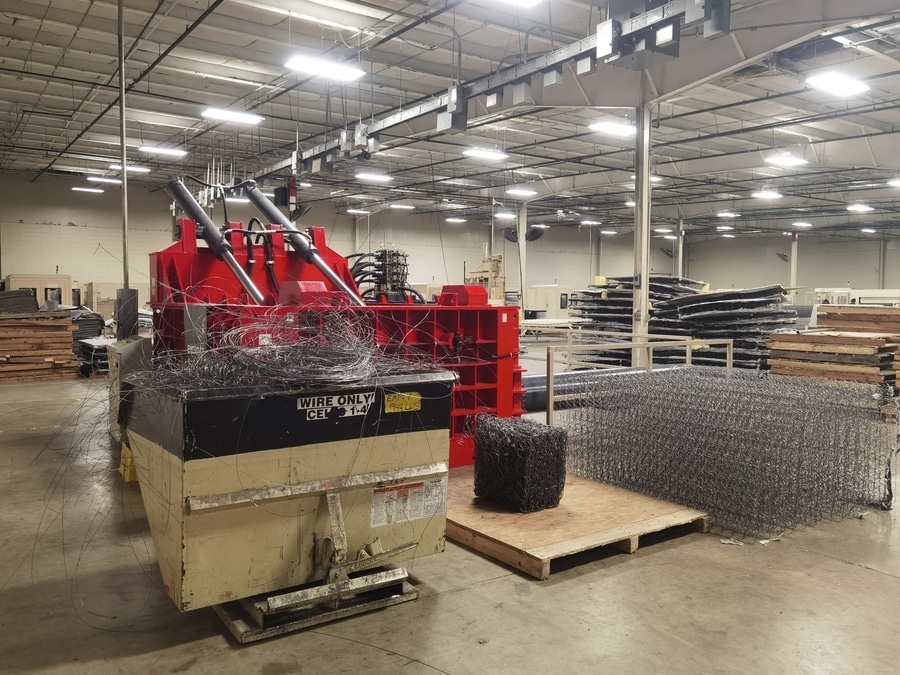
The machine functions like a high-powered “metal compressor.” Workers feed the dismantled, loose springs into the hopper, and the hydraulic system compresses them into compact, uniform metal bricks.
The immediate benefits were evident:
Significant volume reduction: A room full of springs could be condensed into a small corner.
Lower transport costs: A single truck could now carry 4–6 times more metal, significantly reducing per-ton shipping costs.
Higher sale price: Steel mills favor these high-density, single-material bales due to improved furnace efficiency, paying USD 50–70 more per tonne than loose springs.
By integrating the door‑lid baler into a mattress recycling line, the recycler efficiently processed pocket spring mattresses, foam, and textile components, maximizing metal recovery and operational efficiency.
5. Working Together for a Greener Future
For our waste management partners, what used to be a costly challenge has now turned into a real opportunity for profit.
At ENERPAT, we’re proud to be your trusted technical partner. We don’t just provide individual balers—we offer complete solutions, from mattress shredding and sorting to metal baling.
If you’re facing challenges with mattress springs or other scrap metal, we invite you to reach out, just like our partners do. Let the experts handle the process, and together we can transform waste into valuable resources.