#Industry News
How Aluminum Can Shredders Improve Recycling Efficiency and Support a Circular Economy
Learn how aluminum can shredders improve recycling efficiency, reduce logistics costs, and support sustainable aluminum recycling in a circular economy.
Aluminum beverage cans are one of the most common waste streams worldwide. From supermarkets and restaurants to households and public events, billions of cans are consumed every year. While they may appear insignificant individually, aluminum cans represent one of the most valuable and sustainable recyclable materials when processed correctly.
However, inefficient handling of loose aluminum cans often leads to high transportation costs, excessive storage space, and lower recycling efficiency. This is where aluminum can shredders play a critical role in modern recycling systems.
Why Aluminum Cans Are Ideal for Recycling
Aluminum is unique among metals because it can be recycled indefinitely without losing quality. From an energy and resource perspective, aluminum recycling delivers exceptional benefits:
Recycling aluminum uses up to 95% less energy than producing primary aluminum from bauxite.
Processing one ton of recycled aluminum can save:
Around 9 tons of bauxite
Approximately 1.2 tons of coke
About 600 kWh of electricity
Beyond economic advantages, aluminum recycling significantly reduces landfill pressure, greenhouse gas emissions, and wastewater discharge associated with primary aluminum smelting. These factors make aluminum can recycling a cornerstone of sustainable and circular economy initiatives.
The Challenge of Recycling Loose Aluminum Cans
Despite their recyclability, loose aluminum cans create several operational challenges for recyclers:
Low bulk density, leading to inefficient transportation
High storage costs due to excessive volume
Slower and uneven melting during remelting
Increased contamination from residual liquids, coatings, and labels
To overcome these issues, recyclers increasingly rely on industrial aluminum can shredders as a pre-processing solution.
How an Aluminum Can Shredder Works
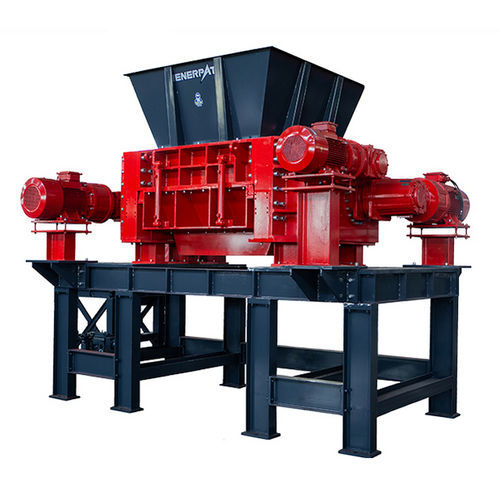
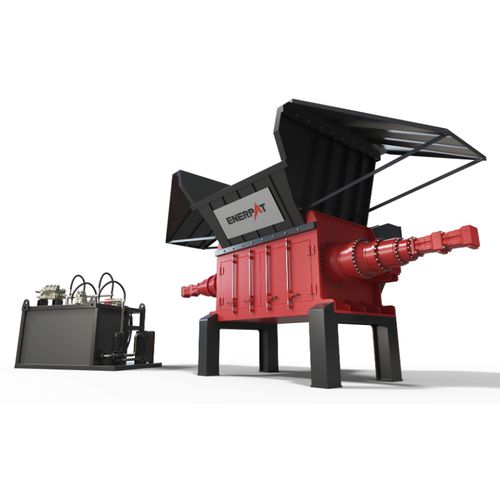
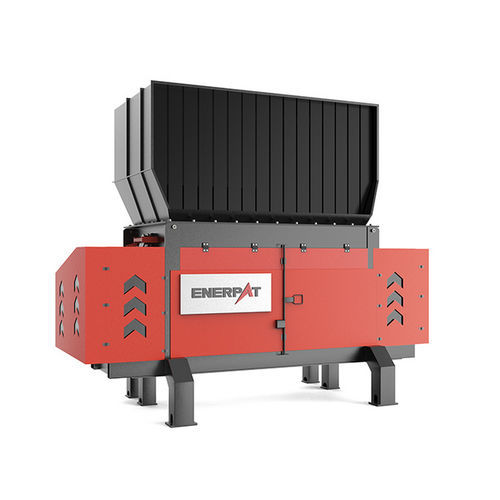
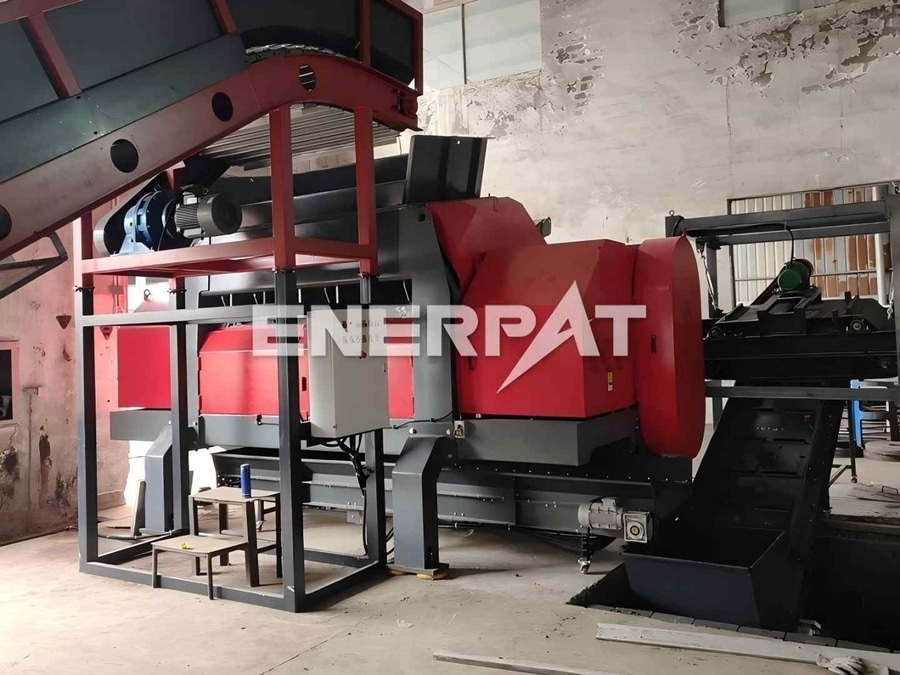
A modern aluminum can shredder typically uses a single-shaft shredding system designed for light but bulky metal scrap.
The process includes:
Whole aluminum cans are fed into a hopper.
A rotating shaft equipped with hardened cutters tears and shears the material against fixed counter blades.
The cans are reduced into uniformly sized fragments or granules.
An overload protection system prevents damage from overfeeding or foreign materials.
This controlled shredding process ensures consistent output size while maintaining operational stability for long-term industrial use.
Key Advantages of Using a Single-Shaft Shredder for Aluminum Cans
Compared with traditional crushing or baling equipment, single-shaft shredders offer several clear advantages in aluminum can recycling:
1. Higher Processing Efficiency
Optimized cutter geometry and high-torque drive systems allow continuous operation with throughputs of several tons per hour, meeting the demands of medium- and large-scale recycling plants.
2. Uniform Output Size
Consistent particle size improves:
Furnace feeding efficiency
Melting speed and uniformity
Downstream separation processes
3. Reduced Noise and Dust
Enclosed shredding chambers and controlled cutting action result in:
Lower operating noise
Minimal dust generation
This helps recyclers comply with environmental and workplace safety regulations.
4. Simplified Operation and Maintenance
Single-shaft shredders feature:
Fewer moving parts
Easy access to wear components
Lower long-term maintenance costs
Downstream Benefits of Shredded Aluminum Cans
Shredding aluminum cans creates measurable advantages throughout the recycling chain:
Volume reduction of up to 70–80%, dramatically lowering transportation and storage costs
Faster and more uniform melting, reducing furnace cycle times
Improved removal of impurities such as coatings, liquids, and labels
Higher purity recycled aluminum, increasing market value
In practical recycling operations, one truckload of shredded aluminum can replace several loads of loose cans, significantly improving logistics efficiency.
Aluminum Can Shredders and Sustainable Recycling
Industrial aluminum can shredders play a vital role in advancing sustainable recycling practices. By improving material density, processing efficiency, and output quality, shredders help recyclers:
Reduce energy consumption
Lower carbon emissions
Maximize the value of aluminum scrap
Support circular economy objectives
As global demand for recycled aluminum continues to grow, efficient pre-processing equipment will remain essential for achieving both economic and environmental goals.
Final Thoughts
Aluminum cans are far from waste—they are a renewable metal resource with enormous recycling potential. By integrating aluminum can shredders into recycling operations, companies can unlock higher efficiency, lower costs, and improved sustainability performance.
For recyclers aiming to optimize aluminum recovery and remain competitive in a greener economy, investing in the right shredding technology is no longer optional—it is a strategic necessity.