#Product Trends
BM-D1090 Dual‑Output Aluminum Chips Briquetting Machine: A Rail Transit Manufacturer Success Story
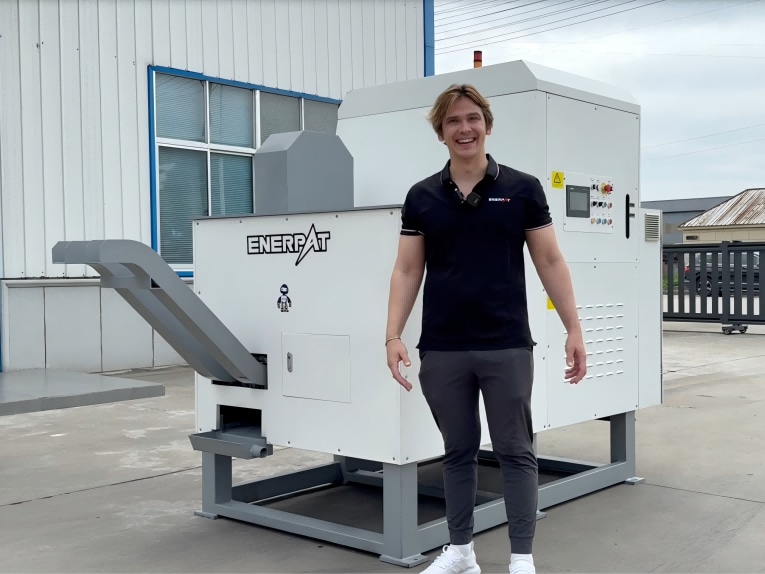
Fully automatic aluminum chips briquetting machine BM‑D1090: 300 kg/h, volume cut >80%. Clean briquettes boost resale value 10‑30%. For rail transit swarf.
Industry Rail transit equipment manufacturing
Material Aluminum chips and shavings
Solution BM‑D1090 dual‑output briquetting press with automated infeed and shredding
Outcome 300 kg/h throughput, >80% volume reduction, 10–30% higher resale value
The Customer
In June 2025, a premier manufacturer of urban rail transit equipment—a recognized benchmark in the sector—contacted Enerpat. The company’s daily production generates substantial volumes of aluminum turnings and milling swarf. These loose aluminium chips not only consume enormous warehouse space but also bring messy cutting fluid leakage, low material recovery rates, and mounting EH&S concerns. The manufacturer needed a custom‑engineered system that could solve these problems without disrupting its production rhythm.
The Requirements
The rail specialist set three clear objectives for the new aluminum chips briquetting machine line:
Guaranteed throughput
400 tonnes of aluminum swarf per year, across 220 working days, in 8‑hour shifts—translating to a minimum average capacity of 227 kg/h. The system had to reliably maintain this pace to support the plant’s output.
Full environmental compliance
The equipment had to meet both national and local environmental standards. No secondary pollution of air or water would be acceptable.
Automation and smart control
The customer wanted to raise productivity through automation, with intelligent monitoring and fault early‑warning capabilities to ensure stable, long‑term operation.
Enerpat’s Tailored Solution
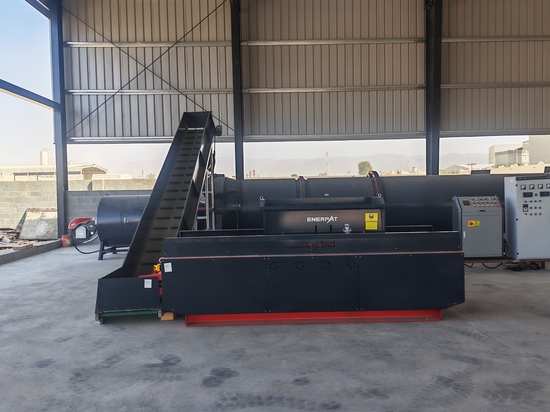
After analyzing the material properties and the required throughput, Enerpat’s engineering team designed a fully automatic aluminum‑chip processing line built around the BM‑D1090 dual‑output aluminum briquetting machine. The complete system comprises:
Conveyor
MSA‑F600 single‑shaft shredder
Centralized feed hopper
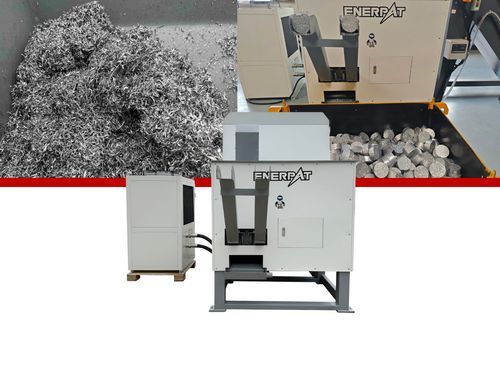
BM‑D1090 dual‑output briquetting press
Waste‑fluid collection tank
Every stage was precisely matched to the customer’s needs, and the entire line was equipped with a fluid recovery system to prevent leakage and keep the shop floor clean.
1. MSA‑F600 Single‑Shaft Shredder
Irregular, bulky, and stringy aluminum chips first pass through the MSA‑F600. High‑speed rotary blades tear the swarf into uniform, granular particles, creating the ideal feedstock for the downstream briquetting press.
2. BM‑D1090 Dual‑Output Aluminum Chips Briquetting Machine
The heart of the line, this press simultaneously forms two high‑density aluminum briquettes per cycle. It produces around 5–6 briquettes per minute, each 90 mm in diameter. The dual‑output design comfortably satisfies the customer’s higher volume demands and briquette‑diameter specifications, while the integrated hydraulic system and smart PLC ensure steady, unattended operation.
3. Conveyor & Centralized Feed Hopper
A continuous conveying system feeds material without interruption. The hopper dispenses aluminum chips at timed, metered intervals to prevent blockages and maintain a consistent flow that matches the automated production rhythm.
4. Waste‑Fluid Collection Tank
Cutting oils and emulsions are separated and recovered through a dual‑filtration design. Once the liquid reaches the preset level, an automatic pump extracts the fluid for reuse or proper disposal—eliminating floor contamination and reducing new‑oil consumption.
The Results
The fully automatic aluminum‑chip briquetting line delivered tangible value on multiple levels:
Throughput & Efficiency Gains
The BM‑D1090 aluminum chips briquetting machine runs at an effective 300 kg/h—smoothly exceeding the calculated 227 kg/h requirement and comfortably meeting the 400‑tonne/year target.
Briquetting reduces the volume of loose aluminum chips by more than 80%, slashing storage space and logistics costs.
The resale value of the clean, dense briquettes is 10–30% higher than that of raw, oily swarf.
The system supports 24/7 continuous operation, giving the customer confidence in unbroken production.
Resource & Environmental Benefits
After shredding and briquetting, the aluminum material achieves a far higher metal yield when re‑melted. The dense briquettes sink rapidly into the melt, dramatically boosting recovery rates and cutting material waste. At the same time, the removal of cutting fluids eliminates the dense black smoke and explosion risks typically associated with feeding oily swarf directly into a furnace, helping the plant exceed its environmental compliance goals.
Economic Impact
Automation has significantly reduced manual handling and labour costs. The compacted briquettes lower transportation, warehousing, and melting energy expenses while minimising melt‑loss through oxidation. By converting a loose, low‑value waste stream into a clean, high‑value raw material, the rail manufacturer has improved both its cost structure and its negotiating power in the secondary metal market—achieving simultaneous cost reduction, efficiency elevation, value increase, and risk control.
The Customer’s Verdict
“When an industry leader in rail transit joins forces with a global solid‑waste management expert, aluminum chip recycling stops being a daily headache on the shop floor. Enerpat engineered an end‑to‑end automatic briquetting line for our aluminum swarf that hits both our environmental and recovery efficiency targets. Loose chips now become dense briquettes; the recovery rate has climbed, and the cutting fluids are collected and handled centrally—zero pollution worry. That’s the best endorsement we can give.”
— Project Lead, Rail Transit Equipment Manufacturer
Enerpat’s BM‑D1090 dual‑output aluminum chips briquetting machine, integrated into a full‑line solution, once again proves that smart briquetting technology turns a messy, costly waste stream into a clean, profitable resource.