#Product Trends
How to control dust and noise on construction sites
Find out why it is important to measure particulate matter and ambient noise during construction work.
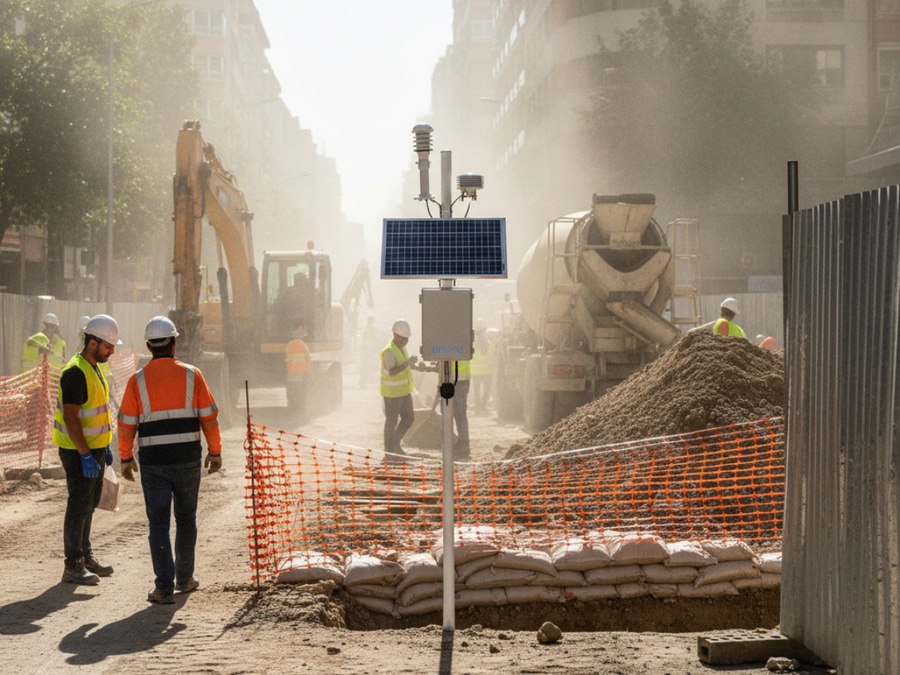
Construction works are significant sources of environmental pollution. The release of dust and noise has serious consequences for public health and the environment, affecting not only workers but also neighbouring communities.
Construction dust contains fine particles of various sizes from cutting, drilling, grinding and demolition. These particles are harmful to respiratory health and contribute to air pollution. In addition to health risks, they generate extra costs for cleaning operations.
There are proven methods for controlling dust emissions: irrigation and water sprinkler systems maintain humidity, preventing the release of particles; physical barriers (fabric fences, temporary walls) reduce wind dispersion; containment and extraction systems are essential for cutting, demolition and excavation.
However, the key lies in continuous monitoring. Measuring fine particles (PM10 and PM2.5) in real time allows control strategies to be adjusted. A practical example: by visualising in real time how particulate matter emissions fluctuate, the water flow in irrigation systems can be optimised, achieving a balance between efficiency and consumption.
With regard to noise, the construction sector is inherently noisy. According to Royal Decree 286/2006, prolonged exposure above 85 dB is dangerous for hearing. Noise causes discomfort to workers and neighbours, affecting sleep patterns and general health.
Measuring dust and noise is crucial for three reasons: it ensures regulatory compliance, avoiding penalties; it provides objective data to evaluate existing control measures and adjust strategies according to actual conditions; it allows for the implementation of corrections based on real-time data, protecting the health of workers and the community.
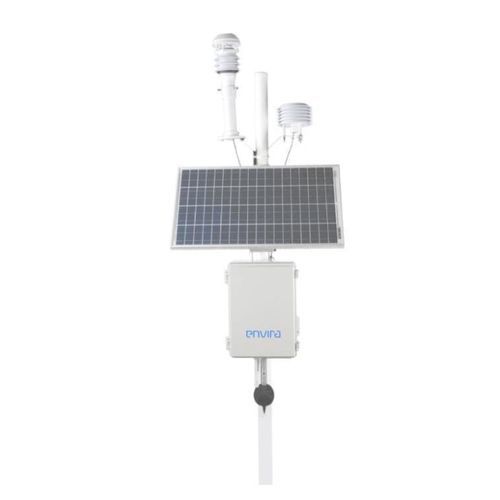
Portable devices such as Nanoenvi EQ simultaneously measure particulate matter (PM10, PM2.5) and include a sound level meter to assess noise. With IoT technology, they capture real-time data visible on a data platform, sending alerts when established thresholds are exceeded. This comprehensive solution transforms environmental control in construction from reactive to predictive and preventive.