#Product Trends
Detection and control of fugitive emissions in industry
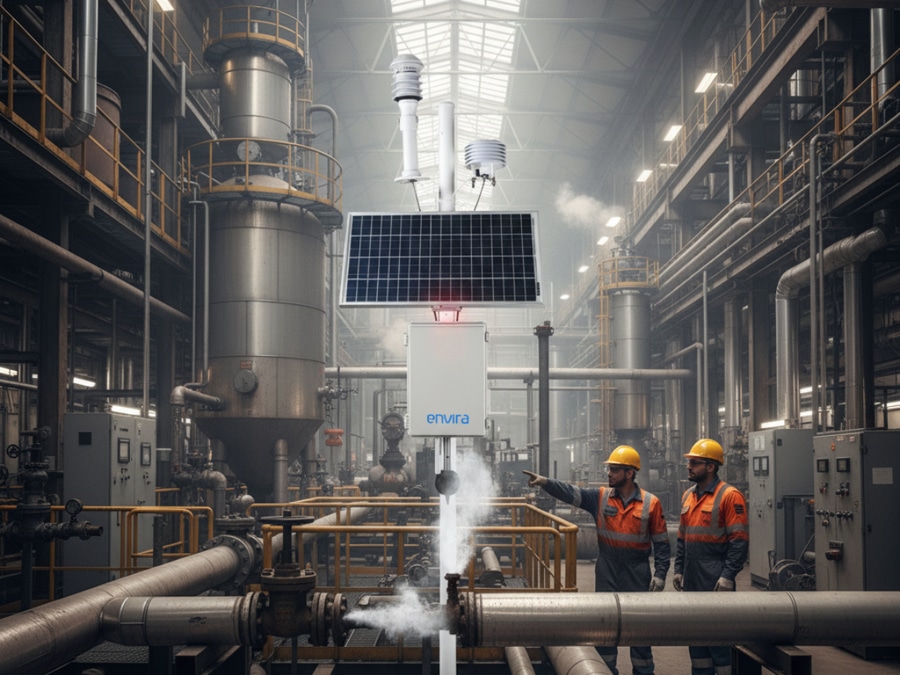
Prevent fugitive emissions by detecting them in real time
Fugitive emissions account for between 5-15% of total greenhouse gas emissions according to European Standard EN15446:2008, defined as unintentional emissions caused by leaks in devices designed to be airtight.
They occur during the production, transport, storage or processing of substances. Unlike other emissions, their unintentional nature generates a high economic and environmental impact. The substances vary depending on the industry: hydrocarbons, VOCs, toxic gases (ammonia, chlorine, H2S), solvent vapours, particulate matter (coal, powdered chemicals, metal powders).
Monitoring techniques are classified according to proximity to emission sources. Top-down monitoring (from a distance) detects significant unexpected leaks using satellites (global coverage but limited resolution) and helicopters (more cost-effective, greater detail but limited coverage).
Bottom-up monitoring (close to the source) provides specific information and concrete measurements using drones (scheduled detection, limited time), mobile vehicles/stations (high mobility, wide coverage, useful in urban environments) and fixed-point sensors (continuous measurements at key points).
The LDAR (Leak Detection and Repair) technique is the most common at ground level, used on components not designed to leak (valves, flanges, PSVs). Operators equipped with instrumentation according to EPA Method 21 (America) or EN 15446:2008 (Europe) perform measurements and repairs.
Main industries affected: petrochemical, chemical and pharmaceutical, energy, metallurgy, paper and textiles. Spanish Law 34/2007 requires specific control of emissions in facilities under Integrated Environmental Authorisation.
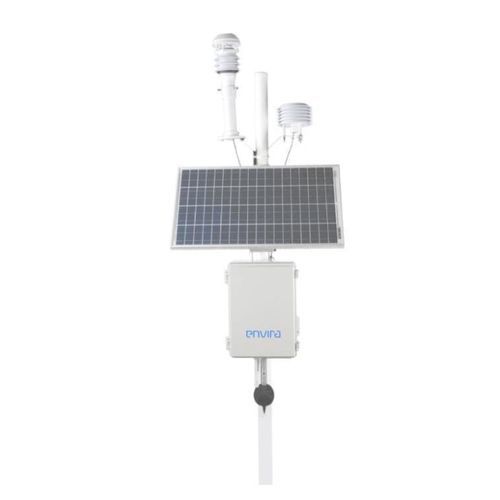
Modern solutions integrate multiple techniques. Portable stations such as Nanoenvi EQ allow continuous monitoring of particulates and gases at risk points, with a visualisation platform generating real-time alerts. Compact stations offer type approval when formal regulatory documentation is required.
This comprehensive Top-Down + Bottom-Up approach ensures early detection and effective control of leaks, regulatory compliance and minimisation of economic and environmental losses.