#Industry News
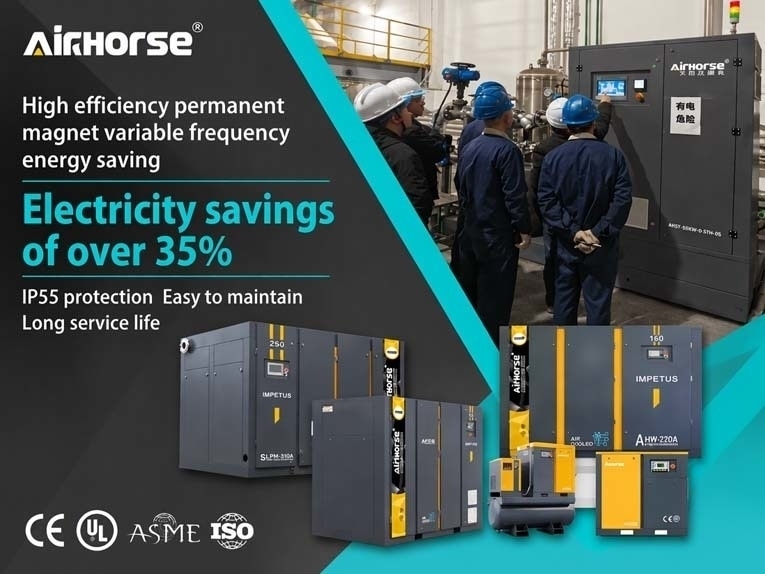
High efficiency permanent magnet variable frequency energy saving, electricity savings of over 35%
Variable-speed drive (VSD) compressors are widely regarded as a more energy-efficient alternative to fixed-speed compressors.
Variable speed drive (VSD) compressors are widely regarded as a more energy-efficient alternative to fixed-speed machines in applications with fluctuating demand. Why some VSD compressors deliver stronger energy savings, greater reliability and better resilience in harsh environments than others. Drawing on technical insights and application examples, it looks at key factors such as component integration, control strategies, start/stop energy losses and environmental protections. For engineers, factories and workshops, it highlights why a deeper understanding of the technology is essential.
At the heart of any VSD compressor is a simple idea: rather than running at full capacity regardless of demand, the compressor adjusts its motor speed to match airflow requirements in real time. This modulation helps to avoid the energy waste that characterized particularly during periods of low demand.
Most VSD compressors use an inverter to regulate the motor speed, with sensors and control logic determining how much air is needed and when. This can deliver significant savings in electricity use, particularly in applications where demand fluctuates.
Start/Stop Losses: The Hidden Energy Cost
In theory, a VSD compressor should slow down when demand drops, consuming less power and avoiding unnecessary wear. In practice, many machines are unable to maintain efficiency at the very lowest loads.
When demand drops below the minimum stable operating speed of the compressor element, the machine must shut down. In this phase, known as unloading, some VSD compressors continue to run without producing any air, consuming power but doing no useful work. Others must vent pressurized air from the system before restarting, a process that introduces additional energy losses known as ‘blow-off’ losses, resulting in more frequent and energy-intensive cycles.
The Role of Component Design and System Integration
Energy savings do not come from the VSD principle alone. They rely on how well the various components of a compressor system are matched and controlled. One example is the use of high-efficiency motors, such as those with IE4 or IE5 ratings, which can significantly reduce losses compared to standard alternatives. These motors are particularly effective when paired with advanced control systems capable of adjusting operating parameters dynamically.
In environments where compressors are subject to frequent load changes or high ambient temperatures, components such as oversized coolers, efficient oil separation systems and smart temperature regulation algorithms can make the difference between stable operation and repeated shutdowns.
Operating in the Real World: Heat, Humidity and Dust
A compressor's rated performance on paper rarely reflects the conditions it will face on the factory floor. High ambient temperatures, airborne dust, and elevated humidity are routine in many industrial environments, and not all VSD systems are built to handle them.
Take heat, for example. Extended periods of high ambient temperature can affect both motor and oil performance, potentially leading to overheating or system shutdown. While most compressors are rated to operate at temperatures up to 46 °C, some are engineered with additional safeguards that allow them to run reliably up to 55 °C.
Dust presents another challenge, particularly in industries like woodworking or metal processing. Inverter components are especially vulnerable, and VSD compressors incorporate IP54 or IP55 higher-rated protection, along with sealed drive trains and optional outdoor canopies. The cabinet design also influences how well a compressor copes in dusty environments.
Ultimately, the durability and adaptability of a VSD compressor depend on how it has been engineered to manage the full spectrum of environmental stressors, not just its performance under ideal test conditions.
Return on Investment
While VSD compressors are often promoted for their energy-saving potential, the actual savings achieved in practice depend on how well the system is specified and controlled. A compressor with a wider operating range and low unload losses will generally be better suited to variable demand than one with a narrow band of efficient operation.
Cost is always a factor. While VSD systems often carry a higher upfront price than fixed-speed alternatives, the long-term savings in electricity costs - which typically account for up to 80% of a compressor’s lifetime operating expenses - can be substantial. Payback periods are often short, especially in operations with fluctuating demand, but they are only realize when the system performs as intended. That performance is determined not just by the operating principle, but by how the machine is designed, built and integrated into the broader air system.
For engineers, factories and workshops, the lesson is clear: if you want the benefits of VSD technology, make sure you understand how the system works - and what compromises may be built in. Purchasing a variable speed machine alone is not a guarantee of performance. What matters is how that performance is delivered.
Still struggling with which technology is right for you? AIRHORSE air compressed technical engineer are always available to talk you through the decision! Please feel free to contact us.