#Product Trends
How to Choose a Transformer No-Load Loss Tester (2026 Buyer Guide)
Not every loss tester fits every job. Pick the wrong range or skip harmonic correction and your field numbers won't match the nameplate. Here's what actually matters when you buy a transformer no-load loss tester.
Accuracy first
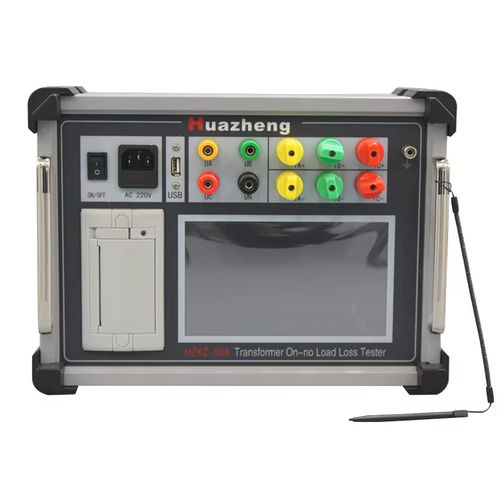
For loss and capacity work you want tight class specs. The HZKZ-50A transformer no-load loss tester holds 0.1% on voltage and current and 0.2% on power across a power factor of 1.0 down to 0.2, which is the range where no-load measurements live. Low power factor is normal in no-load testing, so check the accuracy at low PF, not just at unity.
Harmonic analysis is not optional
Site power is rarely clean. Harmonics in the supply distort the voltage waveform and inflate core loss readings. A tester that measures harmonic content (the HZKZ-50A transformer no-load loss tester covers the 1st to 32nd harmonics with bar graphs and live waveforms) lets you see the distortion and correct the no-load loss back to a true sine wave.
Match the range, then extend it
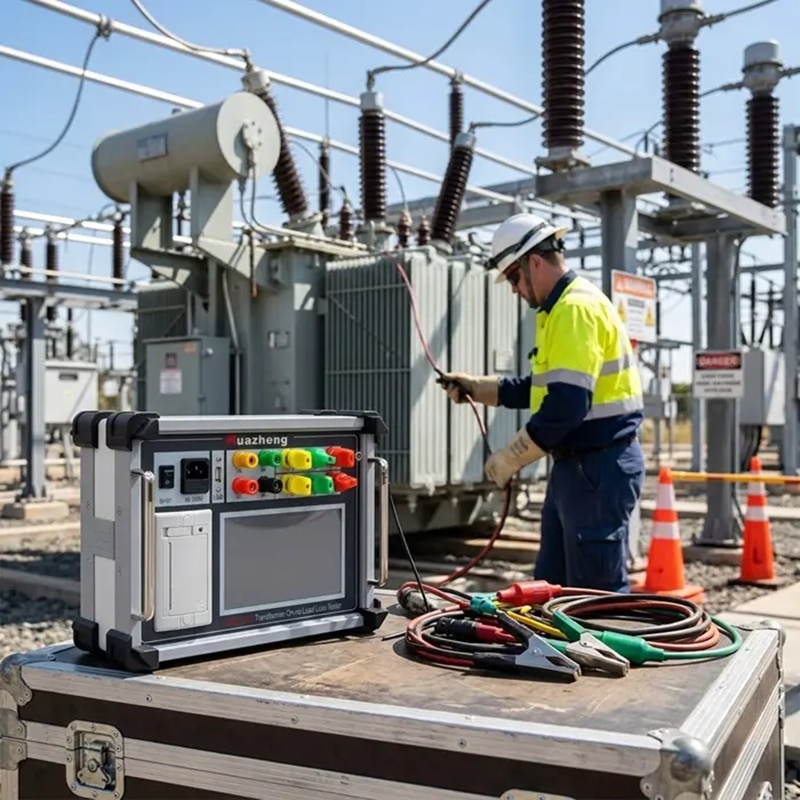
Confirm the direct ranges fit your fleet: AC 10-500 V phase (850 V line), current 0.1-50 A, capacity 30 kVA to 20000 kVA. For bigger units, look for external PT and CT support with settable ratios so the screen still shows real applied values.
Usability and records
A 7-inch color touchscreen with vector diagrams speeds up wiring checks. Built-in DBF storage plus USB-to-Excel export makes reporting painless, and a no-power-off clock timestamps every run. Compact, light, and touch-driven means one operator can work faster in the field.
Checklist before you buy:
- Power accuracy at low power factor
- Harmonic analysis and waveform correction
- External PT/CT support for large capacity
- Touchscreen, vector diagram, USB/Excel export
- Wide operating range: -20 C to +40 C, humidity up to 80% RH
Compare models on our [Transformer No-Load Loss Tester](/transformer-loss-tester) or [get a recommendation](/contact).
FAQ:
Q: Why does harmonic analysis matter for no-load loss testing?
A: Harmonics distort the supply waveform and skew core loss readings; measuring
them lets the tester correct results to a pure sine wave.
Q: How do I Test Transformers beyond the instrument's range?
A: Connect external voltage and current transformers and set their ratios so the
tester displays the true applied values.