#Product Trends
What a Kinematic Viscosity Tester Measures in a Petroleum Lab
What a Kinematic Viscosity Tester Measures in a Petroleum Lab
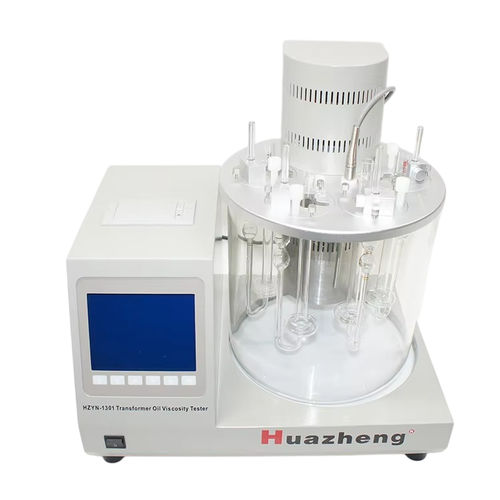
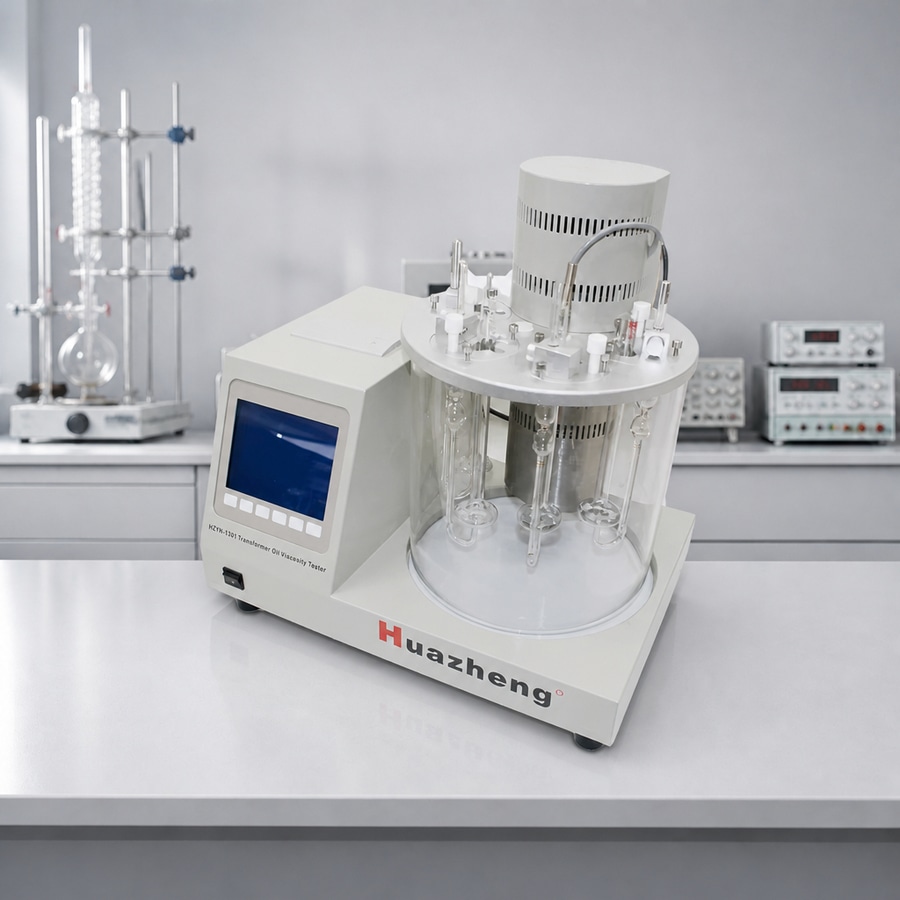
A kinematic viscosity testeris the constant-temperature bath used to grade liquid petroleum products. The operator charges a calibrated glass capillary Viscometer, holds the bath at a known temperature, and times a fixed volume of oil as it flows under gravity. Kinematic viscosity is the viscometer constant multiplied by that flow time. The SI unit is m²/s. Certificates are written in mm²/s, which is the same as cSt. Dynamic viscosity is not a second instrument reading. It is kinematic viscosity times the density of the liquid at the same temperature.
This tester is designed to GB265-88, Determination of kinematic viscosityof petroleum products. The method is for Newtonian liquids: lubricating oil, transformer oil, diesel, fuel oil and hydraulic fluid. International tenders usually name Astm D445 or ISO 3104. Those methods use the same capillary arithmetic, ν = C × t.
Why 40 °C and 100 °C dominate search traffic
ISO viscosity grades for industrial oils are based on kinematic viscosity at 40 °C. SAE engine-oil grades use 100 °C. Viscosity index needs both. Transformer oil, used-oil analysis and many fuel specifications sit on the same two points, sometimes with 50 °C or 80 °C for heavier stocks. Viscosity drops quickly as temperature rises. A one-degree miss in the bath can move the result by about 1–2 %, which is why a kinematic viscometer is only as good as its temperature control.
How a four-hole capillary bath is used
Select a glass capillary so the flow time is long enough to be repeatable. Bring the four-hole liquid bath to the set point and wait until the jacket is quiet. Load the sample without trapping air. Time the meniscus, repeat, and average the acceptable runs. GB265 and ASTM D445 both expect more than one pass. This apparatus times the movement and calculates the final kinematic viscosity, so the bench is not doing the arithmetic by hand.
Two holes on one oil give the duplicate. The other two can hold a check standard or a second product while the bath is already stable. Water is the usual medium. Glycerol is used for the higher set points; the stirrer then has to be trimmed. For petroleum QC, that is the job: a PID viscometer bath, a constant you can enter, and a result in mm²/s at a stated temperature.