


#Product Trends
Insulation Resistance Tester: Turning Cable and Switchgear QC Into a Timed, Repeatable Line Step
Insulation Resistance Tester: Turning Cable and Switchgear QC Into a Timed, Repeatable Line Step
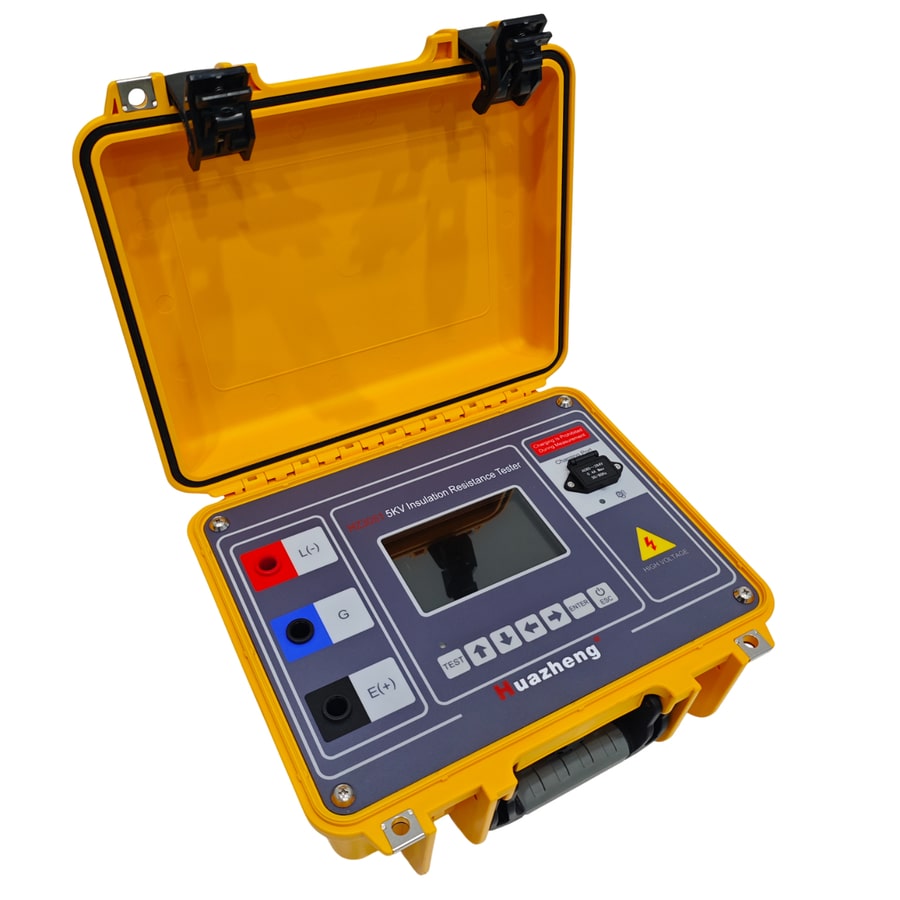
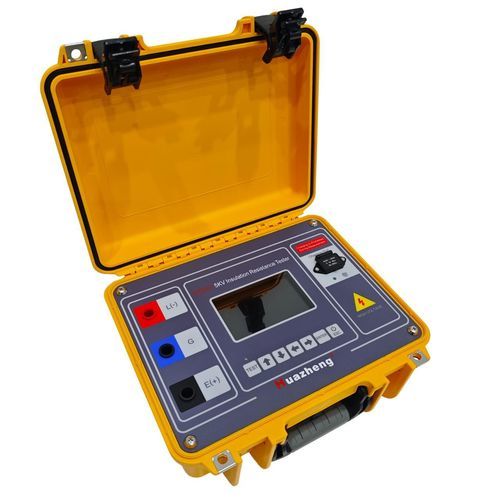
A cable or switchgear factory running insulation resistance testing as part of final QC needs the test to behave the same way on sample 200 of a shift as it did on sample 1 — which means the equipment, not just the test method, has to be built for repetitive, high-volume use rather than occasional diagnostic work. An adjustable test time from 1 to 60 minutes in 30-second steps, with settings stored independently per test mode (IR, DAR, PI, step voltage), lets a QC technician switch between product types on the same line without reconfiguring timing each time — a transformer bushing test and a cable Insulation Test don't need the same duration, and the instrument shouldn't force them to.
Capacitance measurement is directly relevant to cable factory QC in a way it isn't for most other equipment types. A measurement range of 10nF to 25μF, accurate to ±10%±5nF, lets a line technician verify cable capacitance alongside insulation resistance from the same instrument — useful for catching manufacturing variances in insulation thickness or material consistency before a finished cable reel ships. A discharge rate of 0.47s/μF or faster matters directly here too: long cable samples carry meaningful stored capacitive energy after a test, and a fast discharge circuit keeps the line moving to the next sample without a long manual wait.
For switchgear manufacturers running acceptance tests across mixed product lines — bushings, CTs, breakers — breakdown protection combined with a dedicated arcing mode turns a failed unit into a located defect rather than just a rejected one, useful when a factory's rework process needs to know where a problem is, not just that one exists.
A 5-inch color LCD with 800×480 resolution keeps results legible on a factory floor where ambient lighting and viewing distance aren't optimized the way a lab bench is, and six fixed test voltages from 100V to 5000V, plus a continuously adjustable custom range, cover both low-voltage distribution cable testing and higher-voltage switchgear and bushing acceptance specs without swapping instruments between test stations.
For export-oriented factories supplying multiple regional markets, hardware and configurable software filtering keeps measurement accuracy consistent on a factory floor with significant ambient electrical noise from adjacent production equipment — a condition most lab-oriented instrument specs don't account for but every real factory floor has.
A six-minute PI test or a five-step voltage ramp doesn't change based on which customer eventually receives the finished product. What changes is whether a factory's QC station handles that test as a repeatable, timed line step — or as a bottleneck that slows down everything behind it.
 鄂公网安备42018502009509号