


#Product Trends
Transformer Tan Delta Tester: Handling the CVT Testing Problem Most Factory Lines Weren't Built For
Transformer Tan Delta Tester: Handling the CVT Testing Problem Most Factory Lines Weren't Built For
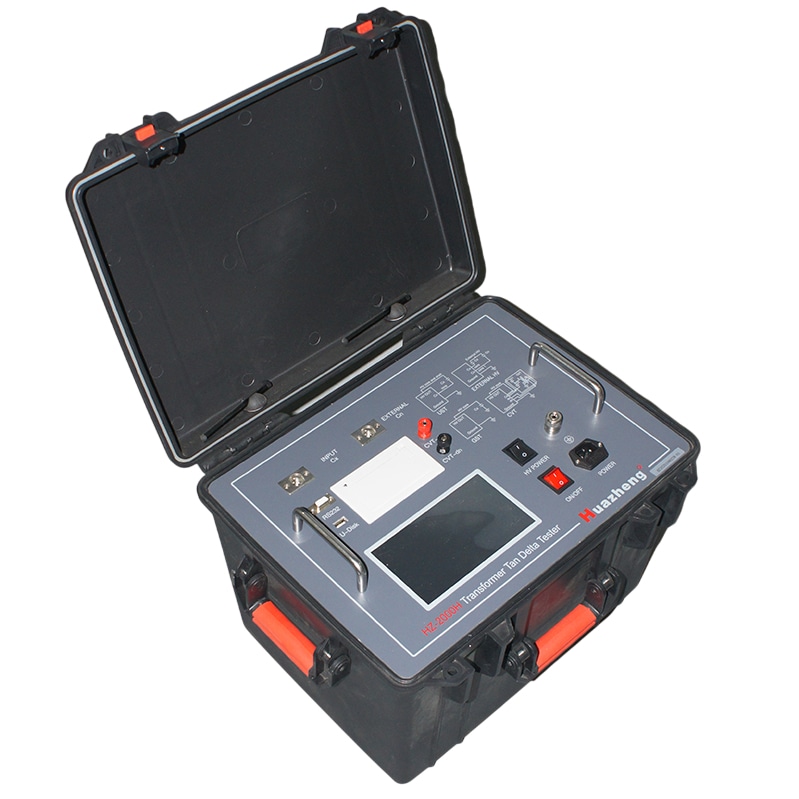
Capacitive voltage transformers make up a substantial share of the installed base across 220kV-and-above grids throughout Asia, and that creates a specific testing problem most factory QC lines inherited from equipment designed primarily for straightforward transformers and bushings. An integrated CVT has no accessible mid-voltage tap — its capacitor divider and electromagnetic unit are connected internally inside the oil tank — which means standard positive or negative connection methods can't be used to measure the C1 and C2 divider capacitors without risking damage to the unit. Self-excitation, using the CVT's own intermediate transformer as the test source, is the only method that works safely.
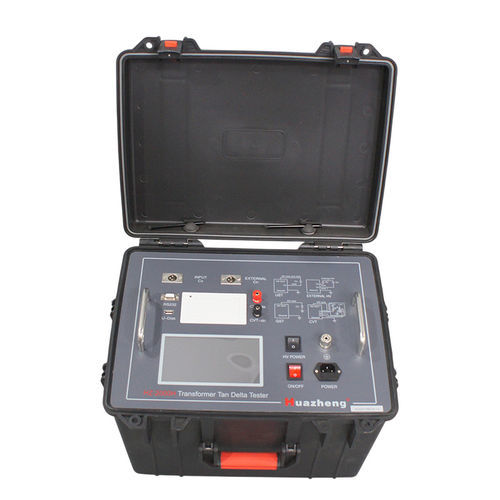
A transformer tan delta tester offering self-excitation output across 3V, 20V, and 50V ranges resolves this directly, measuring C1 and C2 capacitance and dielectric loss independently as well as the combined total CVT value — covering both acceptance testing for newly manufactured units and routine diagnostic testing for units already in service, without a separate dedicated CVT test rig taking up floor space.
Throughput is the other half of what a switchgear or cable factory actually needs from this kind of equipment. A measurement cycle of roughly 40 seconds per test, combined with automatic identification of capacitance, inductance, and resistance in the test object, means a QC technician doesn't need to manually configure the instrument differently for a capacitor unit versus an arrester versus a bushing moving through the same test station — the instrument adapts to what's connected.
Capacitance range coverage matters for a factory producing a mixed product line. Internal high-voltage measurement spanning 3pF to 60,000pF at 10kV, and external high-voltage capability up to 1.5μF, covers everything from small bushing capacitances to large capacitor bank units on the same instrument, without swapping test heads between product types.
For larger manufacturing operations or state utility testing programmes running multiple test benches simultaneously, a computer interface capable of controlling up to 32 instruments at once is what makes integrating several testers into one comprehensive high-voltage test vehicle or multi-station QC line realistic — centralizing data processing and report output rather than reconciling separate result sets from standalone units across a production floor.
Data traceability closes the loop for export-oriented factories supplying multiple regional markets with different documentation requirements. Automatic U-disk export, dedicated PC review software, a built-in calendar chip, and a micro thermal printer together produce a dated, exportable record for every unit tested — the kind of documentation an overseas buyer's incoming inspection team increasingly expects as standard, not an add-on.
CVT testing isn't a niche requirement in a market where capacitive voltage transformers are this common. It's a baseline capability a factory's test equipment either has — or doesn't — and that difference shows up the first time a production batch includes units a conventional tester simply can't test safely.

 鄂公网安备42018502009509号