
#Industry News
Gas Changeover System for Food and Beverage: Ensuring Continuous, Safe, and High-Purity Gas Supply
Gas Changeover System for Food and Beverage: Ensuring Continuous, Safe, and High-Purity Gas Supply
Introduction
The food and beverage industry relies heavily on industrial gases to ensure product quality, production efficiency, hygiene, and safety. From carbon dioxide used in beverage carbonation to nitrogen for food packaging and oxygen for aquaculture or specialty food processing, gas supply plays a critical role throughout the manufacturing process. Any interruption in gas delivery can lead to production downtime, product waste, inconsistent quality, and increased operational costs.
A gas changeover system is specifically designed to provide an uninterrupted gas supply by automatically switching from a depleted gas cylinder bank to a full reserve bank without interrupting production. This automation not only improves operational efficiency but also enhances workplace safety and reduces manual intervention.
As food manufacturers continue to adopt automation and stricter quality management standards, automatic gas changeover systems have become an essential component in modern food and beverage production facilities.
This article explores how gas changeover systems work, their components, benefits, applications, selection criteria, and why they are indispensable for today’s food processing industry.
best top 10 ultra high purity gas pressure regulator in india
best top 10 ultra high purity gas pressure regulator in india
What Is a Gas Changeover System?
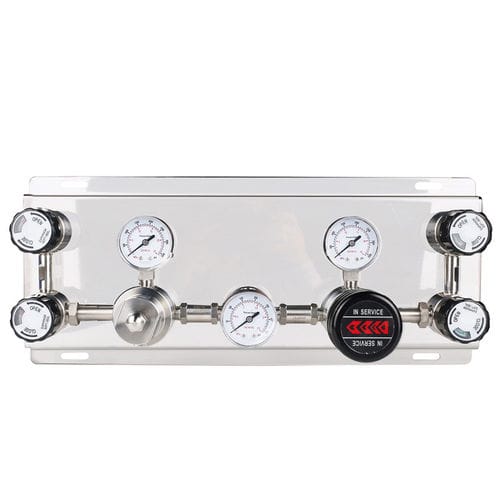
A gas changeover system is an automated gas control solution that continuously supplies gas from multiple cylinders or cylinder bundles. When the primary gas source reaches a preset low-pressure threshold, the system automatically switches to the reserve cylinder bank without interrupting gas flow.
Unlike manual switching, automatic gas changeover systems eliminate production stoppages caused by empty cylinders while maintaining stable outlet pressure throughout the process.
These systems are commonly used with:
Carbon Dioxide (CO₂)
Nitrogen (N₂)
Oxygen (O₂)
Argon (Ar)
Mixed Food Grade Gases
Specialty Food Processing Gases
They are suitable for both high-pressure cylinders and cylinder bundles used in medium and large-scale production facilities.
Why Continuous Gas Supply Is Critical in Food and Beverage Manufacturing
Many food production processes cannot tolerate gas supply interruptions, even for a few seconds.
Typical examples include:
Beverage Carbonation
Soft drinks, sparkling water, and beer require constant CO₂ pressure for consistent carbonation levels.
An interruption may result in:
Product inconsistency
Incorrect carbonation
Production downtime
Waste of filled containers
Modified Atmosphere Packaging (MAP)
Nitrogen and carbon dioxide are widely used to replace oxygen inside food packages.
Stable gas flow is essential for:
Longer shelf life
Reduced oxidation
Maintaining product freshness
Preserving flavor and texture
Dairy Processing
Many dairy production lines use nitrogen blanketing to prevent oxidation and bacterial contamination.
Continuous gas delivery ensures hygienic production throughout the manufacturing cycle.
Brewing Industry
Breweries use:
CO₂ for carbonation
Nitrogen for nitrogen-infused beverages
Mixed gases for dispensing systems
Gas interruptions affect beverage quality and production stability.
Food Storage
Controlled atmosphere storage facilities rely on nitrogen and carbon dioxide to preserve fruits, vegetables, meat, and seafood.
Any fluctuation in gas supply may reduce storage effectiveness.
How an Automatic Gas Changeover System Works
The operating principle is straightforward yet highly reliable.
The system includes two independent gas cylinder banks:
Primary Bank
Reserve Bank
During normal operation:
Gas flows from the primary cylinder bank.
Pressure regulators reduce cylinder pressure to the required outlet pressure.
When cylinder pressure falls below the preset switching pressure, the automatic changeover valve activates.
Gas supply immediately switches to the reserve bank.
Operators receive an indicator showing that the primary bank is empty.
Empty cylinders can be safely replaced while production continues.
This process occurs automatically without interrupting downstream gas consumption.
Major Components of a Food Grade Gas Changeover System
A high-quality gas changeover system typically consists of several precision-engineered components.
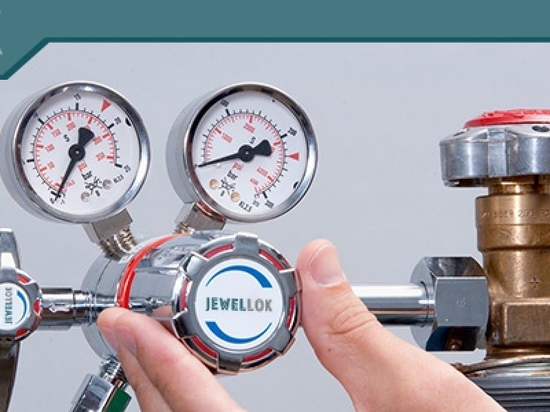
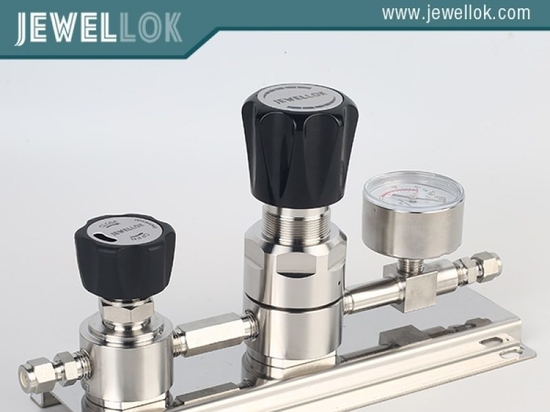
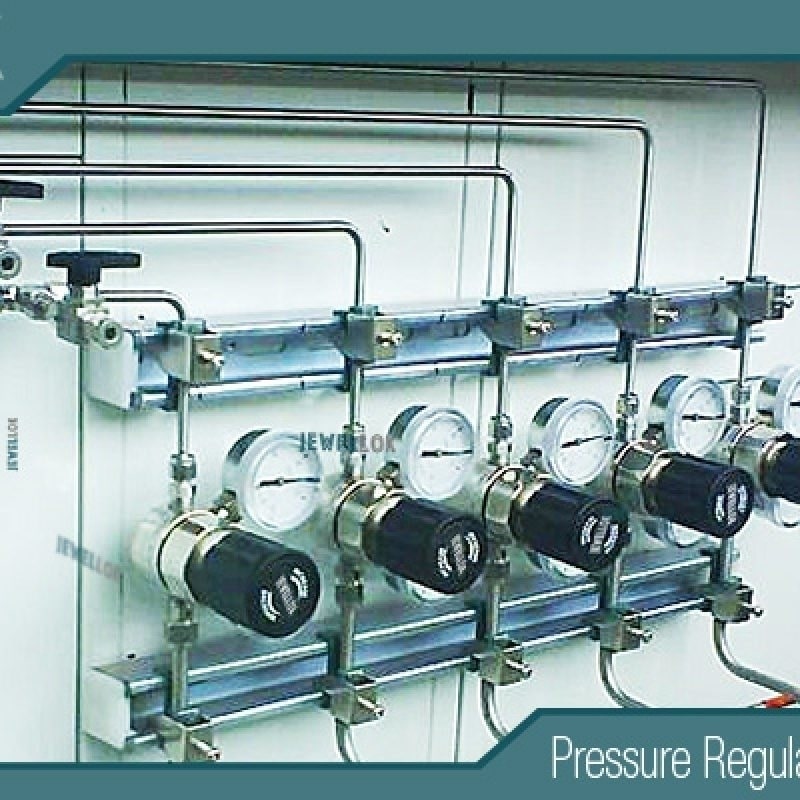
High Pressure Regulators
Pressure regulators reduce cylinder pressure while maintaining a stable outlet pressure.
Food-grade regulators usually feature:
Stainless steel construction
Corrosion resistance
High pressure stability
Accurate pressure control
Automatic Changeover Valve
The changeover valve monitors inlet pressure from both cylinder banks.
Its primary function is to:
Detect pressure reduction
Automatically switch gas sources
Prevent supply interruption
Pressure Gauges
Pressure gauges display:
Cylinder pressure
Outlet pressure
Reserve cylinder status
They help operators monitor gas consumption efficiently.
Isolation Valves
Isolation valves allow individual cylinder banks to be disconnected during maintenance without shutting down the entire system.
Safety Relief Valves
Safety valves protect downstream equipment from excessive pressure.
They are essential for compliance with industrial safety standards.
Flexible High Pressure Hoses
Stainless steel braided hoses safely connect cylinders to the manifold.
Food-grade hoses provide:
Leak resistance
Long service life
High pressure capability
Types of Gas Changeover Systems
Different production facilities require different levels of automation.
Manual Changeover Systems
Operators manually switch between cylinder banks.
Advantages:
Low cost
Simple installation
Disadvantages:
Production interruption
Labor intensive
Higher risk of operator error
Semi-Automatic Changeover Systems
The regulator switches automatically, but operators manually reset the system after replacing cylinders.
Suitable for:
Medium gas consumption
Small food factories
Fully Automatic Gas Changeover Systems
These systems perform complete automatic switching without manual intervention.
Features include:
Continuous operation
Automatic pressure balancing
Remote alarm outputs
PLC integration
Digital monitoring
They are ideal for large-scale food processing facilities operating 24/7.
Common Gases Used in Food and Beverage Industries
Carbon Dioxide (CO₂)
Applications include:
Beverage carbonation
Beer production
Soft drinks
Packaging
Cooling
Nitrogen (N₂)
Used for:
Modified atmosphere packaging
Tank blanketing
Food preservation
Coffee packaging
Snack packaging
Oxygen (O₂)
Applications include:
Aquaculture
Fermentation
Fish transportation
Medical nutrition products
Argon (Ar)
Argon is commonly used for:
Wine preservation
Specialty beverages
Oxygen displacement
High-value food packaging
Advantages of Automatic Gas Changeover Systems
Continuous Production
Automatic switching eliminates costly production downtime caused by empty cylinders.
Manufacturers achieve higher production efficiency.
Improved Product Quality
Stable gas pressure ensures:
Uniform carbonation
Consistent packaging atmosphere
Better product shelf life
Enhanced Food Safety
Reliable gas delivery helps maintain hygienic processing conditions while reducing the risk of contamination caused by process interruptions.
Reduced Labor Costs
Operators no longer need to constantly monitor cylinder pressure or manually switch gas sources.
This reduces labor requirements and improves operational efficiency.
Higher Safety Standards
Automatic systems reduce:
Human error
Improper cylinder handling
Sudden pressure fluctuations
Gas leakage risks
Lower Maintenance Costs
Modern stainless steel systems are designed for:
Long operating life
Minimal maintenance
Excellent corrosion resistance
Stainless Steel Construction for Food Applications
Food-grade gas systems typically use 316L stainless steel, which offers:
Superior corrosion resistance
Easy cleaning
Excellent hygienic performance
Compatibility with food-grade gases
Long service life
Electropolished internal surfaces further minimize particle generation and facilitate sanitation.
Smart Monitoring and Automation
Modern gas changeover systems increasingly integrate with factory automation platforms.
Available features include:
Remote pressure monitoring
Low-pressure alarms
Cylinder depletion alerts
PLC communication
SCADA integration
IoT-based diagnostics
Data logging
Predictive maintenance
These capabilities enable operators to optimize gas usage, schedule cylinder replacement proactively, and reduce unplanned downtime.
Choosing the Right Gas Changeover System
Selecting the appropriate system depends on several factors.
Gas Type
Different gases require compatible materials, seals, and regulator designs.
Gas Consumption
Daily gas usage determines cylinder capacity and manifold size.
Working Pressure
Both inlet and outlet pressure ratings must match the production process.
Number of Cylinders
Facilities with higher consumption often require larger cylinder banks to reduce replacement frequency.
Automation Requirements
Manufacturers should determine whether manual, semi-automatic, or fully automatic operation best suits their production needs.
Future Expansion
Modular systems make it easier to add additional cylinders or integrate with centralized gas distribution networks as production grows.
Maintenance Best Practices
Proper maintenance helps maximize safety, reliability, and service life.
Recommended practices include:
Inspect regulators regularly
Check flexible hoses for wear
Test automatic switching performance
Verify pressure gauge accuracy
Inspect safety relief valves
Perform leak detection tests
Replace worn seals promptly
Keep maintenance records
Follow manufacturer-recommended service intervals
Routine preventive maintenance minimizes unexpected failures and extends equipment lifespan.
Industry Standards and Compliance
Gas changeover systems used in food and beverage applications should comply with recognized industry standards and local regulations.
Typical considerations include:
Food-grade material compatibility
Pressure equipment safety requirements
Leak-tight performance
Hygienic design principles
Proper labeling and identification
Safe installation and maintenance procedures
Selecting equipment from experienced manufacturers that provide testing, documentation, and quality assurance can simplify compliance and support long-term operational reliability.
Future Trends in Food Gas Supply Systems
As Industry 4.0 technologies become more widespread, gas management systems are evolving beyond basic pressure control.
Emerging trends include:
AI-assisted predictive maintenance
Cloud-based monitoring platforms
Digital pressure sensors
Wireless alarm systems
Energy-efficient regulator designs
Smart gas inventory management
Integration with Manufacturing Execution Systems (MES)
Automated analytics for gas consumption optimization
These innovations help manufacturers reduce operating costs, improve process transparency, and maintain uninterrupted production in increasingly automated facilities.
Conclusion
A reliable gas changeover system for food and beverage applications is far more than a convenience—it is a critical investment in production continuity, food safety, and operational efficiency. By automatically switching between gas cylinder banks, these systems eliminate downtime, maintain stable gas pressure, and support consistent product quality across a wide range of manufacturing processes.
Whether supplying carbon dioxide for beverage carbonation, nitrogen for modified atmosphere packaging, or specialty gases for advanced food processing, an automatic gas changeover system ensures uninterrupted performance while reducing manual intervention and enhancing workplace safety.
For manufacturers seeking to improve productivity and meet increasingly stringent quality standards, selecting a high-quality stainless steel gas changeover system with intelligent monitoring capabilities provides a reliable, future-ready solution. As automation and digital manufacturing continue to advance, modern gas management systems will play an even greater role in optimizing food and beverage production while supporting sustainable, efficient, and safe operations.
For more about gas changeover system for food and beverage: ensuring continuous, safe, and high-purity gas supply, you can pay a visit to Jewellok at https://www.jewellok.com/product-category/chemical-delivery-system/ for more info.