
#Industry News
Why Ultra High Purity Diaphragm Valves Outperform Traditional Valve Technologies
Why Ultra High Purity Diaphragm Valves Outperform Traditional Valve Technologies
In modern semiconductor manufacturing, pharmaceutical production, biotechnology, aerospace, and advanced chemical processing industries, controlling extremely pure fluids and gases has become one of the most critical engineering challenges. As process technologies continue to advance, traditional valve technologies such as ball valves, gate valves, and globe valves often struggle to meet increasingly strict requirements for contamination control, leakage prevention, reliability, and precision flow management.
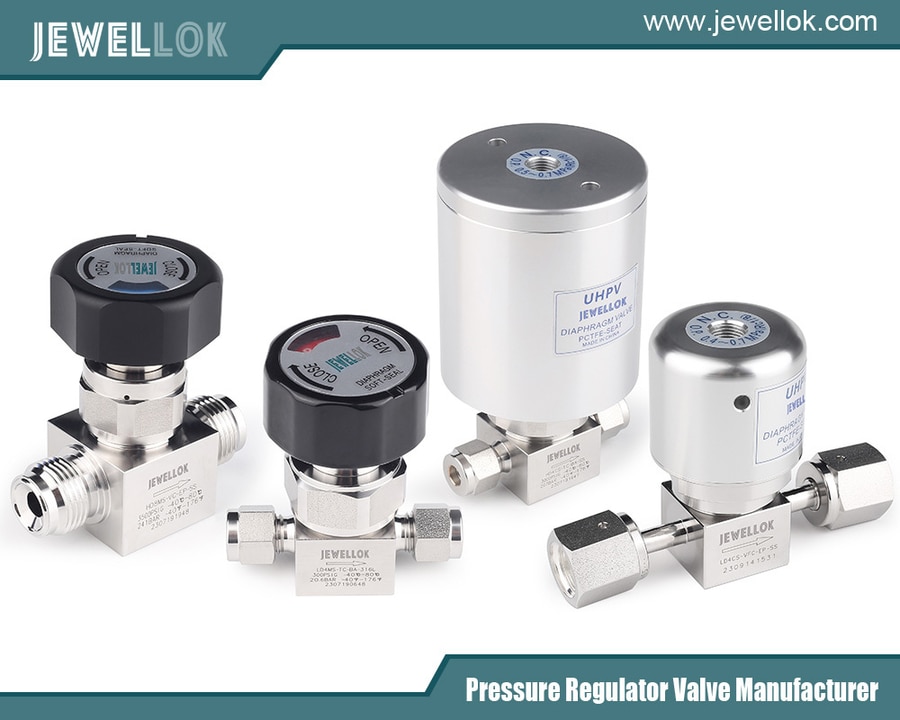
Ultra High Purity (UHP) diaphragm valves have emerged as a superior solution for applications where even microscopic contamination can negatively impact product quality and process efficiency. Designed specifically for high-purity gas and chemical delivery systems, UHP diaphragm valves provide exceptional sealing performance, minimal dead volume, superior corrosion resistance, and outstanding particle control.
Compared with conventional valve technologies, UHP diaphragm valves offer significant advantages in semiconductor fabrication facilities, cleanroom environments, and other industries requiring highly controlled process conditions.
1. Understanding Ultra High Purity Diaphragm Valve Technology
An ultra high purity diaphragm valve is a precision-engineered valve that uses a flexible metal diaphragm as the primary sealing element. Unlike traditional valves that rely on rotating or sliding components, diaphragm valves isolate the process fluid from the mechanical operating mechanism.
The core structure typically includes:
High purity 316L stainless steel body
Metal diaphragm assembly
Precision actuator system
Welded or VCR connection options
Electropolished internal surfaces
Low dead-space flow channels
The diaphragm moves vertically to open or close the valve, creating a highly reliable barrier between the process media and external mechanical components.
For semiconductor-grade applications, manufacturers commonly use advanced materials such as:
316L VIM-VAR stainless steel
Cobalt-based superalloy diaphragms
High-performance sealing materials
Ultra-clean surface treatments
These materials ensure compatibility with corrosive gases, toxic chemicals, and sensitive process environments.
2. Superior Contamination Control Compared with Traditional Valves
One of the biggest advantages of UHP diaphragm valves is their ability to minimize contamination.
Traditional valves often contain multiple internal moving parts, including:
Rotating balls
Valve stems
Packing materials
Sliding seals
Lubricated components
During operation, these components may generate particles through mechanical friction and wear. In semiconductor manufacturing, even nano-scale particles can cause defects on wafers and reduce production yield.
UHP diaphragm valves solve this problem through a completely isolated flow path.
The diaphragm creates a physical separation between:
Process gas or chemical fluid
Valve actuator mechanism
As a result:
No lubricants contact the process media
No stem movement occurs inside the fluid path
Particle generation is significantly reduced
Chemical contamination risks are minimized
This makes UHP diaphragm valves the preferred choice for critical semiconductor processes such as:
Chemical Vapor Deposition (CVD)
Atomic Layer Deposition (ALD)
Etching processes
Ion implantation
Photolithography gas delivery
3. Exceptional Leak Tightness and Safety Performance
Leak prevention is another area where ultra high purity diaphragm valves outperform traditional valve technologies.
In specialty gas systems, leakage can create serious safety risks, especially when handling:
Toxic gases
Corrosive gases
Reactive chemicals
Semiconductor process gases
Traditional valve designs usually depend on mechanical seals around moving shafts. Over time, these seals may degrade due to:
Chemical exposure
Thermal cycling
Mechanical wear
Pressure fluctuations
UHP diaphragm valves eliminate many of these weaknesses by using a welded metal diaphragm structure.
Advanced semiconductor-grade diaphragm valves can achieve extremely low leakage rates, often reaching:
Helium leak rates below 1×10⁻⁹ atm·cc/sec
Long-term pressure stability
Excellent gas isolation performance
This high sealing capability improves:
Operator safety
Process stability
Equipment reliability
Environmental protection
For semiconductor fabs operating hundreds of gas delivery points, improved leak control can significantly reduce maintenance requirements and production risks.
4. Lower Dead Volume for Better Process Performance
Dead volume refers to areas inside a valve where process gases or chemicals can become trapped.
Large dead volume creates several problems:
Residual chemical contamination
Slow purge cycles
Gas mixing issues
Longer process stabilization time
Traditional valves often have complex internal geometries that create unnecessary spaces.
UHP diaphragm valves are specifically designed with optimized flow paths and minimal internal cavities.
Benefits include:
Faster Purging
When switching between process gases, smaller internal volumes allow faster removal of residual gases.
Improved Process Repeatability
Stable gas composition improves consistency in advanced manufacturing processes.
Reduced Chemical Waste
Efficient flushing reduces the amount of expensive specialty gases or chemicals required.
This is particularly important in semiconductor manufacturing, where high-value process gases such as tungsten precursors, fluorine-based gases, and specialty chemicals require precise control.
5. Better Corrosion Resistance for Aggressive Chemicals
Many industrial applications involve highly corrosive media that can damage conventional valve materials.
Examples include:
Chlorine-based gases
Fluorine compounds
Ammonia
Hydrogen chloride
Semiconductor precursor chemicals
Traditional valves may experience:
Internal corrosion
Seal degradation
Material contamination
Reduced service life
UHP diaphragm valves are manufactured using corrosion-resistant materials and advanced surface treatments.
Common technologies include:
Electropolishing
Electropolishing improves stainless steel surfaces by:
Removing microscopic impurities
Reducing surface roughness
Improving corrosion resistance
Preventing particle accumulation
High Purity Metal Components
316L stainless steel provides excellent resistance against many aggressive chemical environments while maintaining mechanical strength.
Advanced Diaphragm Materials
Cobalt-based alloy diaphragms provide:
High fatigue resistance
Excellent corrosion resistance
Long operational lifetime
These features allow UHP diaphragm valves to operate reliably in demanding chemical delivery systems.
6. Higher Reliability and Longer Service Life
Industrial customers increasingly focus on equipment reliability because unexpected downtime can cause significant financial losses.
Traditional valve technologies often require maintenance due to:
Seal replacement
Lubrication requirements
Mechanical wear
Stem leakage
UHP diaphragm valves reduce these maintenance concerns through a simpler and more reliable design.
Advantages include:
Fewer moving components
No sliding seals
Reduced mechanical friction
Stable performance over millions of cycles
For automated semiconductor gas cabinets and chemical delivery units, reliable valve operation is essential because thousands of process cycles may occur every year.
The long service life of UHP diaphragm valves helps manufacturers achieve:
Higher equipment availability
Lower maintenance costs
Improved production efficiency
7. Precision Flow Control Advantages
Modern semiconductor and pharmaceutical processes require extremely accurate flow control.
Traditional valves may experience:
Flow fluctuations
Pressure instability
Limited adjustment accuracy
UHP diaphragm valves provide excellent control characteristics because the diaphragm movement is highly predictable.
They can be integrated with:
Pneumatic actuators
Electronic control systems
Automated gas panels
Process monitoring systems
This enables precise management of:
Gas pressure
Chemical flow rate
Process timing
Delivery consistency
In advanced manufacturing environments, precise valve control directly contributes to higher product quality.
8. Comparison Between UHP Diaphragm Valves and Traditional Valve Technologies
Feature UHP Diaphragm Valve Traditional Ball/Gate/Globe Valve
Contamination Control Excellent Moderate
Particle Generation Extremely Low Higher
Dead Volume Minimal Higher
Leakage Performance Extremely High Depends on sealing system
Corrosion Resistance Excellent Material dependent
Maintenance Requirement Low Higher
Semiconductor Compatibility Excellent Limited
Cleanroom Application Ideal Less suitable
This comparison demonstrates why UHP diaphragm valves have become the industry standard for high-purity applications.
9. Applications of Ultra High Purity Diaphragm Valves
Semiconductor Manufacturing
UHP diaphragm valves are widely used in:
Gas delivery systems
Gas cabinets
Chemical dispense units
Etching equipment
Deposition equipment
They help maintain the purity and stability required for advanced chip manufacturing.
Pharmaceutical Industry
In pharmaceutical production, contamination control is essential. UHP diaphragm valves are used for:
High purity fluid handling
Sterile processing systems
Clean chemical delivery
Solar and Display Manufacturing
Advanced solar cells and display technologies require precise process gas control. UHP diaphragm valves provide reliable performance in these applications.
Laboratory and Research Equipment
Research facilities use UHP diaphragm valves for:
Specialty gas systems
Vacuum systems
Analytical instruments
10. Future Development Trends of UHP Diaphragm Valve Technology
As semiconductor technology moves toward smaller process nodes, demand for higher purity standards continues to increase.
Future UHP diaphragm valve innovations will focus on:
Smart Valve Integration
Advanced sensors and digital monitoring will enable:
Real-time performance tracking
Predictive maintenance
Remote diagnostics
Improved Materials
New alloys and surface technologies will further improve:
Chemical resistance
Cycle life
Reliability
Advanced Automation
Fully automated gas delivery systems will require more intelligent and precise valve solutions.
These developments will strengthen the role of UHP diaphragm valves in next-generation manufacturing.
pressure regulator and pressure reducing valve
pressure regulator and pressure reducing valve
Conclusion
Ultra High Purity diaphragm valves represent a significant advancement over traditional valve technologies. Their unique diaphragm isolation structure, superior sealing performance, minimal dead volume, excellent corrosion resistance, and outstanding contamination control make them essential components in semiconductor, pharmaceutical, chemical, and advanced manufacturing industries.
While traditional valves may still be suitable for general industrial applications, they cannot match the demanding requirements of ultra-clean environments. For critical processes where purity, reliability, and safety are essential, UHP diaphragm valves provide the performance advantages required for modern high-tech industries.
As global manufacturing continues to demand higher precision and cleaner processes, ultra high purity diaphragm valve technology will remain a key solution for achieving superior process control and long-term operational reliability.
For more about why ultra high purity diaphragm valves outperform traditional valve technologies, you can pay a visit to Jewellok at https://www.specialtygasregulator.com/product-category/specialty-gas-cabinet/ for more info.