
#Industry News
Laboratory Specialty Gas Cabinet Manufacturing Process
Laboratory Specialty Gas Cabinet Manufacturing Process
Laboratory Specialty Gas Cabinet Manufacturing Process
Introduction
In advanced scientific research, semiconductor R&D, and precision industrial laboratories, the handling of hazardous gases demands absolute containment. Specialty gases used in these facilities—ranging from highly toxic and pyrophoric compounds to corrosive or highly flammable fluids—require specialized infrastructure to ensure personnel safety and process integrity. The primary barrier protecting the lab environment from these volatile substances is the ultra high purity specialty gas cabinet. Manufacturing these enclosures is a highly sophisticated discipline that blends precise structural fabrication with orbital welding, cleanroom assembly, and complex automated control integration. This technical article explores the systematic manufacturing process required to build laboratory grade specialty gas cabinets that comply with stringent micro contamination and safety standards.
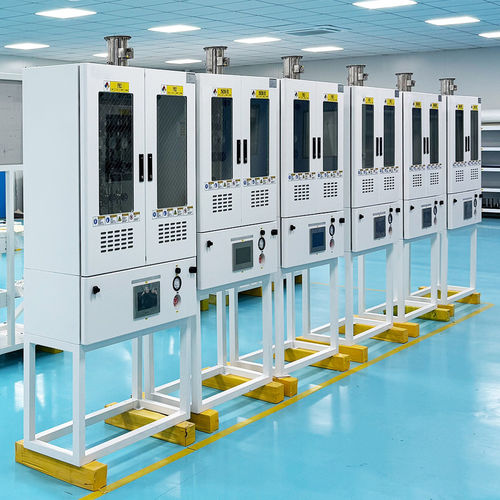
laboratory gas pipeline system
laboratory gas pipeline system
Enclosure Engineering and Sheet Metal Fabrication
The manufacturing lifecycle begins with structural design and mechanical engineering. Engineers create three dimensional computer models that calculate optimal airflow dynamics, exhaust distribution, and ergonomic component placement. Because these cabinets must contain potential explosions, fire, or toxic leaks, the outer shell must satisfy rigorous structural durability metrics.
The enclosure is typically fabricated from high grade, heavy gauge cold rolled steel, often varying between twelve and sixteen gauge thickness depending on the specific safety rating required. Computer numerical control laser cutting machines process the steel plates to guarantee dimensional accuracies down to fractions of a millimeter. Once cut, the sheets are transferred to precision press brakes for bending.
The structural frame is assembled using gas metal arc welding or gas tungsten arc welding. Every joint must be continuously welded rather than spot welded to ensure a gas tight seal and robust physical integrity. After structural welding, the enclosure undergoes mechanical grinding to eliminate sharp edges and weld spatters. The raw steel shell then proceeds to a multi stage chemical pre treatment process, which includes degreasing, zinc phosphating, and deionized water rinsing. This prepares the surface for an industrial grade, chemical resistant epoxy powder coating. The coating is electrostatically applied and cured in high temperature ovens, creating a durable barrier capable of withstanding harsh laboratory cleaning agents and corrosive environments.
Gas Manifold Design and High Purity Piping Line Fabrication
The core functional element of any specialty gas cabinet is the internal fluid distribution manifold. This manifold controls gas flow, regulates pressures, provides isolation, and facilitates automated nitrogen purging and vacuum cycles. Because the manifold comes into direct contact with ultra high purity process gases, the materials used must be completely inert and free from surface imperfections.
The manufacturing standard dictates the exclusive use of seamless ASTM A269 or A632 grade 316L stainless steel tubing. To eliminate micro contamination risks, this tubing undergoes a chemical electropolishing process that reduces inner surface roughness to less than ten microinches. Electropolished surfaces prevent gas molecules from adhering to microscopic crevices, thereby eliminating moisture entrapment and particle shedding.
Fabrication of the manifold takes place within a controlled cleanroom environment to avoid ambient contamination. Technicians use precision tube cutters and dedicated orbital facing tools to prepare the tube ends. Mechanical cutting must produce perfectly square edges without introducing metal burrs or particulate debris. Once faced, the components are joined using automated orbital tungsten inert gas welding. Orbital welding tracks the weld joint mechanically, supplying an exact current and speed to produce highly uniform, full penetration welds. Throughout the welding process, a continuous flow of ultra high purity argon gas backpurges the interior of the tube. This backpurging displaces oxygen and prevents internal weld oxidation, an effect commonly known as sugaring, which would otherwise ruin gas purity.
Component Integration and Cleanroom Assembly
Once the ultra high purity piping manifold is welded and verified, it moves to final cleanroom assembly, typically within a Class 100 or Class 10 cleanroom zone. Here, the manifold is integrated with specialized fluid control components, including pneumatic diaphragm valves, mass flow controllers, dual stage pressure regulators, check valves, and pressure transducers.
Every component selected for a specialty gas cabinet must match the purity level of the electropolished tubing. Diaphragm valves are preferred over ball or needle valves because they do not contain sliding seals or packing materials that could wear down and shed particles into the gas stream. These valves utilize metal to metal seals to guarantee leak tightness to the atmosphere.
During assembly, workers employ torque wrenches to tighten face seal fittings, such as VCR fittings, to precise manufacturer specifications. These fittings utilize unplated silver or nickel gaskets compressed between two polished metal beads, forming a helium tight joint. Every connection is carefully logged, and the geometric layout is maintained to avoid any dead legs—areas of stagnant gas that cannot be swept away during purge cycles.
Electrical Systems and Controls Automation
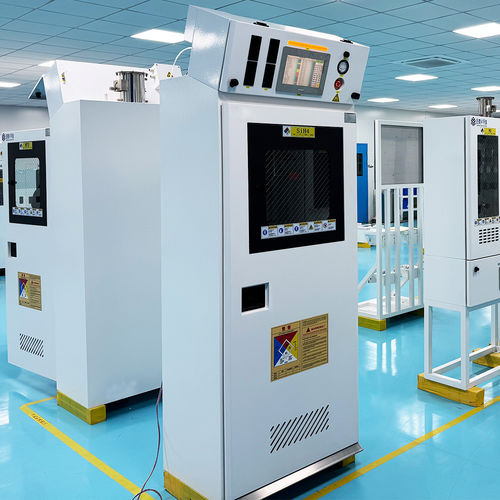
Modern laboratory specialty gas cabinets are fully automated systems driven by industrial programmable logic controllers. The integration of electrical systems occurs parallel to or immediately following the mechanical assembly. Control engineers design the electrical architecture to isolate high voltage components from the gas delivery pathways, ensuring intrinsic safety.
The programmable logic controller acts as the central brain of the gas cabinet, monitoring an array of digital and analog sensors. These include color touchscreen human machine interfaces, ambient gas detection sensors, exhaust velocity transmitters, pneumatic pressure switches, and cylinder weight scales or load cells. The controller continuously executes complex safety algorithms. If an anomaly occurs—such as a toxic gas leak detection, a drop in facility exhaust ventilation, or an overpressure condition—the controller immediately cuts power to the normally closed pneumatic source valves, isolating the hazardous gas within the cylinder.
The software also automates necessary operation sequences, such as the cylinder changeover purge routine. When an operator needs to replace an empty cylinder, the controller executes a pre programmed sequence of alternating nitrogen purges and deep vacuums. This sequence clears hazardous residues from the connection pigtail, ensuring the operator is not exposed to toxic fumes during the cylinder swap.
Quality Control, Testing, and Validation Protocols
Before a specialty gas cabinet leaves the manufacturing facility, it must undergo exhaustive quality control testing to validate its safety and performance metrics. The final testing regime is structured into distinct validation phases.
First, the manifold undergoes helium leak testing using a highly sensitive mass spectrometer leak detector. The system is evacuated, and helium gas is applied externally to all weld joints and mechanical connections. Alternatively, the manifold is pressurized with helium while a sniffing probe checks the joints. The acceptable leak rate limit is typically set to less than one times ten to the minus nine standard cubic centimeters per second. Any measurable leak requires immediate remediation and re testing.
Second, moisture and particle analysis are conducted on the internal lines. The manifold is purged with ultra high purity nitrogen, and specialized analyzers measure trace moisture and oxygen levels down to single digit parts per billion. Particle counters verify that the system is not shedding micro contaminants that could degrade downstream laboratory processes or damage sensitive analytical instruments.
Finally, full functional and electrical testing is executed. Technicians simulate fault conditions, emergency shutdown sequences, and power failures to verify that all hardware interlocks and software safety routines respond flawlessly. Once all tests are passed, the cabinet is cleaned, enclosed in dual layer anti static polyethylene bagging, purged with a nitrogen blanket, and crated for transport.
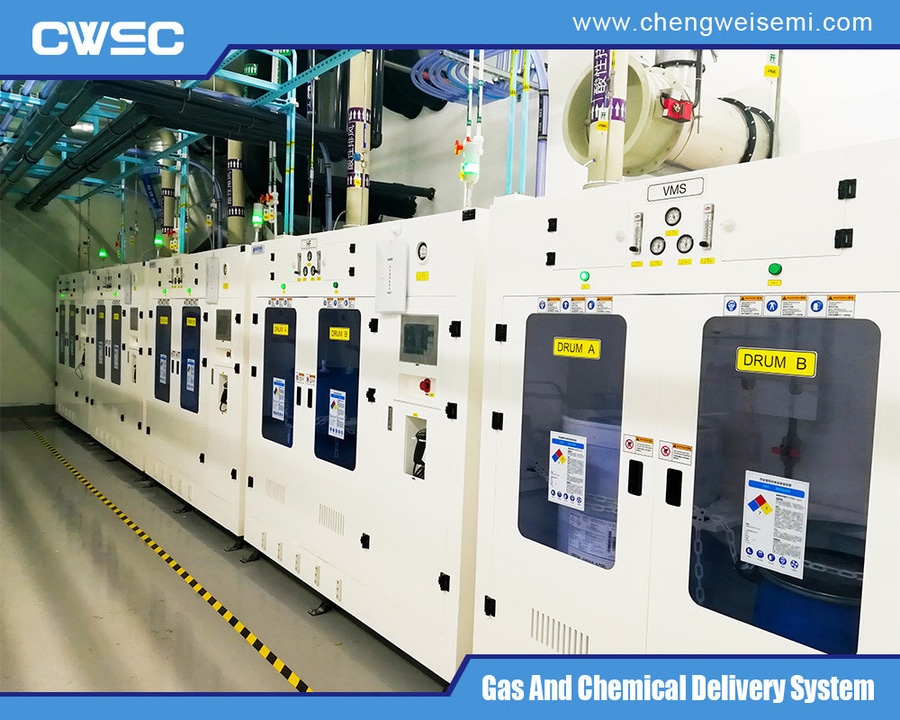
Centralized Laboratory Gas Supply Systems
Centralized Laboratory Gas Supply Systems
Conclusion
The manufacturing of laboratory specialty gas cabinets is a precision driven process where structural engineering, metallurgy, cleanroom assembly, and automated software design converge. By strictly managing material selection, adhering to orbital welding protocols, assembling within cleanrooms, and integrating responsive control architectures, manufacturers deliver critical infrastructure that guarantees laboratory safety. These robust systems allow research facilities to utilize advanced, volatile chemistries with total confidence, protecting both human life and scientific accuracy.
For more about laboratory specialty gas cabinet manufacturing process, you can pay a visit to Chengwei Semiconductor at https://www.chengweisemi.com/gas-cabinet/ for more info.