
#Industry News
Engineering Ultra-High Purity and Safety: The Architecture of the Modern Semiconductor Gas Cabinet
Engineering Ultra-High Purity and Safety: The Architecture of the Modern Semiconductor Gas Cabinet
Engineering Ultra-High Purity and Safety: The Architecture of the Modern Semiconductor Gas Cabinet
Introduction: The Critical Role of Sub-Fab Gas Infrastructure
In modern semiconductor fabrication facilities (fabs), processing steps rely on complex chemical reactions driven by specialized gases. These gases—spanning silane (SiH4), phosphine (PH3), boron trifluoride (BF3), tungsten hexafluoride (WF6), and hydrogen chloride (HCl)—are essential for deposition, doping, etching, and cleaning operations. However, many of these electronic specialty gases (ESGs) possess highly hazardous properties, being pyrophoric, toxic, corrosive, flammable, or a combination of these threats. Consequently, the primary containment boundary between these lethal substances and the fabrication cleanroom environment is the semiconductor gas cabinet.
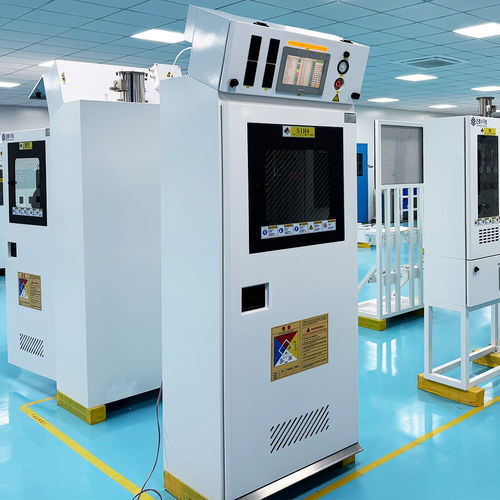
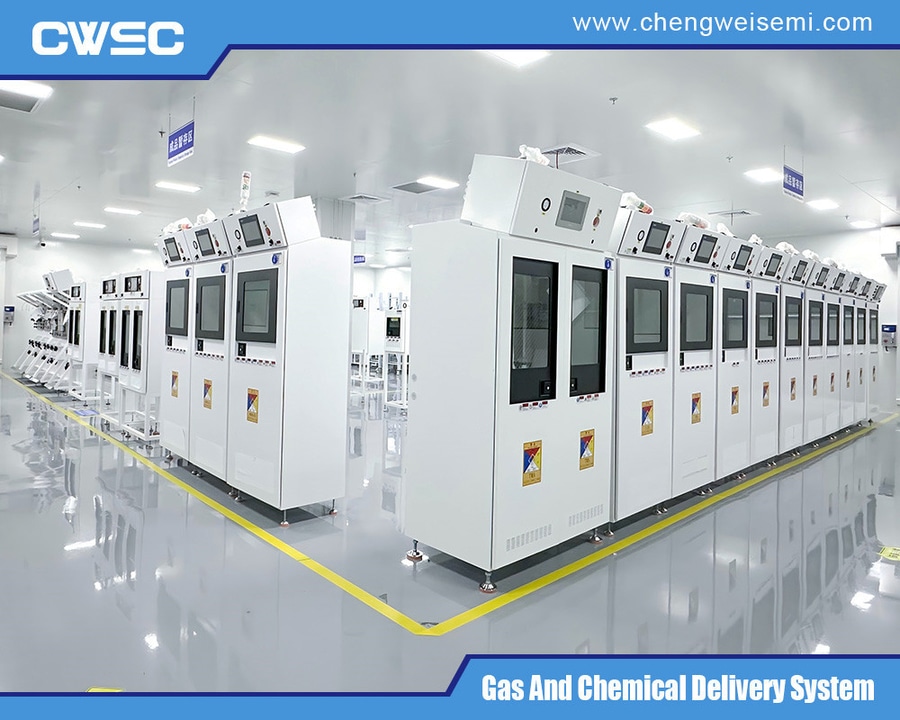
A semiconductor gas cabinet is a highly engineered enclosure designed to store gas cylinders safely, regulate delivery pressures, and monitor process conditions continuously. Far from a simple metal locker, a modern gas cabinet integrates precise fluid mechanics, automated electrical control systems, high-sensitivity life safety sensors, and ultra-high purity (UHP) component pathways. As advanced device nodes demand strict control over sub-parts-per-billion (ppb) contamination, the architecture of the semiconductor gas cabinet has evolved from basic containment boxes into intelligent, multi-layered process distribution nodes.
semiconductor gas cabinet manufacturer
semiconductor gas cabinet manufacturer
Mechanical and Structural Architecture
The physical shell of a semiconductor gas cabinet is built to withstand internal pressures and prevent external chemical release. Typically fabricated from 11-gauge or thicker cold-rolled steel, the cabinet enclosure features continuously welded seams to eliminate structural leak paths. The exterior surfaces are coated with chemical-resistant epoxy powder finishes to prevent corrosion from ambient humidity or exposure to aggressive chemical vapors.
The internal compartment is designed around an active negative-pressure exhaust architecture. Fabs mandate that a dedicated exhaust ventilation system continuously draws air through the cabinet, maintaining a minimum face velocity—typically 200 linear feet per minute (LFPM)—across the door openings and window panels. This dynamic negative pressure ensures that if any minor fitting leak develops within the cabinet, hazardous fumes are pulled directly into the facility’s scrubber or abatement system rather than escaping into the sub-fab area. The viewing window is constructed from fire-rated, wire-reinforced safety glass, allowing technicians to inspect cylinder connections visually without compromising the integrity of the secondary containment boundary. Furthermore, the interior features self-closing and self-latching mechanisms on doors to ensure containment is maintained automatically.
Ultra-High Purity (UHP) Gas Manifold Design
At the heart of the semiconductor gas cabinet is the gas panel or distribution manifold. This system must deliver gases without introducing even minute traces of foreign particulate matter, moisture, or oxygen, which can cause defects on a single nanometer-scale transistor. The entire wet path—any surface directly contacted by the process gas—is constructed from 316L VIM/VAR (Vacuum Induction Melted / Vacuum Arc Remelted) stainless steel. This specialty alloy exhibits extremely low background inclusions and is subjected to rigorous electropolishing processes to achieve an ultra-smooth, mirror-like inner surface with a typical surface roughness (Ra) of less than 5 to 10 micro-inches.
Electropolishing forms a dense, chromium-rich oxide passivation layer on the metal surface. This layer serves two functions: it minimizes the surface area where gas molecules can stick (moisture desorption), and it prevents aggressive gases like hydrogen chloride or fluorine from corroding the underlying metal matrix. Connections within the manifold are made using automated orbital TIG welding or high-purity metal-gasket face seal fittings (VCR). This eliminates threads, pockets, or dead legs where moisture or impurities can become trapped, facilitating uniform gas flow and rapid purging phases during cylinder change-outs.
Process Control Modules and Automated Purging Sequences
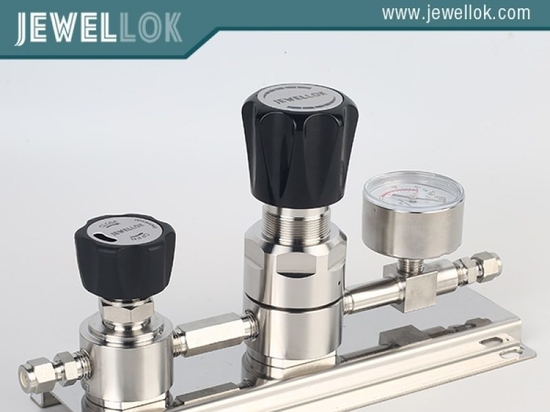
Managing gas lines requires sophisticated fluid regulation modules inside the panel. A standard high-purity manifold incorporates electronic mass flow controllers (MFCs), pneumatic process valves, diaphragm or bellows-sealed regulators, and electronic pressure transducers. The delivery pressure regulator downsteps the raw cylinder pressure—which can exceed 2,000 pounds per square inch (psi) for compressed gases—into a highly stable, controllable delivery pressure required by the point-of-use processing tools.
A defining feature of the automated semiconductor gas cabinet is its ability to perform self-contained, software-driven purging routines. Before a depleted gas cylinder can be disconnected, or before a new cylinder is integrated into the process loop, residual toxic vapors or ambient atmospheric air must be completely removed. The cabinet achieves this via a programmed cross-purge sequence. This routine utilizes a dedicated nitrogen purge line and an active vacuum generator (venturi or mechanical vacuum pump) to cycle the manifold repeatedly between high-pressure inert nitrogen injection and deep vacuum extraction. By executing dozens of these pressure-vacuum cycles automatically, the system dilutes any volatile residuals to concentrations below permissible exposure limits (PEL), protecting field technicians during cylinder change operations.
Integrated Life Safety Systems and Instrumentation
Industrial safety requires a multi-layered sensor matrix inside the enclosure. Gas cabinets are outfitted with highly specific electrochemical, infrared, or paper-tape gas detectors tuned to detect sub-parts-per-million concentrations of the specific gas stored within the enclosure. If a leak is recognized, the system triggers an emergency shutdown sequence, isolating the cylinder at its source via a pneumatic valve.
Beyond gas leak instrumentation, cabinets incorporate optical ultraviolet/infrared (UV/IR) flame detectors to identify pyrophoric fires immediately, such as silane ignition events. Thermal sensors monitor ambient temperature thresholds, while differential pressure switches continuously audit the exhaust ventilation system to ensure required face velocities do not drop. If exhaust airflow fails, or if an internal flame or gas leak is registered, the centralized controller commands an immediate closure of all process lines. These safety systems are hardwired to executive Emergency Power Off (EPO) systems and interlocked directly with pneumatic fail-safe valves, which close automatically if electrical power or pneumatic air pressure is severed.
semiconductor gas cabinet manufacturer
semiconductor gas cabinet manufacturer
Conclusion: Future Traces and Smart Fab Integration
As the semiconductor industry advances toward 2-nanometer nodes and beyond, the margins for process variation and hardware reliability continue to compress. The semiconductor gas cabinet is transitioning from a localized safety mechanism into a fully networked element of the smart fab. Modern architectures are increasingly embedding advanced IoT instrumentation, edge-computing microcontrollers, and prognostic health monitoring systems into the gas panel loop.
By analyzing real-time pressure decay rates, pneumatic response times, and ambient temperature gradients, predictive analytics can identify worn regulator diaphragms or microscopic valve seat erosion before a catastrophic failure or process disruption occurs. Through deep integration with overarching manufacturing execution systems (MES), the modern semiconductor gas cabinet provides continuous system health data. This approach maximizes tool uptime, lowers maintenance overhead, and ensures strict compliance with rigorous micro-contamination and occupational safety standards worldwide.
For more about semiconductor gas cabinet, you can pay a visit to Chengwei Semiconductor at https://www.chengweisemi.com/product/semiconductor-gas-cabinet-manufacturing-with-vmb-gas-cabinet-and-bsgs-gas-cabinet/ for more info.