
#Industry News
Advanced Engineering of Slurry Delivery Systems in Sub-3nm Semiconductor Fabrication
Advanced Engineering of Slurry Delivery Systems in Sub-3nm Semiconductor Fabrication
Advanced Engineering of Slurry Delivery Systems in Sub-3nm Semiconductor Fabrication
Introduction to CMP and Fluid Logistics
In modern semiconductor manufacturing, the drive toward sub-3nm node architectures has placed unprecedented demands on chemical mechanical planarization (CMP) processes. As feature sizes shrink to atomic scales, achieving absolute global planarity across multi-layered silicon wafers becomes a foundational prerequisite for subsequent lithographic exposure. CMP relies heavily on the synergistic combination of chemical etching and mechanical abrasion to remove excess materials—such as copper, tungsten, cobalt, and various dielectric films. The chemical component softens the surface layer, while nano-scale abrasive particles suspended in a liquid medium mechanically sweep away the reacted material.
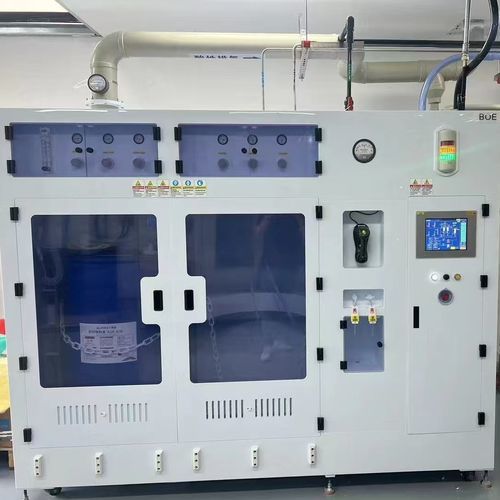
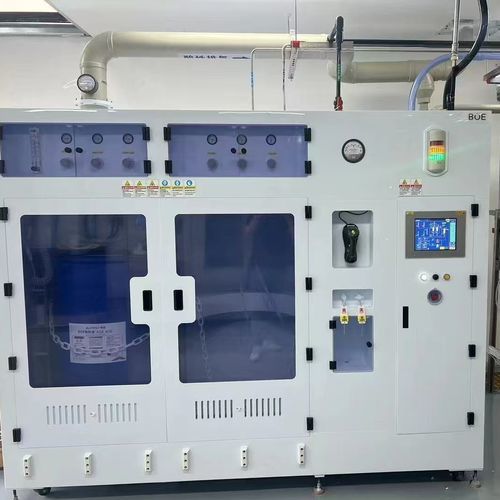
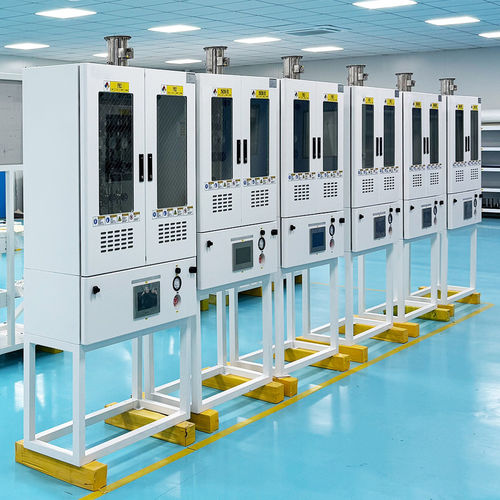
The critical link connecting bulk chemical management to the actual polishing pad is the Slurry Delivery System (SDS). An SDS is an ultra-high purity fluid engineering infrastructure engineered to transport, blend, and dispense highly sensitive abrasive suspensions from central chemical rooms directly to point-of-use (POU) equipment. Unlike standard industrial chemicals, chemical slurries are complex, non-Newtonian, colloidal suspensions containing highly concentrated abrasives like silica, alumina, or ceria. Managing these fluids requires an intricate balancing act between precise volumetric flow, uniform dispersion, chemical stability, and micro-contamination prevention, as any deviation can lead to catastrophic yield losses.
Slurry Delivery System
Slurry Delivery System
Fluid Dynamics and Rheological Management
The primary challenge in designing a Slurry Delivery System stems from the inherent rheological behavior of colloidal suspensions. Slurries exhibit time- and shear-dependent viscosity characteristics. If a slurry remains stagnant or experiences insufficient shear forces, the particles begin to settle out of the suspension under the influence of gravity. This phenomenon, known as particle sedimentation, leads to solid accumulation inside supply lines, dead legs, and valve cavities, resulting in severe distribution imbalances and clogging.
Conversely, if the fluid is subjected to excessive mechanical shear—such as that generated by high-RPM impellers or abrupt pressure drops across narrow orifices—the protective electrostatic or steric barriers surrounding the nano-abrasives are overcome. This triggers shear-induced coagulation, causing individual particles to aggregate into macro-scale clusters or ‘large particles’ (LPs). In a sub-3nm process environment, these agglomerated particles act as cutting elements on the wafer surface, creating micro-scratches, chatter marks, and line-opens that ruin entire production lots. Therefore, the fluid loop within an SDS must maintain a continuous, low-shear, uniform recirculation velocity (typically between 0.5 to 1.5 meters per second) to prevent both settling and aggregation.
Hardware Architecture and Piping Design
To sustain low-shear, continuous recirculation, the physical infrastructure of a Slurry Delivery System must avoid standard piping paradigms. Every component along the fluid path is evaluated for its impact on boundary-layer dynamics. Ultra-high purity fluoropolymers, primarily Perfluoroalkoxy (PFA) and High-Purity Polyvinylidene Fluoride (PVDF), are selected for chemical delivery lines due to their exceptional chemical inertness, smooth surface finish, and minimal trace-metal leaching properties. Mechanical joints are minimized in favor of continuous orbital welding or non-wetted flare connections to maintain an uninterrupted inner surface profile.
Piping layouts are engineered to eliminate ‘dead legs’—stagnant pockets of fluid where slurry can pool and dry out. Any dried slurry will eventually flake off as aggregate clusters, migrating back into the mainstream supply loop and acting as micro-contamination sources. Bends and elbows are executed with large bend radii (typically 5D or 10D) rather than sharp 90-degree fittings to maintain laminar or transitional flow states and prevent localized shear spikes. Valves within the Slurry Delivery System must feature specialized non-wetted, weir-style or diaphragm designs that isolate the mechanical actuator from the fluid path while providing a smooth, self-draining internal cavity.
Pumping Technologies and Shear Prevention
The choice of pumping technology represents one of the most critical decisions in Slurry Delivery System engineering. Conventional centrifugal or positive-displacement piston pumps are unsuitable for CMP slurry loops due to the high-shear contact zones between impellers, seals, and casings. Instead, modern systems utilize specialized low-shear pumping mechanisms. Among the most widely adopted are levitating-bearingless centrifugal pumps and pneumatic bellows pumps.
Levitating-bearingless pumps utilize magnetic levitation to suspend the rotor inside the pump housing, eliminating all mechanical bearings, shafts, and dynamic seals. Without physical contact points, the fluid experiences minimal mechanical friction and shear stress, preserving the particle size distribution (PSD) of the abrasive suspension over millions of cycles. Pneumatic bellows pumps, on the other hand, utilize alternating pressurized air expansions to gently displace fluid inside flexible fluoropolymer bellows. These pumps operate at low stroke frequencies to minimize internal fluid velocities and turbulence, ensuring that delicate colloidal formulations remain structurally uniform from the repository to the CMP tool pad.
Advanced Filtration and Contamination Control
Filtration within a Slurry Delivery System is fundamentally a multi-stage, classification process rather than simple particulate removal. The objective is not to capture all solid matter, but rather to extract large particle counts (LPCs) and agglomerated clusters while allowing the active, nominal nano-abrasives to pass through unobstructed. This requires highly specialized depth filters and pleated membrane filters with precisely defined absolute rating cut-offs, often in the range of 0.1 to 0.5 microns depending on the CMP application.
Filter configurations are typically deployed in serial topologies, starting with coarse depth filters at the bulk supply station to capture aggregated material formed during chemical transport or drumming. Intermediate classification filters are placed along the main recirculation loop, while ultra-fine point-of-use (POU) filters are installed immediately upstream of the dispense nozzles at the polishing tables. Monitoring pressure differentials across these filter housings is critical; a rising pressure drop indicates filter loading or localized cake formation, which can alter the slurry’s volumetric delivery and shear profiles if left unmanaged.
Analytical Instrumentation, Automation, and Monitoring
Maintaining chemical uniformity requires an automated array of analytical instruments integrated directly into the Slurry Delivery System. Real-time sensor networks track key physical and chemical characteristics, including pH, electrical conductivity, density, and temperature. For advanced node processes, automated blending modules execute precision dosing of deionized water (DIW), chemical additives, and concentrated slurry matrices using closed-loop mass flow controllers (MFCs) and high-accuracy balance scales.
Furthermore, inline optical particle counters (OPCs) are utilized to track LPC trends without interrupting the production flow. If an escalation in large particle counts is detected, indicating localized aggregation or filter breakthrough, the automated control network can immediately trigger an alert, divert the affected fluid path to an isolation loop, or engage backup filtration systems. This level of automated feedback loop ensures that the physical properties of the slurry remain strictly within acceptable statistical process control (SPC) boundaries before the fluid ever reaches a high-value production wafer.
Slurry Delivery System
Slurry Delivery System
Conclusion and Future Trends
The Slurry Delivery System has evolved from a supportive utility into a fundamental process-enabling technology within advanced semiconductor foundries. Managing the delicate equilibrium between fluid kinetics, mechanical safety, and micro-contamination control is vital for achieving sustainable yields at sub-3nm dimensions. As the industry advances toward next-generation architectures like Gate-All-Around (GAA) nanosheets and Backside Power Delivery Networks (BSPDN), the complexity of CMP processes will only multiply, requiring even more sophisticated slurry chemistries.
Future SDS development will likely focus on integrating machine learning algorithms for predictive filtration maintenance, utilizing advanced smart sensors capable of continuous multi-spectral chemical analysis, and refining fluid mechanics to manage highly abrasive, custom-engineered suspensions. By addressing these fluid logistical challenges with strict engineering rigor, Slurry Delivery System technologies continue to bridge the gap between chemical design and physical device fabrication.
For more about slurry delivery system, you can pay a visit to Chengwei Semiconductor at https://www.chengweisemi.com/slurry-delivery-system-sds/ for more info.