
#Industry News
Dust-Free Blasting: Miracle Solution or Industrial Mirage?
Examining the Reality Behind "Zero-Dust" Surface Preparation Technologies in the Age of Clean Manufacturing
In the age of clean manufacturing, dust-free blasting technology has garnered significant attention for its promise of eliminating abrasive dust—a persistent challenge in industry. But does this revolutionary approach truly deliver on its claims, or is the perfect solution still out of reach?
The Challenge of Blasting Dust
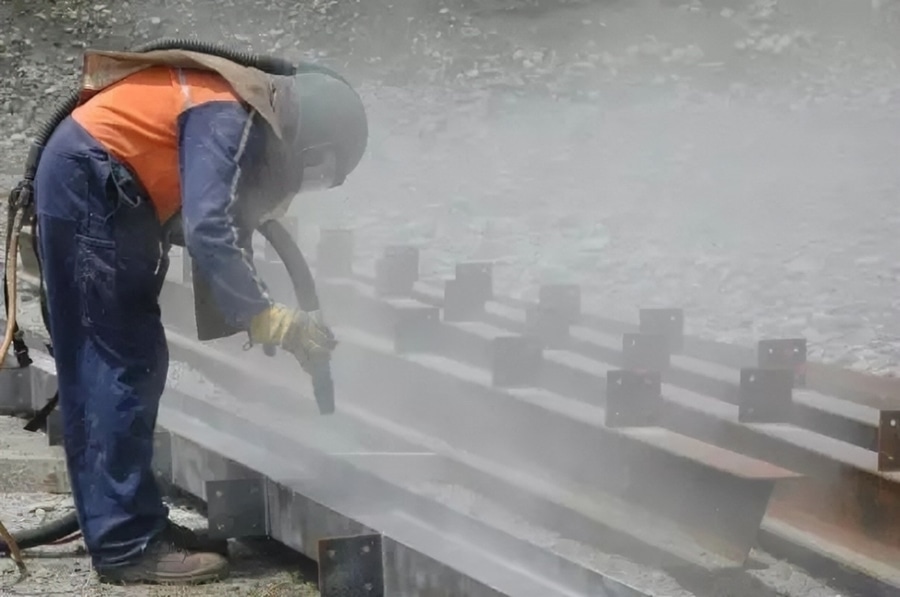
Conventional blasting operations generate significant dust, leading to:
Respiratory health risks for workers and communities
Environmental contamination from particulate dispersion
Reduced visibility affecting work quality
Cross-contamination of manufacturing processes
High costs for dust collection and disposal
Regulatory compliance challenges
These issues have driven innovation in "dust-free" or "dustless" blasting technologies, but the critical question remains: do these solutions eliminate the problem or merely reduce it?
How Dust-Free Technologies Work
Modern systems employ three primary approaches:
Water-Based Suppression: Uses water to encapsulate abrasive media or create wet curtains, preventing dust dispersion.
Vacuum-Integrated Systems: Feature containment shrouds, vacuum extraction at the source, and filtration to capture particles.
Low-Dust Media: Sponge-based or heavier formulations designed to minimize airborne particles.
Performance Reality
Independent testing shows advanced systems typically achieve:
80-95% dust reduction compared to conventional dry blasting
Improved air quality but not complete elimination of respirable particles
Variables like substrate properties, humidity, equipment maintenance, and operator technique significantly impact effectiveness.
Environmental Trade-offs
While dust-free blasting reduces local air pollution, it introduces new considerations:
Water Usage: High consumption and potential contamination in water-scarce regions
Energy Consumption: Vacuum systems require more energy, increasing carbon footprints
Life Cycle Impact: Studies suggest environmental burdens shift rather than disappear, but overall profiles often improve.
Economic Considerations
Implementing dust-free blasting involves:
Higher initial equipment costs (30-50% more than conventional systems)
Increased operational expenses for water, energy, or specialized media
Additional training and maintenance requirements
Offsetting benefits include reduced regulatory costs, lower cleanup expenses, and improved work quality.
Case Studies
1. Shipyard in Northern Europe: Water-injection blasting reduced dust by 85% but required unexpected water treatment investments.
2. Aerospace Manufacturer: Vacuum-integrated blasting provided excellent dust control but faced maintenance challenges.
3. Bridge Maintenance Contractor: Sponge media effectively contained lead-based paint removal but increased material costs.
Future Directions
Advancements may include:
Real-time dust monitoring and AI optimization
Hybrid suppression technologies
Environmentally friendly suppression agents
Closed-loop water reclamation systems
Conclusion
Dust-free blasting technologies represent a significant step forward in industrial surface preparation, offering meaningful environmental and health benefits. While they dramatically reduce dust emissions, they do not eliminate them entirely. Companies pursuing clean manufacturing should adopt these technologies with realistic expectations, recognizing their value in supporting operational efficiency and sustainability goals. The path toward truly dust-free blasting continues to evolve, bringing industry closer to this ideal with each technological advancement.