
#Industry News
Revolutionizing 3D Printing Finishes: How Ceramic Beads Are Transforming Surface Treatment
Discover how ceramic bead blasting delivers superior surface smoothing, enhanced durability, and premium finishes for 3D-printed parts across industries.
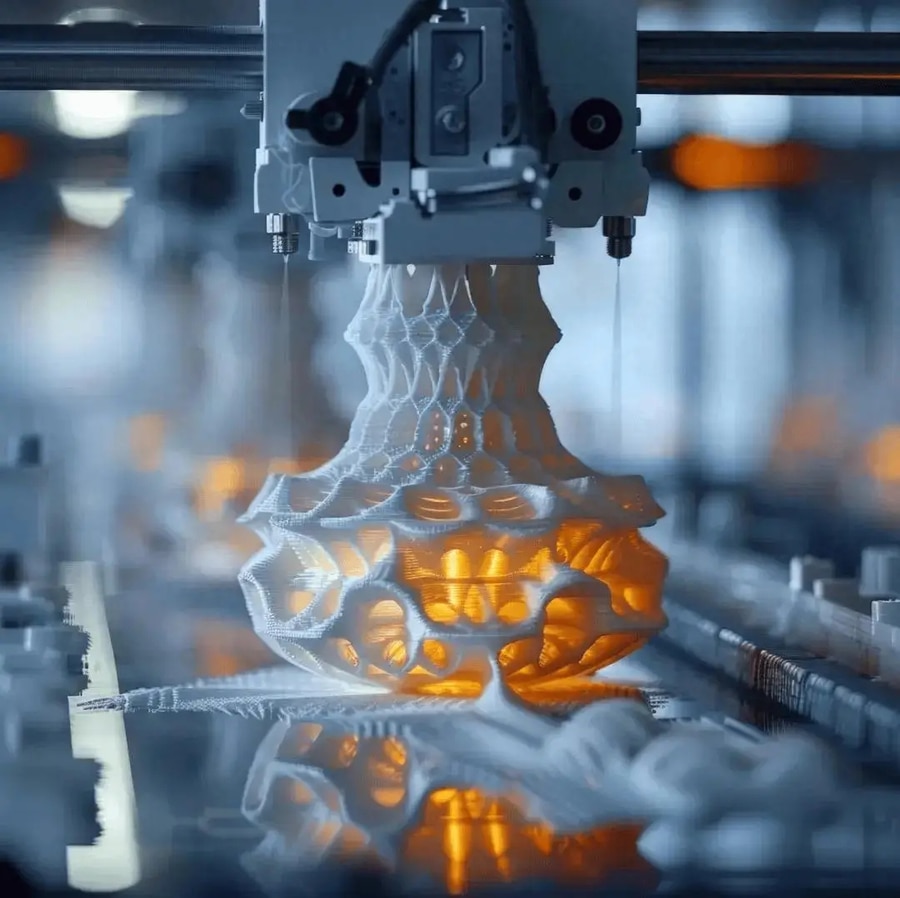
Additive manufacturing, commonly known as 3D printing, has revolutionized industries from aerospace and medical to automotive and consumer goods. However, while 3D printing offers unprecedented design freedom, it also introduces new challenges—particularly in surface quality. Rough surfaces, visible layer lines, and inconsistent finishes can limit the functional and aesthetic value of printed parts. Enter ceramic bead blasting, a technology that is redefining the way 3D-printed parts are finished.
With their unique combination of precision, durability, and gentleness, ceramic beads offer a groundbreaking solution for achieving superior surface quality without compromising part integrity. In this article, we explore how ceramic beads are setting new standards for post-processing 3D-printed components.
The Challenge of 3D-Printed Surface Finishes
Despite the technological advancements in additive manufacturing, printed parts often exhibit:
* Layer-by-layer texture
* Surface roughness unsuitable for mechanical or cosmetic purposes
* Support material remnants or uneven textures
* Micro-porosities and surface inconsistencies
These imperfections can negatively affect mechanical performance, sealing capabilities, biocompatibility, aerodynamic behavior, and visual appeal. Traditional post-processing methods, such as sanding, polishing, or chemical smoothing, are either labor-intensive, inconsistent, or incompatible with complex geometries.
Why Ceramic Bead Blasting Is a Game Changer
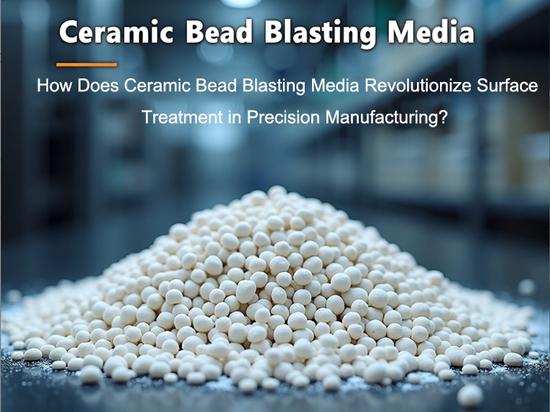
Ceramic bead blasting offers a clean, efficient, and scalable method to finish 3D-printed parts. By propelling fine ceramic beads at controlled pressures against the part’s surface, the process gently removes surface imperfections, smooths out layer lines, and refines textures without eroding delicate features or dimensional accuracy.
Key advantages of ceramic bead blasting include:
1. Uniform Surface Smoothing
Ceramic beads impact the surface uniformly, providing consistent texture refinement across the entire part, even on complex geometries and internal structures.
2. Minimal Material Removal
Unlike aggressive abrasives, ceramic beads are engineered to polish rather than cut. They remove minimal material, preserving dimensional tolerances and intricate design features crucial for functional applications.
3. Enhanced Aesthetic Quality
Parts treated with ceramic beads acquire a matte, satin-like finish that enhances the visual appeal. This is particularly important for consumer-facing products and high-end prototypes.
4. Improved Mechanical Properties
Smoother surfaces reduce stress concentrations and potential crack initiation sites, thereby improving the mechanical durability and fatigue resistance of 3D-printed components.
5. Compatibility with Diverse Materials
Ceramic bead blasting is highly effective across a wide range of 3D printing materials, including:
* Metals (such as titanium, aluminum, stainless steel)
* Polymers (such as nylon, PEKK, and PEEK)
* Composite materials
* Resin-based parts from SLA, DLP, or similar technologies
Applications Across Industries
The ability to finely control surface finishes has unlocked new opportunities for 3D-printed parts:
In aerospace, blasted metal parts exhibit improved aerodynamic performance and fatigue resistance.
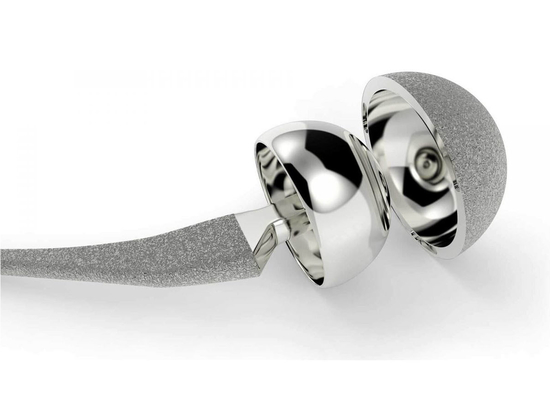
In medical devices, smoother surfaces enhance biocompatibility and facilitate sterilization.
In automotive, post-processed components meet both functional tolerances and aesthetic demands.
In consumer electronics, bead-blasted parts deliver premium finishes that enhance brand value.
Sustainability and Efficiency Benefits
Ceramic beads are long-lasting, recyclable, and generate less dust compared to traditional blasting media. This reduces waste disposal costs and contributes to cleaner, safer manufacturing environments. Furthermore, ceramic bead blasting processes can be easily automated, enabling manufacturers to scale production without compromising quality.
Conclusion: The New Standard in 3D Printing Surface Finishing
As additive manufacturing matures, the expectations for surface quality and performance are higher than ever. Ceramic bead blasting provides a sophisticated yet practical solution to these demands, offering manufacturers a competitive edge through superior surface finishing.
By integrating ceramic bead technology into post-processing workflows, companies can achieve the perfect balance between form, function, and efficiency—turning good 3D-printed parts into exceptional ones.
Tags
ceramic bead blasting 3D printing
3D printed parts surface treatment
ceramic media post-processing
additive manufacturing finishing solutions
surface finishing for metal 3D prints
polishing 3D printed parts
industrial 3D printing post-processing
advanced surface smoothing techniques
ceramic blasting for polymers
improving 3D printing aesthetics