#Industry News
Wind Turbine Slip Ring vs Industrial Robot Slip Ring | Design Differences and Application Challenges
Application Scenario Challenges and Optimization Design Strategies for Industrial Rotary Conductors
Wind power and industrial robots represent two core high-end application scenarios for precision slip rings. Divergent operating conditions, environmental requirements, service life standards and motion logic create completely differentiated demands for slip ring performance in power load resistance, environmental adaptability, wear life and signal stability. General-purpose slip rings fail to fit both extreme scenarios, easily causing corrosion, signal jitter, stuttering and accelerated aging. This article summarizes the key design differences, application challenges and customized solutions for wind turbine and industrial robot slip rings.
1. Core Design Differences Between the Two Slip Ring Types
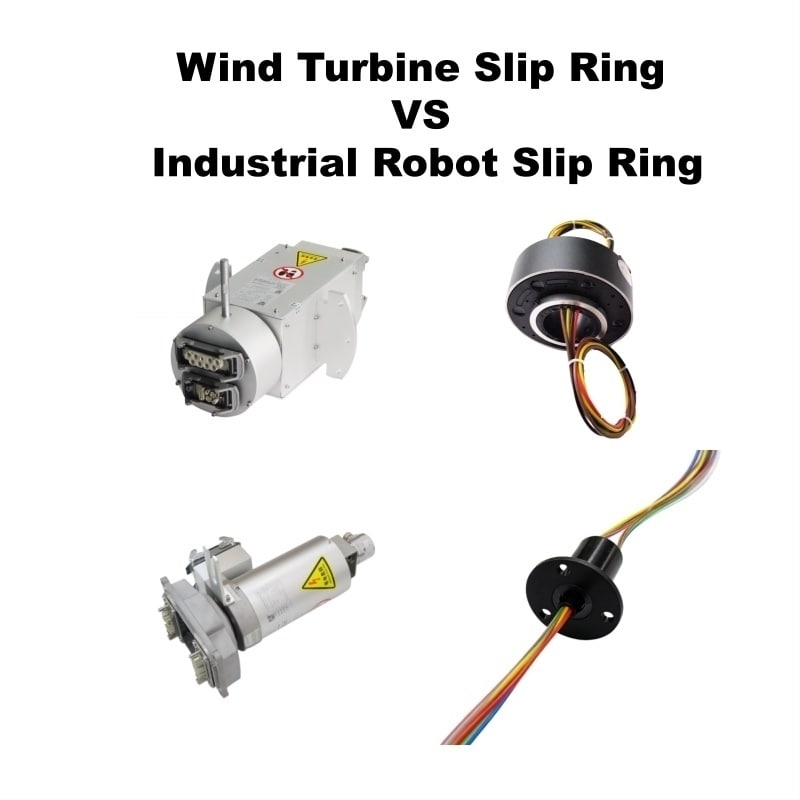
Wind turbine slip rings prioritize ultra-long service life, extreme outdoor durability and continuous high-power transmission. In contrast, industrial robot slip rings focus on clean-operation adaptability, high-frequency fatigue resistance and high-precision signal transmission.
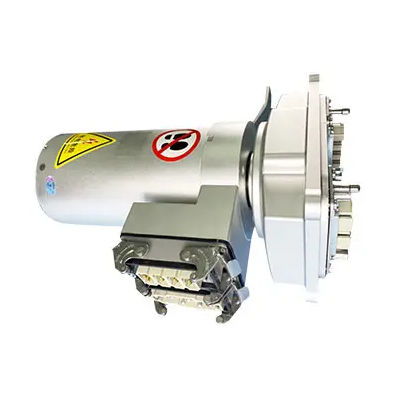
Wind turbine slip rings undertake high-current, high-voltage power transmission for megawatt-level units. They operate 24/7 in harsh outdoor environments including offshore salt spray, extreme temperature alternation, sandstorms and high humidity, requiring 20-year service life and minimal maintenance. Low-speed continuous rotation and long-term stable operation are their main working characteristics, with core challenges including corrosion, insulation aging and high offshore maintenance costs.
Industrial robot slip rings feature medium-low power output and prioritize precise signal transmission. Designed for indoor clean workshops in 3C, pharmaceutical and precision manufacturing industries, they require oil-free, dust-free and low-noise operation. These slip rings withstand high-speed reciprocating rotation and frequent start-stop commutation over millions of revolutions, with major pain points including signal jitter, stuttering and contact fatigue failure under frequent dynamic loads.
2. Wind Turbine Slip Ring: Extreme Weather Resistance and Ultra-Long Maintenance-Free Design
Wind turbine slip rings are installed on wind turbine nacelles and hubs to deliver stable power, control signals and sensor data for pitch systems. Given the high cost of offshore wind turbine shutdown and maintenance, wind power slip rings are engineered for extreme durability and long-term stability.
Adopting fully sealed integrated anti-corrosion structures and high-strength anti-corrosion alloy housings with passivation and anti-rust spraying treatments, these slip rings effectively block salt spray, moisture and dust intrusion. The multi-layer sealing structure prevents insulation aging, leakage and short-circuit risks under all-weather outdoor conditions.
Matched with high-strength wear-resistant contact pairs and long-acting self-lubricating systems, they support tens of millions of rotation cycles and 20-year full-machine service life. Optimized high-current loops reduce heat generation and voltage drop during high-power operation, lowering shutdown frequency and overall wind farm operation and maintenance costs.
3. Industrial Robot Slip Ring: Clean, Precision and High-Frequency Anti-Fatigue Design
Robot slip rings are widely applied in 6-axis industrial robots, collaborative robots and sorting equipment for clean and precision production lines. Different from wind power equipment, robots require flexible high-frequency reciprocating movement and zero-pollution operation.
Robot-specific slip rings adopt oil-free dry wear-resistant structures without traditional grease lubrication, eliminating oil overflow and falling debris to meet dust-free workshop standards. Their compact and lightweight structure adapts to narrow robot built-in installation spaces, reducing operating damping and equipment noise.
The optimized elastic contact structure improves anti-fatigue and anti-impact performance, resisting frequent start-stop load fluctuations to avoid stuttering, signal interruption and data jitter. Equipped with full-range shielding design, they isolate on-site electromagnetic interference, ensuring stable and high-precision transmission of servo control, vision and IO signals for automated production.
4. Case Study: Custom Slip Ring Solves EtherCAT Bus Faults in Packaging Machines
In high-speed packaging lines for food, pharmaceutical and daily chemical industries, EtherCAT bus systems require ultra-high real-time signal stability. Ordinary general-purpose slip rings often cause intermittent faults including bus errors, data loss and sudden shutdowns, which cannot be detected by conventional electrical debugging and severely reduce production efficiency.
Project Background & Faults
A large daily chemical manufacturer’s high-speed pillow packaging lines with ordinary imported slip rings suffered frequent random EtherCAT failures after one year of operation, including slave station offline, frame loss and emergency shutdown. Restarting achieved temporary recovery, but repeated faults increased defective rates and maintenance costs.
Root Cause Analysis
Conventional single-contact slip rings produce slight vibration and radial runout during long-term high-speed rotation, causing dynamic contact resistance fluctuations. Tiny resistance mutations break the continuous and high real-time transmission requirements of EtherCAT differential signals, resulting in intermittent communication failures.
Customized Slip Ring Solution
Targeting high-speed continuous operation and complex electromagnetic environments of packaging equipment, we launched a dedicated EtherCAT slip ring solution:
First, a multi-point parallel elastic contact structure offsets high-speed vibration and radial deviation, maintaining stable physical contact and eliminating instantaneous signal disconnection.
Second, high-purity gold-plated wear-resistant contacts deliver ultra-low and stable contact resistance, adapting to high-frequency EtherCAT signal transmission and avoiding data dropout.
Third, customized internal shielding structures isolate EMC interference, ensuring complete and real-time bus data transmission in complex workshop environments.
Field Application Effect
After replacement, 12 months of full-load operation verified zero EtherCAT faults, zero data loss and zero unplanned shutdowns. The production line operating rate increased by over 12%, while the defective rate dropped below 0.1%. The customized slip ring extends maintenance cycles significantly, reducing long-term operational costs.
5. Conclusion
Wind turbine slip rings pursue corrosion resistance, heavy-load stability and ultra-long maintenance-free performance for harsh outdoor heavy-duty scenarios. Industrial robot slip rings focus on cleanliness, high-frequency anti-fatigue and high-precision signal transmission for indoor automated production. Although similar in appearance, the two differ completely in material selection, structure and process and cannot be universally replaced.
Professional scenario-customized slip rings are essential to eliminate hidden equipment faults. We provide targeted slip ring solutions for wind power, industrial robots and packaging automation, ensuring stable and efficient operation of high-end automated equipment.