#Product Trends
How Micro-Hybrid’s NDIR Technology Redefines Refrigerant Gas Detection
Refrigerant gas detection requires reliable performance across low leak concentrations and high exposure levels.
Micro-Hybrid’s NDIR sensor technology uses an innovative multiple-reflection optical design to measure ammonia and other refrigerants precisely, even within compact sensor geometries. The result is a stable alternative to electrochemical sensing for demanding refrigeration and industrial safety applications.
Moving Beyond Electrochemical and Catalytic Limitations
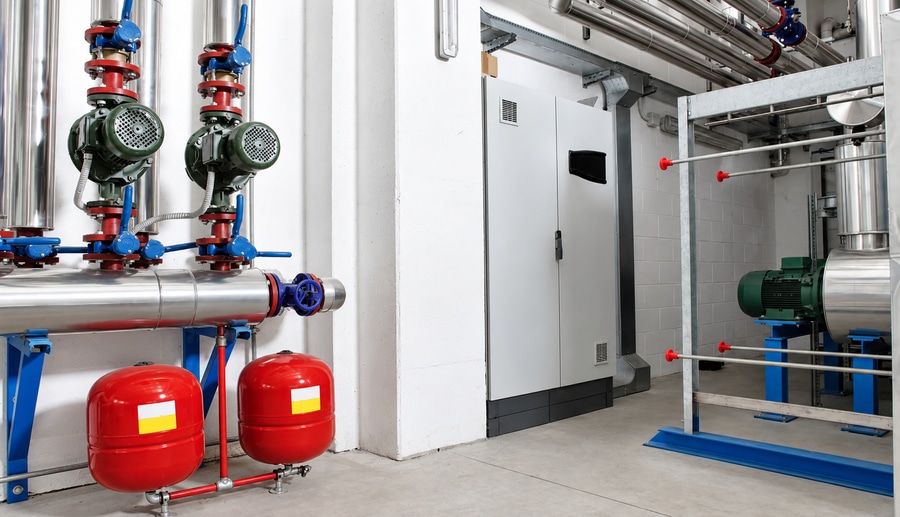
Monitoring refrigerant gases in industrial cooling is critical for personnel safety and plant efficiency. While optical infrared sensing is well established for modern fluorinated refrigerants (HFCs, HFOs), ammonia (NH₃) has long been one of the most challenging gases to measure using compact infrared technology. As a result, much of the market has relied on electrochemical sensing.
Electrochemical sensors became widely adopted due to their availability and familiarity. However, their limitations are well known. Operation depends on electrodes, membranes, and ongoing chemical reactions, making them inherently sensitive to aging, humidity, contamination, poisoning, and cross-gas interference. Cross-sensitivity, in particular, is difficult to eliminate completely and must often be managed through compensation strategies.
Why Has NH₃ Been Difficult for NDIR?
NDIR technology offers a fundamentally stable sensing principle and is widely used across various refrigerant absorption bands. However, ammonia presents unique optical challenges compared with standard refrigerants. NH₃ has relatively low absorption around its relevant absorption band near 10.5 µm, while compact infrared sources provide only limited optical output in this spectral region. In conventional straight-path optical designs, the combination of low source intensity and limited NH₃ absorption can result in signals that are too small for reliable detection within compact sensor geometries.
A New Optical Approach
Micro-Hybrid addresses these limitations through an advanced multiple-reflection optical design. This approach significantly increases the effective optical path length within a compact form factor. The resulting signal enhancement enables reliable detection across refrigerant-specific absorption bands - including the difficult 10.5 µm NH₃ region - without relying on chemical reactions, high operating temperatures, or large sensor housings.
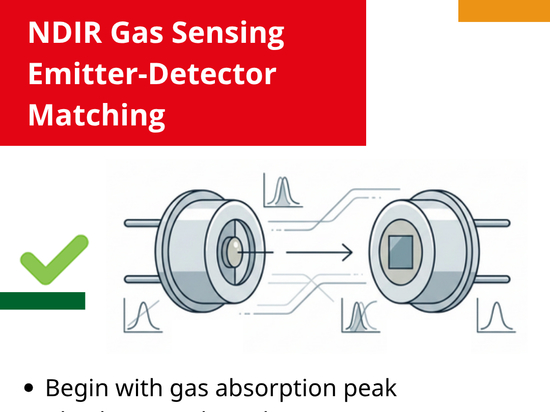
Beyond ammonia, Micro-Hybrid NDIR technology supports the measurement of a broad range of refrigerant gases used in commercial and industrial cooling systems. This includes common fluorinated refrigerants such as HFCs and HFOs, as well as natural refrigerants including CO₂ and hydrocarbons. Each gas has characteristic infrared absorption bands, enabling targeted optical measurement with the appropriate emitter, optical path, filter configuration, and detector. This gives system developers a flexible foundation for building leak-detection and process-monitoring solutions across multiple refrigeration platforms.
A New Performance Benchmark
The resulting NDIR sensor platform delivers performance characteristics that are difficult to achieve with electrochemical technologies:
Wide measurement range: 0–30,000 ppm, supporting trace detection and high-concentration industrial environments.
High sensitivity: detection limit ≤ 30 ppm at zero point.
Fast response: T90 < 30 seconds for real-time monitoring.
Fine resolution: 1 ppm digital resolution.
Strong focus on accuracy: high measurement precision is critical for gas detection systems, where dependable alarm behavior matters more than simply maximizing operating lifetime.
Excellent stability: long-term drift ≤ ±450 ppm per year.
Strong linearity: ≤ ±300 ppm across the measurement range.
Reliable repeatability: ≤ ±150 ppm.
Read the rest of thiy entry on our blog...