#Industry News
Waste statistics in 2025: Key data, facts & global trends
Waste statistics in 2025: Key data, facts & global trends
Circular economy, Waste recycling
Waste statistics in 2025: Key data, facts & global trends
One only needs to look at the waste statistics of all kinds and recycling statistics to understand that humanity faces a growing crisis, with serious environmental, economic, and social repercussions. Waste production continues to grow steadily, especially in urban areas, as we see in our streets. The worst part is that a large proportion of this waste is not managed properly, contaminating soil, water, and air…
It is crucial to take urgent measures to reduce our waste. Optimising its management is imperative. It is now unquestionable: let us move from a linear economy to a circular economy.
Total waste generated worldwide
Each year, according to the Grupo Banco Mundial, society discards 2,01 billion tonnes of municipal solid waste worldwide, and 33% of that figure is not managed in an environmentally safe manner. Each person throws away an average of 0.74 kilograms annually, although this varies between 0,11 and 4,54 kilograms.
There is a correlation between waste generation and income level. High-income countries — comprising 16% of the total population — produce around 34%, that is, 683 million tonnes of the world’s waste.
Projected growth in waste
The Grupo Banco Mundial forecasts an increase in global waste to reach 3,4 billion tonnes by 2050, more than double the growth of the world population. While daily per capita waste generation in high-income countries is estimated to increase by 19% by 2050, the total amount of waste generated in low-income countries is expected to triple.
The regions with the highest waste growth are Sub-Saharan Africa, South Asia, the Middle East, and North Africa, where total waste generation is expected to triple, double, and double respectively by 2050.
AD 4nXciys0WHVxI4Avcc9BjH 7L7kKCTISnVTAbIkn5ltrmCJV4dtWBEXqmncYlS XtQ7yolDT1nfRsGVN8sMfbJXlekZb eiOZldZDKGqZXf04enJ8Ik6CTokU2DKWzkWYZMOjLJgVCs
Caption 1: The World Bank estimates that the total amount of waste generated in low-income countries will increase more than threefold by 2050. In its report “What a Waste 2.0: A Global Snapshot of Solid Waste Management to 2050”, it predicts that over the next three decades, and thanks to economic growth, waste levels will triple and double, respectively, in sub-Saharan Africa and South Asia. In these regions, more than half of the waste is currently dumped in open landfills, and the trajectory of their growth will have significant environmental, health and prosperity impacts, requiring urgent action. In regions with high-income countries, such as North America, Europe and Central Asia, waste levels are expected to rise more gradually. Source: World Bank (https://datatopics.worldbank.org/what-a-waste/)
In these areas, more than half of the waste is currently dumped in open landfills, which will have negative repercussions for the environment, health, and prosperity. Urgent measures are needed to address this.
Statistics by type of waste
If not properly disposed of or recycled, any waste, especially hazardous waste, can cause pollution problems, health risks, and unfortunately, depletion of natural resources. No one will remain unmoved by these data:
Plastic pollution
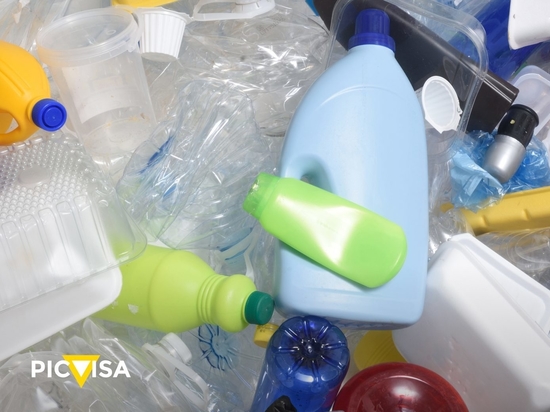
In 2024 alone, humanity generated approximately 400 million tonnes of plastic waste, according to OECD data, which forecasts exceeding 408 million in 2025. The percentage of plastic waste in the world is surprising: it is estimated to represent 10% of total waste, according to an OECD report. Plastic pollution statistics are also alarming, as plastic waste can disrupt habitats and natural processes, reducing ecosystems’ ability to adapt to climate change, directly affecting livelihoods and the wellbeing of millions of people.
Food waste
The Food and Agriculture Organization of the United Nations (FAO) estimates that approximately one-third of food produced globally for human consumption is lost or wasted each year, equivalent to about 1.3 billion tonnes. According to food waste statistics, this figure represents around 17% of total food production.
Food waste statistics in America are revealing. Recycle Track Systems estimates that around 220 million tonnes of food are lost or wasted each year in Latin America and the Caribbean, equivalent to 330 kg per person. On the other hand, food waste statistics in the United States show that about 60 million tonnes of food are wasted annually, with over 80% of Americans discarding edible food due to confusion over date labels.
Food waste has a significant negative impact on the environment and climate, as from agricultural production to consumption it produces greenhouse gases, including emissions from waste treatment, such as in landfills. According to the World Wildlife Fund (WWF), food waste contributes 10% of global greenhouse gas emissions. Additionally, it consumes 25% of all freshwater resources.
E-Waste
E-waste statistics are overwhelming. Global e-waste generation is increasing five times faster than documented recycling, according to the United Nations’ Global E-waste Monitor (GEM). In 2022 alone, a total of 62 million tonnes of electronic waste were produced, 82% more than in 2010. This figure is expected to increase by 32% by 2030 if no measures are taken. In Europe alone, more than 10 million tonnes of e waste are expected to be discarded in 2025, with a 20% increase in per capita generation, rising from 5,6 kg to 6,7 kg per inhabitant per year.
Textile & fabric waste
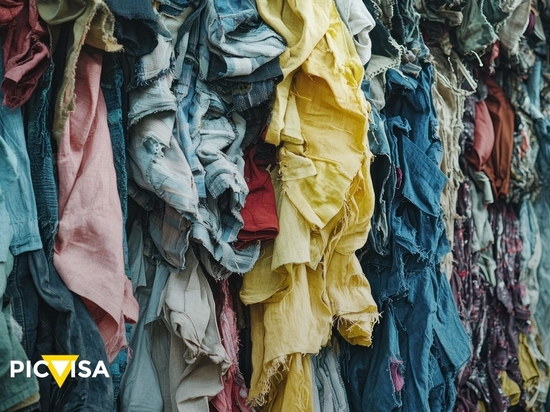
Textile waste statistics are striking. Only 0,3% of materials used by the textile industry come from recycling. Globally, this industry consumes 3,25 billion tonnes of resources annually to produce increasingly ephemeral items, according to a report by Circle Economy and the H&M Foundation. Responsible for up to 8% of global greenhouse gas emissions, the fashion industry consumes enormous amounts of water, 215 billion litres annually, equivalent to 86 million Olympic swimming pools, and uses thousands of chemicals, many harmful to human health and ecosystems. Fast fashion waste statistics highlight the urgent need for sustainable practices in the industry.
Recycling & composting statistics
According to the 2024 Global Waste Management Outlook (GWMO 2024) report by the United Nations Environment Programme (UNEP), municipal solid waste generation is expected to increase from 2,3 to 3,8 billion tonnes from 2023 to 2050. This year, if urgent global waste management measures are not taken, the hidden costs of pollution, unhealthiness, and climate change caused by poor waste disposal practices could nearly double. One fact: only 9% of plastic is successfully recycled, according to the OECD’s Global Plastics Outlook report.
In the EU, the percentage of municipal waste recycled increased from 19% in 1995 to 48% in 2022, while the percentage of waste sent to landfill decreased from 61% to 23% in the same period. These are data from the European Commission, which highlights that Germany, Slovenia, Austria, the Netherlands, and Sweden are the member countries that recycle the most municipal solid waste (MSW).
Regarding food waste, composting is a sustainable way to reduce it and obtain natural fertilizer for plants and gardens. According to Eurostat garbage statistics, in 2023 the European Union generated 511 kg of municipal waste per capita, of which only 17.5% was composted.
Caption 2: Increase in municipal waste between 2013 and 2023 in the EU, figures per country expressed in kilograms per capita (kg per capita). Source: Eurostat.
According to the Bio-waste in Europe report by the European Environment Agency, nearly 12 million tonnes of compost are produced annually from municipal waste in the EU, mainly in Austria, Belgium, Germany, Italy, and the Netherlands. In other countries, compost is mainly produced from agricultural and food industry waste.
Waste management trends and innovations
Digitalisation is transforming how cities and businesses manage their waste. Digital platforms and mobile apps enable citizens to actively participate by correctly separating waste at source and reporting collection issues. Smart waste management systems equipped with IoT sensors provide real-time data on container capacity and waste status, improving operational efficiency and reducing costs.
For example, composting will play a key role in the development of next-generation biorefineries. These facilities use waste, by-products, and secondary streams to obtain a new generation of bioproducts that replace their chemically produced counterparts.
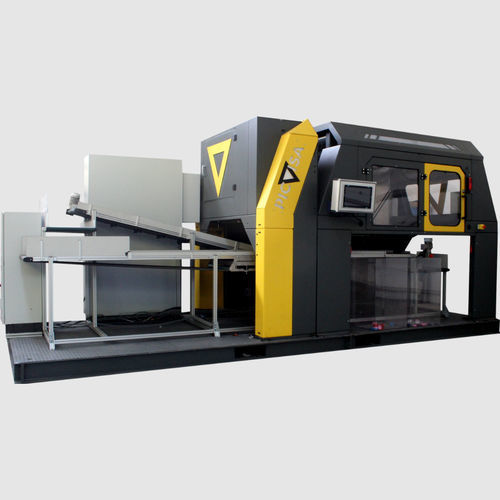
The combination of artificial intelligence, chemical recycling, and Waste-to-Energy (WtE) technologies — capable of converting non-recyclable waste into usable forms of energy, including heat, fuels, and electricity — promises to revolutionise waste management, creating a positive impact on both the environment and the global economy. Emerging technologies to optimise waste management, such as those marketed by PICVISA, are paving the way towards a more sustainable future.