#Industry News
Understanding Material Recovery Facilities (MRF) and why they matter
Understanding Material Recovery Facilities (MRF) and why they matter
Understanding Material Recovery Facilities (MRF) and why they matter
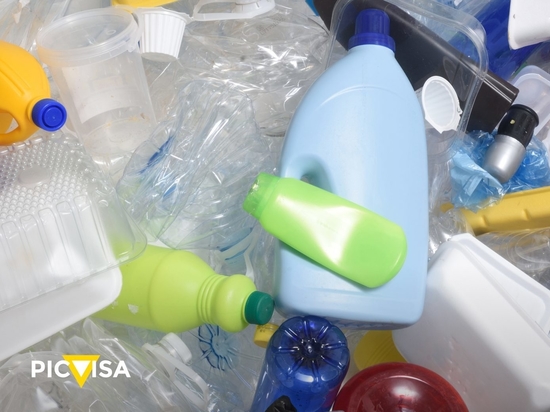
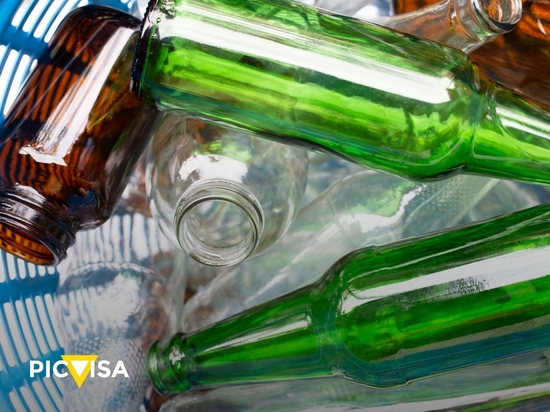
Fortunately, before throwing anything away, our minds switch to “recycling mode” to decide where to dispose of it: the bin for organic waste, the one we’ve chosen for metal and plastic, the spot where we leave bottles-and perhaps some broken glass-the bottle where we store used cooking oil, the paper bag reserved for used papers and cardboard, and the place where we accumulate clothing that’s too worn out to be given a second life, that is, so damaged it can no longer be sold…
To some extent, at a domestic level, our home becomes a small-scale material recovery center. It’s crucial to understand that this initial effort at home is essential for reducing the amount of waste sent to landfills and, therefore, for moving towards the much-needed circular economy. This requires successful waste management in a material recovery facility (MRF).
What are MRFs?
To achieve optimal waste management, there are specialized recovery facilities known as material recovery facilities (MRFs). The main goal of a material recovery facility is to process recyclables, separating and then marketing them as valuable raw materials for the manufacturing of new products.
It’s important to highlight that MRFs are not the same as global material recovery services. While a material recovery facility is a physical plant specializing in the sorting and preparation of recyclable materials, global material recovery services can include collection, logistics, treatment, and recycling at various stages, often provided by comprehensive operators.
Types of material recovery facilities
There are two main types of MRFs: clean and dirty. Clean MRFs receive pre-sorted recyclable materials and further classify them for commercialization. In contrast, dirty MRFs handle a mixed waste stream, where general solid waste is processed and recyclable materials are segregated through both manual and mechanical sorting. These recovery facilities are essential for maximizing the amount of recovered construction materials and other recyclables.
How do MRFs work? Step by step
Undoubtedly, a material recovery center or MRF plays a decisive role in waste reduction, conservation of natural resources, and decreasing the pollution associated with manufacturing new products. Let’s take a look at the recycling process in an MRF recycling facility:
Reception and sorting: Waste arrives at the material recovery and transfer center and is separated by type-plastic, glass, metals, paper, etc.
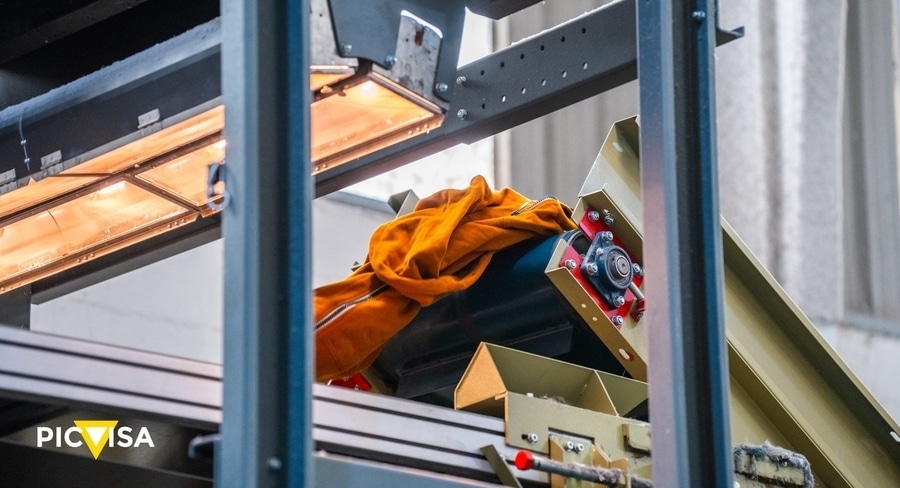
Separation of recyclable materials: Advanced technologies, such as magnets and air currents, are used to identify and separate materials in the MRF. The most advanced recovery facilities, like those equipped by PICVISA, utilize state-of-the-art optical sorting equipment for recycling, both to classify materials and to recover and add value to waste.
Shredding and compaction: Some materials are shredded and compacted to facilitate transport and further processing.
Treatment and processing: Once sorted, recyclable materials are sent to specialized facilities for appropriate treatment. For example, metals are sent to smelters for recycling, while plastics can be washed and reprocessed at dedicated plants.
Transformation and manufacturing: The recycled materials are transformed into new raw materials, which can then be marketed and used in the production of new products.
Challenges and the future of MRFs
Material recovery facilities face various challenges and future opportunities. Here are some of the main issues:
Environmental regulations: These are becoming increasingly strict, and compliance requires investment in infrastructure and technology. Internationally, the new ISO 59014 standard applies to any organization seeking to systematically and responsibly recover secondary materials, using life cycle and circular economy perspectives to promote transparency and efficiency throughout the value chain.
Efficient waste management on the rise: While some MRFs manage contaminated waste-such as lithium batteries or chemicals-they are not typically designed for hazardous waste, which is treated at specialized plants. However, both types of recovery facilities face the challenge of proper decontamination and treatment of waste, which is expected to increase with the rise of electric vehicles.
Technological advances: Fortunately, technological progress and research are enabling the development of more effective and sustainable methods for managing contaminated waste. Examples include the use of microorganisms to break down hazardous compounds, advanced thermal treatments that convert dangerous waste into inert materials, and the adoption of less toxic products and processes, such as biodegradable solvents, which facilitate recycling.
Process optimization: To ensure a circular economy, material facility recovery operations must improve traceability and separation of recoverable materials. This requires embracing technological innovations like those from PICVISA, which make it easier to separate and classify waste for reuse, as well as the development of advanced methods to recover precious metals from used batteries or electronic equipment. Additionally, MRF waste management facilities should consider the benefits of using thermal plasma, which can break down hazardous waste at extremely high temperatures, converting it into reusable products such as synthetic gas and vitrified slag.
Material recovery and transfer centers continue to evolve towards a more sustainable and efficient model. In this transformation, clean energy will play an increasingly important role. Will we see more projects focused on energy transition and storage to improve the integration of renewable energy in the MRF sector? We are confident that this will be the case.