#Product Trends
Artificial Intelligence PICVISA and Girbau are leading the way towards industrial textile recycling
Artificial Intelligence PICVISA and Girbau are leading the way towards industrial textile recycling
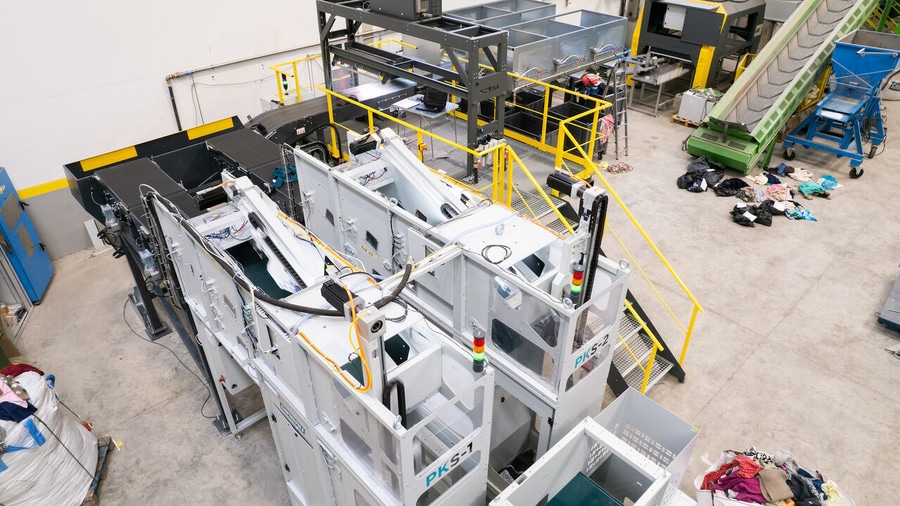
Girbau's automated feeding technology, Sortech, has been combined with PICVISA's ECOSORT optical sorting solution to create a collaboration that enables industrial-scale sorting lines for second-hand garments. The focus here is on reuse and recycling.
PICVISA, textile sorting, AI
© PICVISA
PICVISA, a specialist in AI-based optical sorting technologies for the reuse and recycling of materials, and GIRBAU, a global leader in industrial laundry and automation solutions, have announced a strategic collaboration to advance the full automation of post-consumer textile sorting lines.
The first milestone of this alliance is the launch of a new plant in Northern Europe that integrates Girbau’s Sortech automated feeding and separation system with PICVISA’s ECOSORT textile sorting technology into a single, continuous, fully automated line.
Proven automation for textile recycling
Sortech is a Girbau solution that automates the separation and classification of garments in high-volume industrial environments. Prioritising safety, operational efficiency and improved working conditions, Sortech eliminates repetitive manual tasks while ensuring a steady and controlled garment flow.
In this project, Sortech technology is being used in a new sector: post-consumer textile sorting for reuse and recycling. Growing volumes in this area demand robust and scalable industrial processes.
Advanced sorting for high-value reuse and recycling
PICVISA’s ECOSORT technology sorts used garments by textile composition, colour and type. This generates homogeneous, higher-value fractions for second-hand markets and textile recycling processes.
Integrating ECOSORT with an automated feeding system, such as Sortech, enhances process stability and increases line productivity while enabling more precise and consistent sorting. This reduces reliance on manual labour while improving operator ergonomics.
A pioneering model for the textile circular economy
This plant is one of the first in Europe to fully integrate automated feeding and advanced optical sorting for post-consumer textile treatment. This marks a key step towards the industrialisation of the textile circular economy.
This new installation brings the total number of PICVISA’s ECOSORT technology installations in Europe to eight, strengthening its presence in industrial-scale post-consumer textile sorting plants. The project also represents PICVISA’s second turnkey textile sorting plant in Europe, reinforcing its ability to design and deliver comprehensive, integrated solutions for the textile recycling sector.
Fernando Argiró, Director of Girbau Industrial, added, “Applying our expertise to textile recycling is a natural step for Girbau and represents a global opportunity, aligning with our purpose of generating a positive impact on people and the planet. Doing so through Sortech adds further value, as it is a solution developed together with a client that can now benefit many more plants and markets.”
Both companies foresee that this model can be replicated globally, driven by regulatory developments, reuse and recycling targets, and the need to improve the efficiency and sustainability of textile sorting facilities.