#Industry News
Innovative Uses for Reuse and glass bottle recycling
Innovative Uses for Reuse and glass bottle recycling
Glass recycling
Innovative Uses for Reuse and glass bottle recycling
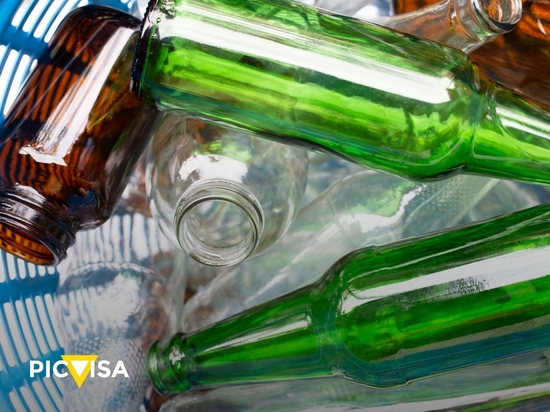
The glass bottle recycling and reuse is booming. In the United States and Europe, crushed and polished glass is already being used to pave walkways. When the sun shines on them, they appear to be covered with shiny little gems. They call it glassphalt and it turns a walk into an extraordinary experience.
There are creative ways to innovate from glass bottle recycling. With these wastes it is even possible to earn some extra income. Learning about glass bottle recycling is a trend, and at PICVISA we are experts.
Unfortunately, according to the American Business Waste, only about 21% of the 130 million tons of glass manufactured annually worldwide is recycled. The United States discards about 12 million tons of waste glass, a figure that in the EU is around 16 million tons and in the UK five million tons.
What is glass bottle recycling and how it works
Households and companies deposit jars and bottles in appropriate containers; in Spain, they are green. Trucks transport them to cleaning and treatment plants, where they are sorted on different conveyor belts, separating them from other materials that cannot be recycled at the same time, such as lids, caps, metal and plastic scraps, Pyrex…
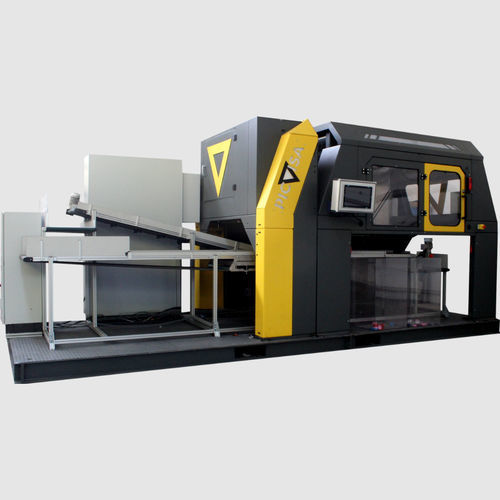
After cleaning, they pass through a series of screens and hammers where, once crushed, they are processed by machines equipped with optical readers (such as the optical sorter). ECOGLASS), which identify and remove any opaque residues of other materials. Glass ready for remelting is known as cullet or cullet, a granular material that companies purchase for melting to make new products.
Key benefits of recycling glass bottles and jars
Households and companies should recycle their glass containers in the appropriate container, and never dispose of them in the organic waste container. If they contain glitter, special paints or mixtures of materials, the bottles are not recyclable and should be disposed of in the appropriate container. Recycling bottles and jars has enormous benefits:
Use fewer raw materials. Recycling glass reduces the extraction of silica sand, soda ash and limestone used to make new glass.
Reduce their presence in the trash. Sending glass bottles for recycling avoids their accumulation in landfills, they take centuries to decompose!
Save water and energy. Crushing does not require water and melting calcin requires lower temperatures than producing glass from scratch.
Reduce CO₂ emissions. By reducing energy consumption, greenhouse gases are also reduced.
Promoting the circular economy and sustainability. Glass is infinitely recyclable, from being a waste it will become a resource. Recycling glass bottles reincorporates waste into the production cycle as a secondary raw material and promotes more sustainable and cleaner cities.
To create jobs. New jobs are generated in the collection, sorting and treatment chain.
Recycling glass bottles to earn money
In some countries there is a deposit, return and refund system (DRS). In Germany, Sweden, the Netherlands, Norway, Denmark and Finland it is possible to recycle glass bottles to earn money. In Spain and the United Kingdom, this system is in its initial stages. Thus, in Barcelona, citizens can participate in the recycling of glass bottles by returning milk or kombucha containers; they receive 45 cents and 25 cents, respectively.
Innovative uses of recycled glass in industry
Companies buy cullet to melt it and use it to make new containers and raw materials for the manufacture of various products. Crushed glass is used to make:
Street furniture. Benches, tables and fountains give a modern and sustainable touch.
Art. Artists create murals, mosaics and sculptures that decorate squares and gardens.
Gardening and landscaping. In gardens and traffic circles, as a substitute for gravel, they provide color and brightness.
Construction. Integrated into blocks, architectural elements and tiles, it gives a translucent and contemporary look.
Naval repairs. To create the abrasive element to clean and repair ship parts.
How to correctly recycle different types of bottles
Reusing glass bottles is the best option. Those who choose to dispose of them should empty them before placing them in the corresponding container. Do not forget:
● Bottles of wine.
Remove the caps and, if possible, the labels.
● Beer bottles.
Removing the metal cap or stopper beforehand, which goes into the yellow container, is crucial in the recycling of beer bottles.
● Perfume bottles.
Separating the spray pump, the cap and any metal or plastic parts, which go into the yellow container, is essential in the recycling of perfume bottles.
Glass bottle recycling rate in EU
Environmental impact of glass bottle recyclers
Let’s not forget that glass shards damage fauna and flora if they are abandoned in natural environments, where they can also cause fires. The purpose of PICVISA is to support industries in the glass bottle recycling sector.
However, it cannot be overlooked that these companies also harm the environment. Why? Melting recycled glass requires temperatures in excess of 1,500 °C, a considerable expenditure of energy. And although CO₂ emissions are lower than producing new glass, the process causes polluting gases. In reference to logistics, being heavier than other materials, its collection and transfer consumes more fuel, and produces more emissions, especially in municipalities with poorly optimized collection systems. However, the work of glass bottle recyclers, both in households and in companies and recycling centers, is commendable. Eurostat figures for 2023 reveal a glass recycling rate of 74.9% in the EU (see graph). Let us congratulate ourselves on this.