#Product Trends
Cardboard dust in logistics: an underestimated risk
Respiratory safety, operational reliability and flow continuity
In logistics warehouses, cardboard dust degrades indoor air quality, working conditions and operational performance. Its control is becoming a key QHSE and productivity issue.
Modern logistics platforms handle massive volumes of cardboard packaging generated by depalletising, picking, repacking and continuous goods movement. These activities produce large quantities of dust, much of it fine and easily re-suspended by airflows and operator movement. Once airborne, these particles penetrate the respiratory tract, reduce comfort and progressively degrade indoor air quality.
Beyond discomfort, cardboard dust represents a tangible safety and operational risk. Its accumulation can reduce visibility in certain areas, increase respiratory irritation and contribute to the fouling of equipment, sensors and automated systems. In high-throughput environments, these effects directly impact process reliability, productivity and absenteeism, while complicating compliance with QHSE requirements.
The challenge lies in the very nature of logistics buildings. Large volumes, constantly changing layouts and highly dynamic flows make conventional ventilation strategies largely ineffective. General ventilation alone rarely addresses the zones where dust is actually generated and often results in excessive energy consumption without meaningful exposure reduction. Effective control requires a precise understanding of emission areas and a targeted air treatment strategy focused on the source.
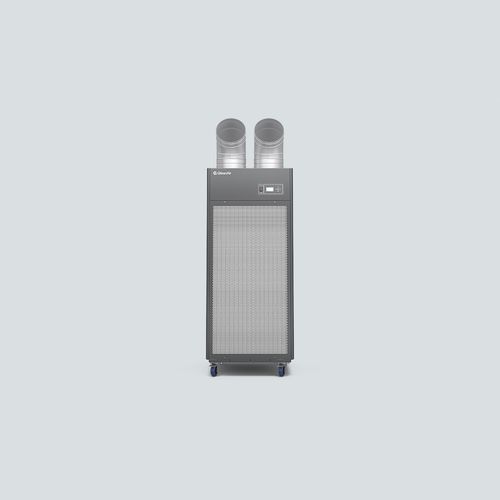
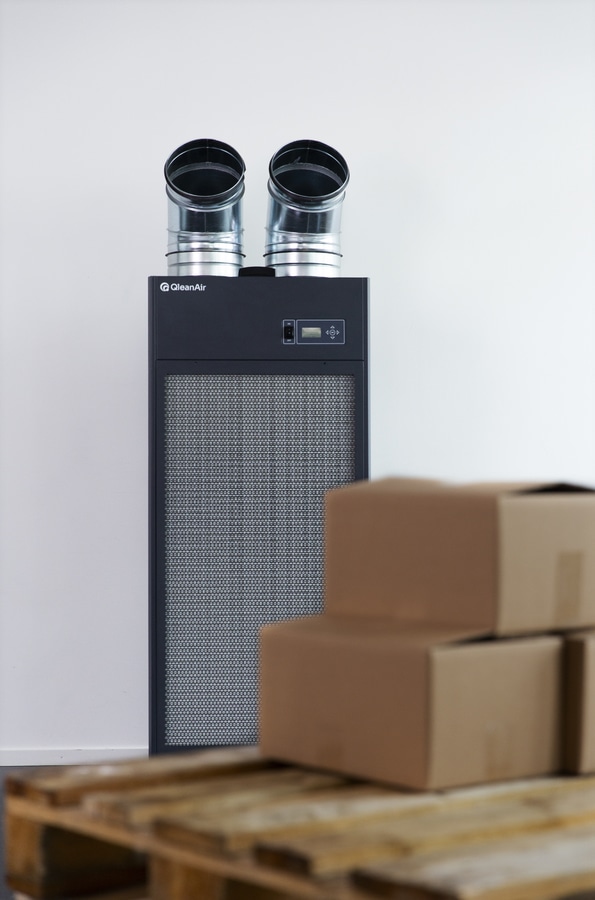
This is where QleanAir France provides a pragmatic and industrially proven response. QleanAir deploys mobile and flexible air purification solutions specifically designed for logistics environments. These systems capture and filter cardboard dust directly at source, without disrupting warehouse operations or requiring structural modifications to the building. The approach is based on on-site airflow analysis, progressive deployment and continuous adaptation to operational changes.
By improving air quality in critical zones, this strategy reduces respiratory exposure for operators, enhances comfort and safety, and protects the availability of automated equipment. Controlling cardboard dust therefore becomes a concrete lever for operational performance, supporting flow continuity and the long-term sustainability of logistics platforms.