#Product Trends
Thermal Camera Price: What Buyers Should Compare
If you are asking about thermal camera pricing for an industrial or enterprise project, the honest answer is that there is usually no single standard price. Public product pages often show price ranges for consumer gadgets or basic handheld tools. In
If you are asking about thermal camera pricing for an industrial or enterprise project, the honest answer is that there is usually no single standard price. Public product pages often show price ranges for consumer gadgets or basic handheld tools. Industrial quotations work differently. What a supplier quotes usually covers a configuration, a workflow, and the services included, not just the camera itself.
thermal imaging cameras
That distinction matters because two buyers can ask for “a thermal camera” but need very different things. One may need a handheld inspection tool for maintenance rounds. Another may need a fixed thermal camera for continuous monitoring, radiometric measurement, network alarms, software integration, and commissioning support. Those are not the same purchase, even if the headline resolution looks similar. For the cost-side explanation, see Raythink’s guide to why thermal cameras cost more.
Why industrial thermal cameras don’t have a fixed price
Public prices can help when the product is a standardized consumer device. They are less useful when an industrial project still involves different requirements for optics, measurement, installation, software, and service. Without matching configurations and project requirements, a broad price range can give buyers a misleading basis for comparison.
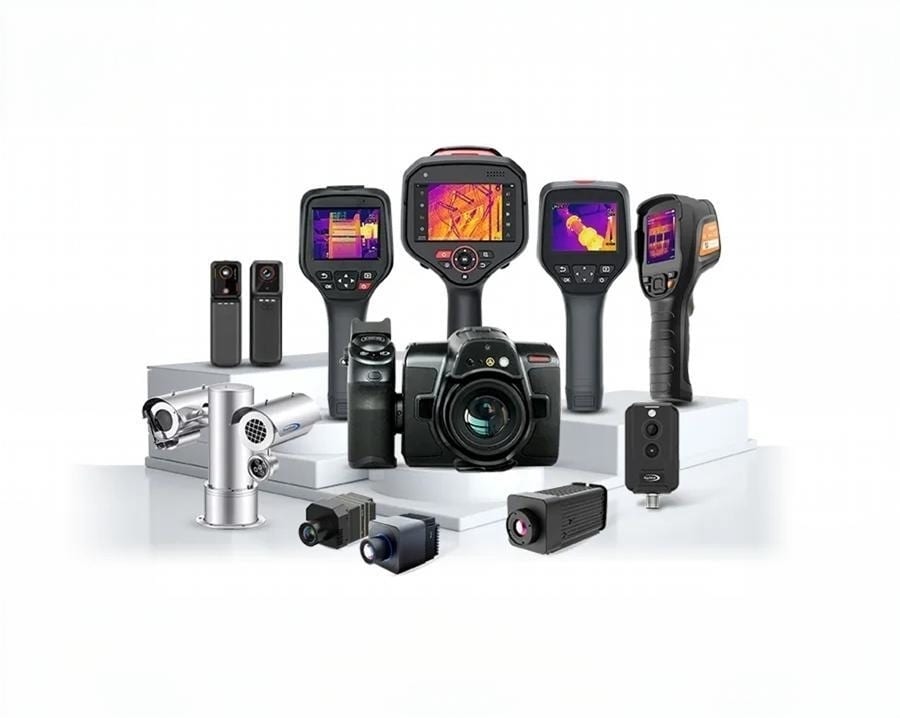
Across Raythink’s handheld, fixed, dual-spectrum, module, and software offerings, the configuration factors differ because the applications and deployment requirements differ. The final price depends on the specific configuration and application requirements, which is why industrial thermal cameras are typically quoted based on the needs of each project.
What factors affect an industrial thermal camera quote?
In practice, industrial thermal camera pricing is shaped by a few practical requirements:
What you need to inspect, and at what distance.
Whether you need images only, or temperature measurement as well.
Which lens, focus method, field of view, and spatial detail the task requires.
Whether the camera must run continuously on site or only during inspections.
Whether you need software, protocol support, alarms, reports, or platform integration.
Whether installation, calibration or verification documents, training, service, and spares are included in the quote.
That is why procurement should not start with “what is the cheapest camera with this resolution?” A better starting point is “what exact configuration will do the job, and what is included in this quote?”
Three common industrial buying scenarios
1. Handheld inspection
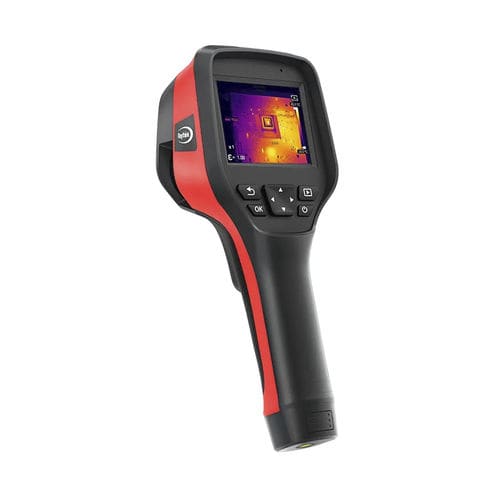
A handheld inspection purchase is usually the simplest scenario, but detector resolution alone is not enough to choose a configuration. The RM620 Handheld Thermal Camera combines a 640×512 infrared detector with a 19 mm manual-focus lens. Buyers still need to confirm whether that lens and focus arrangement suit the target size, working distance, and available inspection access.
RM620 Handheld Thermal Camera, Handheld Thermal ImagerRM620 Handheld Thermal Camera
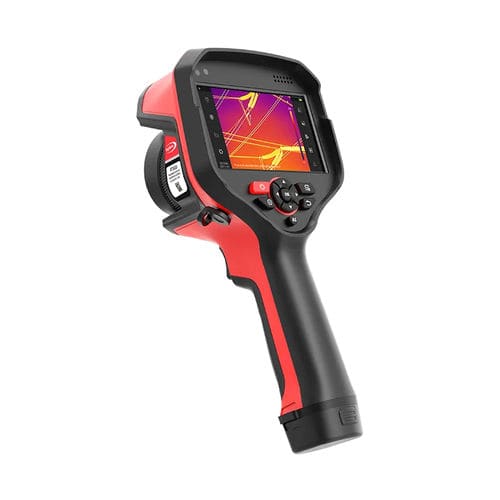
RT630/400 Expert Thermal Camera, Professional Thermal Imaging CameraRT630 Expert Thermal Camera
With the RT630 Expert Thermal Camera, lens choice becomes part of the quotation because standard, wide-angle, telephoto, and super-telephoto options serve different working distances and fields of view. Two quotes for a 640×512 handheld camera may therefore describe different inspection coverage. If the selected lens does not match the task, the initial configuration may not provide the required coverage or level of detail.
For this scenario, the key question is: does the quoted handheld configuration match the target size, distance, access conditions, and reporting workflow?
2. Fixed radiometric monitoring
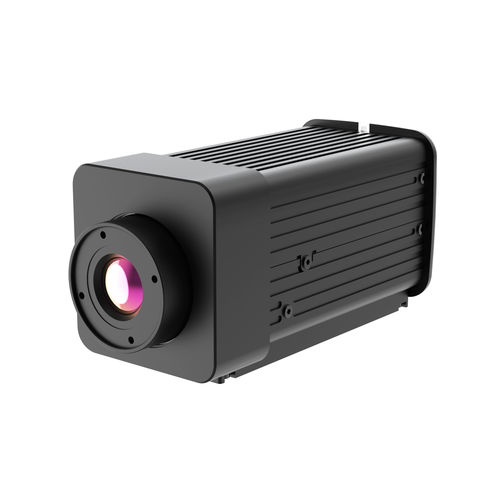
Fixed industrial monitoring involves more than just buying a camera. The Raythin AT31 Motorized Focusing Thermal Camera supports network communication, multiple power options, defined operating conditions, and inputs used for radiometric correction, including emissivity, reflected apparent temperature, ambient temperature, atmospheric conditions, and distance. Buyers who need temperature measurement should confirm who will enter and validate these inputs. Buyers should separately confirm the mounting, power, network, alarm, and data requirements for continuous monitoring.
Motorized-Focusing-Thermal-Camera-at
AT31 Motorized Focusing Thermal Camera
Once a buyer asks for fixed installation, continuous monitoring, network outputs, alarms, or recorded measurement data, the quote has to cover more than hardware. Mounting, power, network path, protocol compatibility, and site commissioning all become part of the discussion. A low unit price that excludes these items is not directly comparable to a fuller project quote.
For this scenario, the pricing question is: what exactly is being installed, connected, and documented?
3. Monitoring with software and platform integration
A third scenario is the one where “camera price” becomes the least useful label. For projects built around Raythink’s PC5 series, the final cost depends on the selected model, imaging configuration, lens, mounting and network requirements, alarm functions, and integration with recording or management platforms. TI Studio can add device management, analysis, temperature rules, trend monitoring, reporting, alarms, recording, I/O linkage, and historical alarm review, subject to the capabilities and compatibility of the selected camera and system configuration.
In this kind of purchase, the quote may depend on software access, license scope, integration work, alarm logic, storage, platform compatibility, and the amount of engineering support required. That is why an enterprise quote can differ sharply from a simple hardware-only offer.
For this scenario, the pricing question is: which software, integration, storage, licensing, and project-delivery items are included in the quoted amount?
real-time temperature viewing
alarm settings of an infrared thermal camera
Some applications require a different type of thermal camera
Some applications require a different type of thermal camera, not simply a higher-specification version of the same product. A standard inspection camera, a cooled infrared module, and an optical gas imaging camera serve different technical purposes. Before comparing prices, buyers should first confirm that the products being compared are intended for the same task.
That matters for pricing because the buyer may not be comparing a cheaper and a more expensive version of the same tool. A standard uncooled camera, a cooled module, and an OGI handheld are intended for different technical tasks and should not be placed in one price comparison simply because all three use thermal-imaging technology.
For this scenario, the key question is whether we are still comparing products within the same category, or whether the application requirements call for a different product family.
How to compare two quotes without guessing
Use a worksheet, not a ranking. The goal is to make sure both quotes describe the same purchase.
Requirement Quote A Quote B What to check
Quoted amount Currency, tax, freight, and quotation date
Target, distance, scene width Target size, distance, required field of view (FOV)
Measurement task Imaging only or temperature measurement
Lens, focus, detector, spectral band Lens option, focus method, detector class, special filter
Software, protocol, alarms, reports Included, optional, or to be quoted
Environment, mount, power, network Installation and site compatibility
Other items included in the price Calibration or verification documents, training, service, spares, quotation validity, and availability
When comparing quotations, record only what each supplier has explicitly included. If the quote does not mention software licenses, development access, calibration documents, service, spare parts, or integration support, ask the supplier to confirm them. A camera may support a function even when that function or service is not included in the quoted package.
For a broader selection checklist, see thermal camera specifications to check before buying. For deployment format tradeoffs, see handheld and fixed thermal imaging cameras.
What to send a supplier before requesting a quote
A clear brief produces a clearer quote. For temperature-measurement product families, see Raythink thermal cameras for temperature measurement.
Include the following information in the request:
Inspection task: the application, target, and smallest feature that must be visible.
Viewing conditions: working distance, required field of view, and any access limitations.
Measurement requirements: whether temperature measurement is needed, the target-temperature range, required accuracy, and available correction inputs.
Deployment requirements: handheld or fixed use, mounting, environment, power, and network connection.
Data and integration: required outputs, reports, alarms, software, recording platform, protocol, or software development interface.
Commercial scope: quantity, destination market, requested quotation date, installation responsibility, calibration or verification documents, training, service, and spares.
Conclusion
Thermal camera pricing varies with the application, configuration, and level of integration required. For industrial and enterprise projects, the quotation may cover more than the camera itself, including measurement requirements, software, system integration, installation, and service. Public product prices therefore may not reflect the cost of a complete industrial solution. Buyers should compare quotations based on the actual configuration and scope of supply, and request a dated quote before making a purchasing decision.