#Product Trends
Thermal Imaging in Mining: Equipment Inspection and Condition Monitoring
Thermal imaging gives mining teams a visual way to compare the surface temperatures of operating equipment. A thermal camera can show an unusually warm conveyor idler, an uneven temperature pattern on a motor, or a wheel position that differs from th
Thermal imaging gives mining teams a visual way to compare the surface temperatures of operating equipment. A thermal camera can show an unusually warm conveyor idler, an uneven temperature pattern on a motor, or a wheel position that differs from the others on the same haul truck.
These thermal differences help maintenance teams decide where to look more closely. Heat may be associated with friction, electrical resistance, restricted cooling, load, or braking, depending on the equipment. A thermal image does not distinguish among those causes by itself, but it can make routine inspections faster and more focused by showing where the unusual pattern appears.
Handheld thermal cameras are suitable for inspection routes covering many accessible assets. Fixed thermal cameras are more useful when one important target needs frequent or continuous monitoring. The right choice depends on the equipment, viewing distance, target size, movement, and installation environment.
What thermal imaging can show on mining equipment?
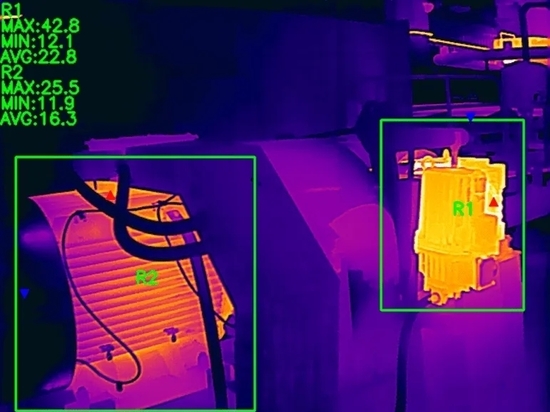
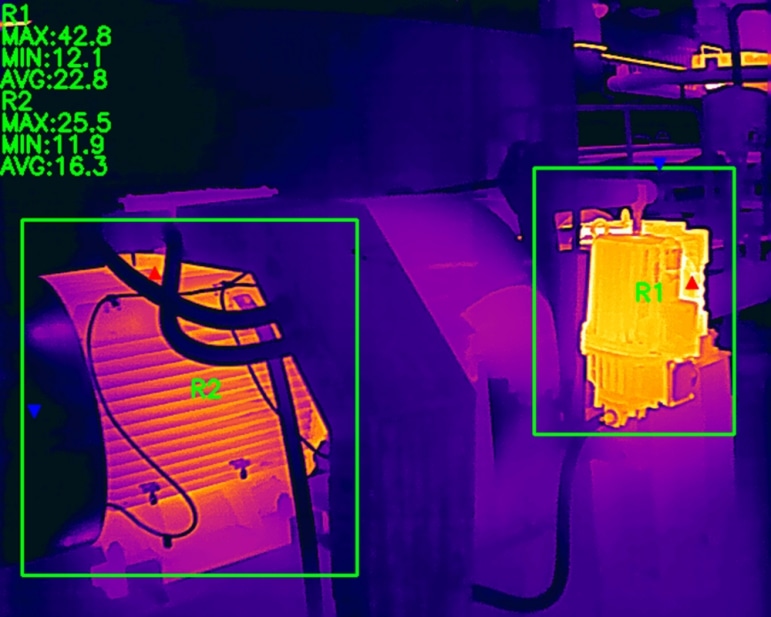
Thermal image of industrial machinery monitored for overheating risks
A thermal camera turns differences in surface temperature into an image. The operator can compare similar components, different positions on the same machine, or the same component during earlier inspections.
Mining equipment Thermal image to compare Typical camera approach
Conveyor One idler, pulley, bearing area, motor, or gearbox surface against nearby equipment Handheld route inspection; fixed monitoring for a critical drive
Motor or gearbox Temperature distribution around the housing, cooling area, coupling, and bearing locations Handheld comparison between similar units or repeated checks of one unit
Electrical equipment Comparable phases, connections, terminals, and cable surfaces Handheld inspection from an approved access point; fixed monitoring for a selected installation
Hydraulic equipment External temperature patterns on pumps, valves, manifolds, filters, cylinders, and lines Handheld inspection during a comparable machine cycle
Haul truck Tire, rim, hub, and visible brake-area patterns across wheel positions Handheld inspection at a checkpoint; fixed monitoring where vehicle position can be controlled
The hottest spot in a thermal image is not always the most useful finding. What usually matters more is a temperature difference that comparable equipment does not show. An absolute temperature limit may be important where the equipment manufacturer or site has set one, but route inspections often depend on comparison and change over time.
For example, one conveyor idler may remain warmer than surrounding idlers, or one electrical connection may show a different thermal pattern from the other phases. The thermal image identifies both the location and the shape of the difference. The maintenance team can then inspect that component according to its normal site procedure.
Use a handheld thermal camera for inspection routes
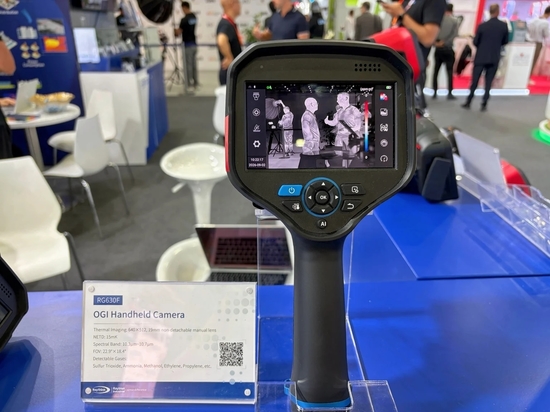
A Raytron Industrial handheld thermal camera is the practical option when a technician needs to inspect many pieces of equipment across a mine. The operator can change position, distance, and viewing angle as the route moves from conveyors to motors, electrical equipment, hydraulic components, and mobile machinery.
The Raytron Industrial RM620 is positioned for this type of industrial inspection. Its 640 × 512 detector provides enough image detail to examine smaller areas within a larger piece of equipment, while manual focus allows the operator to adjust for changing working distances. Those two capabilities are relevant on a mining route because the same camera may be used first on a wide conveyor view and then on a smaller bearing or electrical target.
Conveyor inspections
Along a conveyor, a handheld thermal camera can scan visible idlers, pulleys, bearing housings, motors, brakes, and gearbox surfaces. The operator looks for a component whose thermal pattern differs from nearby components doing the same work.
Thermal images are easier to compare when belt speed, load, camera distance, and viewing angle are reasonably consistent. A warmer idler surface may be associated with increased friction, bearing condition, or alignment, but the image alone does not separate those possibilities. If the same location repeatedly appears warmer than neighboring idlers, the thermal image gives the maintenance team a specific component to inspect instead of treating the entire conveyor as one problem area.
At the conveyor drive, the camera can capture the motor, gearbox, coupling area, brake, and drive pulley during the same inspection. Saving both a thermal image and a visible image makes it easier to identify the exact component later.
Motors, gearboxes, electrical equipment, and hydraulics
Visible image of power distribution cabinets before thermal inspection
Thermal inspection image of power distribution cabinets with heat anomalies
On motors and gearboxes, thermal imaging can show differences around bearing locations, housings, cooling areas, and couplings. A localized warm area and a broad rise across the housing are different thermal patterns and may lead the maintenance team to different questions. Comparing similar units under similar load is usually more useful than judging one temperature reading in isolation.
For accessible electrical equipment, a thermal camera can show an uneven pattern across comparable connections or phases. A localized hot connection differs from a similar rise across all phases, even though both appear as higher temperatures. Reflections from shiny metal can affect the image, so the operator may need to change the viewing angle before treating the pattern as part of the component. Electrical inspection must always follow the mine’s approved access and safety procedures.
Thermal imaging can also be used on visible hydraulic pumps, valves, manifolds, filters, cylinders, and lines. The image can show whether heat is concentrated around one component or distributed along part of the circuit. Because the pattern changes with pressure, flow, and machine cycle, recording the operating state helps the team compare like with like during later inspections.
Haul-truck tires and wheel areas
A handheld thermal camera can compare tire surfaces, rims, hubs, and visible brake-related areas across the wheel positions of a haul truck. The images should be taken at a consistent inspection point and at a similar time after the truck stops.
Route, payload, braking, sunlight, wind, and waiting time can all change the thermal pattern. Keeping these conditions reasonably similar makes a warmer wheel position easier to distinguish from normal operating variation. The value of the thermal image is the side-to-side or wheel-to-wheel comparison; it points the team to the tire, hub, or brake area that differs from the rest.
Use fixed thermal cameras for important monitoring points
A Raytron Industrial fixed thermal camera is useful when the same equipment needs to be viewed repeatedly, when access is difficult during operation, or when thermal data must be connected to an existing monitoring system. Because the camera remains in one position, successive images use the same view and can support temperature trending or site-defined alarms more consistently than occasional handheld images.
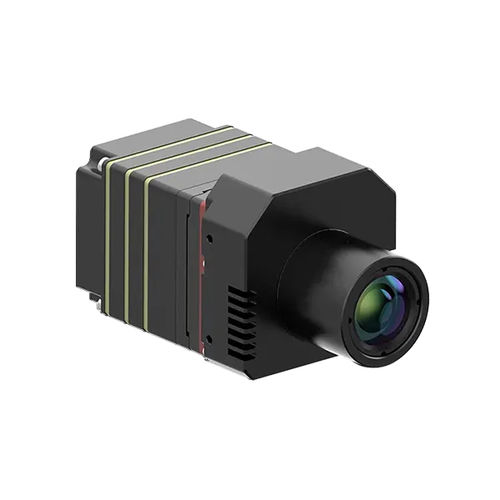
The Raytron Industrial TN460 is a fixed-mount option for a stable view of equipment such as a conveyor drive, motor, gearbox, or electrical installation. Its 640 × 512 detector supports detailed thermal images, while the available lens choices help adapt the field of view to the target and distance. Industrial communication options, including Modbus TCP and MQTT, allow temperature data or alarms to enter a wider monitoring system instead of remaining only in the camera view.
TN460 Fixed mount Thermal Camera, Fixed Thermal Imaging Camera
For an integrated installation that needs motorized focus, the Raytron Industrial AT31 and Raytron Industrial AT61 provide two different starting points:
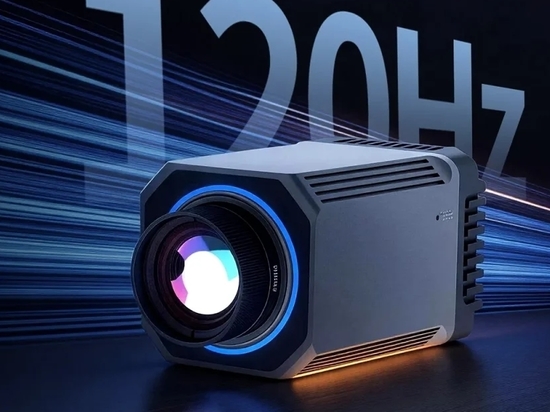
AT31: 384 × 288 resolution and up to 50 Hz imaging. The higher frame rate can be useful when a target moves through the image or its thermal pattern changes quickly.
AT61: 640 × 512 resolution and 25 Hz imaging. The higher detector resolution can place more image detail on a smaller target at the selected field of view.
The choice between AT31 and AT61 is therefore application-based: frame rate matters more for movement, while resolution matters more for target detail. The selected lens must still place enough pixels on the target, and the mounting position must keep the important surface visible. Dust on a protective window can gradually weaken the image, so cleaning and view checks should be included in the installation plan.
Keep thermal images easy to compare
Thermal inspection does not need a complicated procedure, but a few consistent habits make the images more useful:
Inspect at a similar operating state. Record whether the equipment was starting, running normally, heavily loaded, or recently stopped.
Use a similar camera position. Keep the distance and viewing angle reasonably consistent when comparing images over time.
Focus on the target. Refocus a handheld camera when the working distance changes. A blurred image can hide a small warm area.
Check for reflections and blocked views. Shiny surfaces, guards, dust, moisture, and windows can change what the camera sees.
Save enough identification information. Store the thermal image with the equipment ID, inspection point, date, and basic operating condition.
These steps keep the work centered on thermal imaging. The camera finds and records a temperature pattern; the site’s normal maintenance process determines what happens next.
Match the camera to the mining condition-monitoring task
Camera selection should begin with the mining equipment and the thermal change the team needs to observe. A route inspection, a permanent view of a conveyor drive, and an automated checkpoint do not require the same type of camera.
Mining condition-monitoring use case Thermal information needed Raythink starting point Why it fits
Routine inspection of conveyor idlers, pulleys, motors, gearboxes, electrical equipment, and haul-truck wheel areas Thermal images from many accessible assets, with the ability to change distance and viewing angle RM620 Handheld operation, 640 × 512 imaging, and manual focus support a route that includes both larger equipment and smaller inspection points
Repeated monitoring of a critical conveyor drive, motor, gearbox, or electrical installation The same thermal view over time, with temperature data available to a monitoring system TN460 Fixed mounting keeps the view stable, while lens choices and industrial protocols support installation around a defined target
An integrated station viewing a moving belt, rotating surface, or vehicle passing a controlled point More image samples while the target is moving or the thermal pattern is changing quickly AT31 The 50 Hz frame rate and motorized focus make AT31 the more suitable choice when movement is the main concern.
An integrated system viewing a smaller bearing area, connection, or other target that needs more image detail More detector pixels on the selected target at the planned distance and field of view AT61 The 640 × 512 detector and motorized focus make AT61 the better fit for detail-focused inspection.
These models are not four performance levels. RM620 supports periodic mine inspection routes, TN460 supports continuous observation of selected critical equipment, and AT31 or AT61 can be evaluated when an integrator is building a dedicated monitoring station. The mining asset and required thermal view should determine which category is considered first.
Information needed to select the camera and lens
Before selecting a thermal camera for a mining application, collect the following information:
equipment and surface to be viewed;
smallest area that must be visible in the thermal image;
nearest and farthest viewing distance;
required field of view;
whether the target is stationary, rotating, or moving past the camera;
expected surface-temperature range;
handheld inspection or fixed installation;
dust, moisture, weather, vibration, and protective-window requirements;
power, network, and communication requirements for a fixed system;
hazardous-area requirements, if the location is classified.
These details allow the camera, lens, mounting position, focus method, and integration approach to be matched to the actual target.
Thermal imaging in mining is most useful when the application remains simple: capture a clear thermal image, compare the right equipment, record the operating condition, and direct attention to the component that looks different. Handheld cameras make this possible across an inspection route, while fixed and integrated cameras provide repeated views of selected equipment.