#Product Trends
What Gases Can Optical Gas Imaging Cameras Detect? A Complete Guide by Industry
Optical gas imaging (OGI) cameras can visualize gas leaks that are completely invisible to the human eye. But here is a fact that surprises many first-time buyers: an OGI camera does not detect all gases. It detects specific gases based on how those
Optical gas imaging (OGI) cameras can visualize gas leaks that are completely invisible to the human eye. But here is a fact that surprises many first-time buyers: an OGI camera does not detect all gases. It detects specific gases based on how those gases absorb infrared radiation at particular wavelengths.
If you are evaluating OGI technology for your facility, the first question is not “Which camera should I buy?” It is “Does this camera detect the gases we actually handle?” This guide breaks down exactly which gases OGI cameras can and cannot detect, organized by the industries where those gases appear. For a deeper look at how the underlying technology works, see our explanation of the principles behind optical gas imaging technology.
How OGI Detection Works: The Wavelength Connection
OGI cameras detect gases through a phenomenon called infrared absorption. Many gas molecules absorb infrared radiation at specific wavelengths — their own spectral fingerprints. An OGI camera uses a detector paired with a spectral filter tuned to the wavelength band where the target gas absorbs radiation.
Think of it like tuning a radio. Just as you need to match the right frequency to hear a station, an OGI camera must match the right wavelength to “see” a gas. When the camera is pointed at a leak, the target gas absorbs infrared radiation from the background along the line of sight, reducing the infrared signal received by the detector. The difference in infrared radiation creates contrast, enabling the camera to display the gas plume.
This wavelength-specific design means one OGI camera cannot detect every gas. A camera filtered for methane detection operates in a different wavelength band than one designed for sulfur hexafluoride. Understanding this connection is the key to selecting the right equipment.
Wavelength Range Gas Family Typical Applications
3.2–3.5 μm Light hydrocarbons, methane, VOCs Oil and gas, chemical processing
7–8.5 μm Methane, refrigerants, SO₂ Environmental monitoring, HVAC, industrial emissions
10.3–10.8 μm SF₆, ammonia, ethylene Power utilities, refrigeration, and petrochemical
4.2–4.4 μm Carbon dioxide (CO₂) Emissions monitoring (specialized cameras)
4.5–4.7 μm Carbon monoxide (CO) Combustion safety (specialized cameras)
Gases OGI Cameras Can Detect
Hydrocarbons and Volatile Organic Compounds (VOCs)
Hydrocarbons represent the largest family of OGI-detectable gases. These are the gases most commonly handled in oil and gas operations, petrochemical plants, and chemical processing facilities.
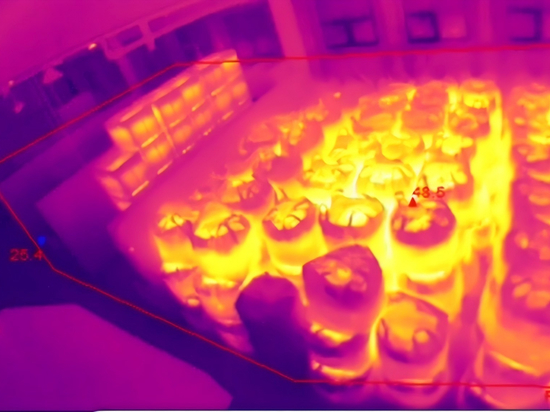
Storage Tank VOCs Gas Leak
Methane (CH₄) is the most widely detected gas with OGI technology. It is the primary component of natural gas and is present across the entire oil and gas value chain — from wellheads and processing plants to pipelines and storage facilities. Methane is also the main constituent of biogas and landfill gas, making it relevant for waste management and renewable energy operations. Because methane is a potent greenhouse gas, leak detection has become a priority for environmental compliance programs worldwide.
Biomethane — purified biogas used as a renewable natural gas substitute — shares the same infrared absorption characteristics as conventional methane. Facilities that produce or consume biomethane, such as anaerobic digesters and biogas upgrading plants, can use the same OGI cameras deployed for natural gas leak detection.
Liquefied Petroleum Gas (LPG), primarily propane (C₃H₈) and butane (C₄H₁₀), is widely used for heating, cooking, and industrial processes. These gases absorb strongly in the hydrocarbon wavelength band and can be visualized with hydrocarbon-tuned OGI cameras. LPG handling facilities, propane filling stations, and petrochemical plants all benefit from OGI-based leak detection.
Beyond these, OGI cameras can detect a broad range of industrial hydrocarbons, including ethane, ethylene, and propylene (essential petrochemical feedstocks), benzene, toluene, and xylene (chemical manufacturing solvents), and common fuel components such as gasoline, ethanol, and methanol. Some advanced OGI systems can visualize a wide range of volatile organic compounds.
Most hydrocarbon-detecting OGI cameras operate in the 3.2–3.5 μm (MWIR) or 7–8.5 μm (LWIR) spectral bands. The exact wavelength determines which specific hydrocarbons are visible and at what sensitivity.
Sulfur Hexafluoride (SF₆)
SF₆ is colorless, odorless, and highly effective at preventing electrical arcing. However, leaks are difficult to detect visually, and SF₆ has a 100-year global warming potential of 23,500 according to U.S. EPA data. That means SF₆ leak inspection is important not only for equipment maintenance, but also for emissions control and regulatory compliance.
Detecting SF₆ requires an OGI camera operating in the 10.3–10.8 μm wavelength range. This is fundamentally different from the wavelength band used for hydrocarbon detection. A standard methane-optimized OGI camera cannot detect SF₆, and vice versa. Power utilities and electrical equipment manufacturers must choose a camera specifically filtered for the SF₆ absorption band.
For facilities with high-voltage electrical infrastructure, SF₆ leak detection is not only a maintenance concern. In the EU, SF₆ is regulated under the F-gas Regulation, Regulation (EU) 2024/573, which includes containment, leak-checking, labelling, record-keeping, and phase-down requirements for fluorinated greenhouse gases.
Ammonia (NH₃) and Industrial Refrigerants
Ammonia (NH₃) is widely used in large-scale industrial refrigeration systems, cold storage warehouses, and fertilizer production. It is toxic at elevated concentrations and poses both health and safety risks when leaked. Ammonia absorbs infrared radiation in the 10.3–10.8 μm range, similar to SF₆, meaning it is detected by LWIR-type OGI cameras.
Industrial and commercial refrigeration also relies on fluorinated refrigerants such as R-134a, R-152a, and R-123. Many of these refrigerants absorb in the 7–8.5 μm band and are detectable with appropriately filtered OGI cameras. For food processing plants, cold chain logistics operators, and HVAC maintenance teams, the ability to visualize refrigerant leaks without shutting down equipment represents a major operational advantage.
Sulfur Dioxide (SO₂)
Sulfur dioxide (SO₂) is a common byproduct of combustion and industrial processes. It is produced in power generation, smelting, sulfuric acid manufacturing, and marine emissions. SO₂ emissions are regulated in many jurisdictions because of their impact on air quality and public health.
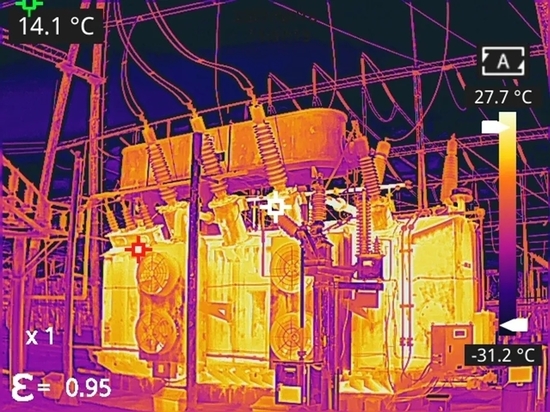
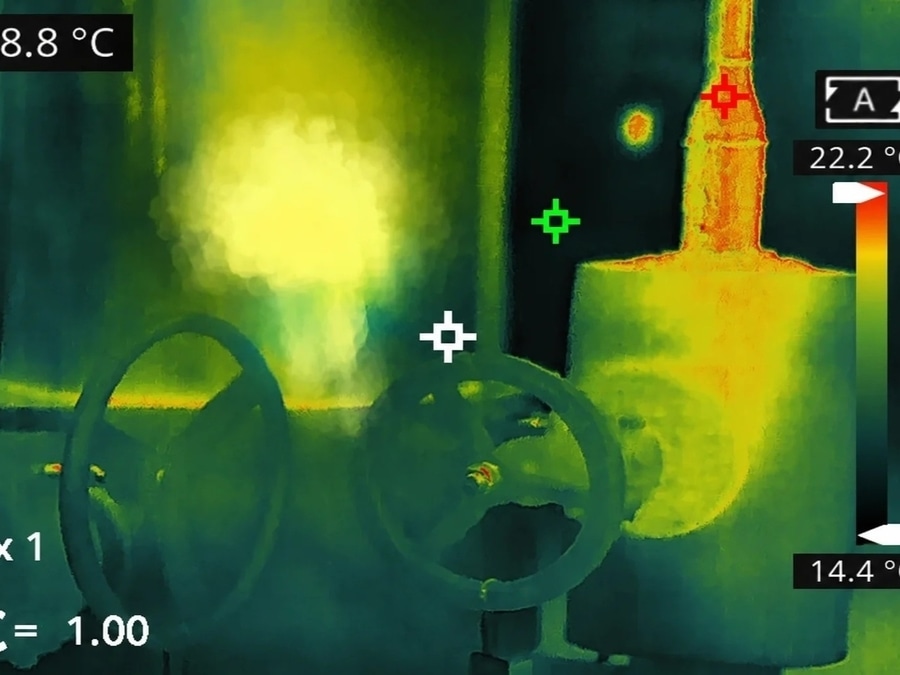
Thermal image showing SF6 gas leakage detection around industrial valves using an OGI camera
SO₂ absorbs infrared radiation in the 7–8.5 μm range, making it detectable with the same LWIR camera types used for methane and refrigerant detection. For facilities with emissions monitoring requirements, an OGI camera tuned to this band can help identify SO₂ leaks and venting without shutting down equipment.
Specialty Industrial Gases
Several other industrial gases fall within OGI detection capabilities, though they often require specialized camera configurations:
Ethylene oxide — used in sterilization and chemical synthesis
Carbon dioxide (CO₂) — detectable at 4.2–4.4 μm, though this requires a specialized camera not standard in most OGI portfolios
Carbon monoxide (CO) — detectable at 4.5–4.7 μm, also requiring specialized equipment
Gases OGI Cameras Cannot Detect
Transparency about limitations matters. OGI cameras cannot detect gases that do not absorb infrared radiation in the wavelength bands where OGI cameras operate. The most notable examples include:
Gas Why It Cannot Be Detected Alternative Detection Method
Oxygen (O₂) No infrared absorption in OGI bands Electrochemical sensors
Nitrogen (N₂) No infrared absorption in OGI bands Not typically monitored for leaks
Hydrogen (H₂) No infrared absorption in OGI bands Catalytic or electrochemical sensors
Helium (He) No infrared absorption in OGI bands Mass spectrometry leak detectors
This limitation is not a flaw in OGI technology — it is a physical constraint. These gases are diatomic or monatomic and lack the molecular vibration modes that create infrared absorption bands. If your facility handles hydrogen systems (for example, in fuel cell or ammonia production applications), you will need complementary detection technologies alongside OG
Choosing the Right OGI Camera by Gas Type
The practical question for most buyers is simple: “I handle these gases — which camera do I need?” The selection process follows three steps.
Step 1: List the gases you need to detect. Start with your process flow diagrams, safety data sheets, and regulatory requirements. Do not guess — the wrong wavelength means the camera will not see the leak.
Step 2: Identify the wavelength band for those gases. Use the table below as a quick reference.
Step 3: Match the wavelength to a camera with the correct spectral filter.
Gas Type Wavelength Example Camera Configuration
Methane, biomethane, LPG, light hydrocarbons 3.2–3.5 μm or 7–8.5 μm MWIR or LWIR hydrocarbon-tuned camera
SF₆, ammonia, ethylene 10.3–10.8 μm Dedicated LWIR camera with 10.55 μm filter
Refrigerants (R-134a, R-152a) 7–8.5 μm LWIR refrigerant-tuned camera
SO₂ 7–8.5 μm LWIR camera (same band as methane/refrigerants)
CO₂, CO 4.2–4.7 μm Specialized cameras (not standard OGI)
For facilities handling multiple gas families, the reality is that a single OGI camera may not cover every need. Some operations require multiple cameras with different filters. Others may benefit from multi-sensor monitoring systems that combine OGI with other detection technologies for comprehensive coverage.
Raythink OGI Camera Recommendations
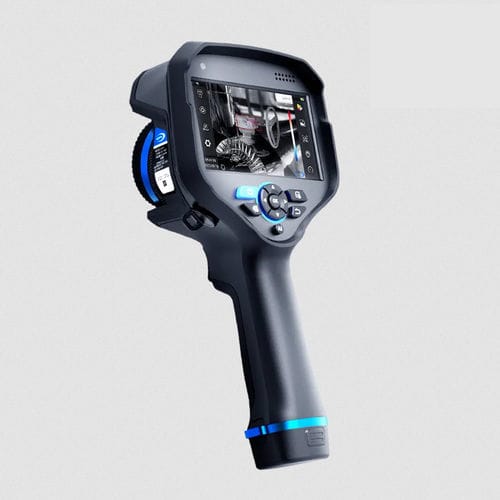
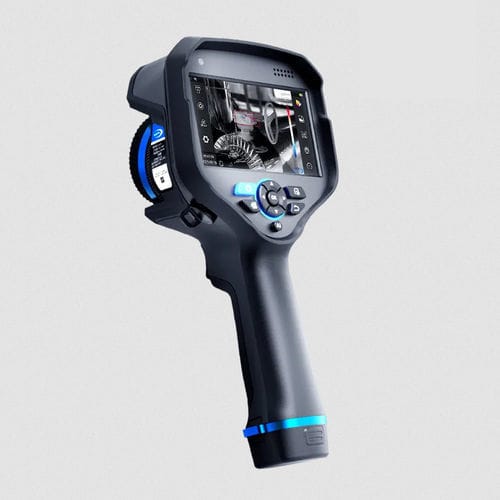
Raythink offers OGI cameras configured for different gas detection requirements. The RG630C handheld OGI camera operates in the 7–8.5 μm range, a band that covers the absorption characteristics of methane, refrigerants, SO₂, etc.
The RG630F handheld OGI camera is designed for long-wave gas detection in the 10.3–10.7 μm range, covering gases such as SF₆, ammonia, ethylene, and propylene.
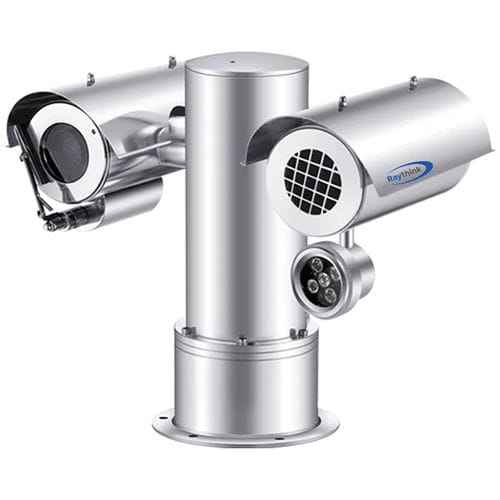
For continuous perimeter or area monitoring, the TE464G1 explosion-proof gas imaging system provides fixed-mount coverage for a broad range of hydrocarbons.
RG630C OGI Handheld Camera
RG630C handheld OGI camera
RG630F OGI Handheld Camera
RG630F handheld OGI camera
TE464G1 Explosion-Proof Gas Imaging PTZ
TE464G1 explosion-proof gas imaging PTZ
Summary
OGI cameras are effective tools for visualizing gas leaks, but their effectiveness depends first on wavelength matching. A camera detects only the gases that absorb infrared radiation within the specific filter band it uses. The examples in this guide group methane and light hydrocarbons in one band, SO₂ and refrigerants in another, and SF₆ and ammonia in a third, yet real-world cameras may use overlapping or slightly different bands, and some gases can be detected with more than one filter configuration. Before selecting equipment, list the gases your facility handles, identify their absorption wavelengths, and match those wavelengths to the correct camera configuration. If you need help mapping your gas detection requirements to the right OGI solution, contact Raythink for a technical consultation or product demonstration.
Frequently Asked Questions
How far away can an OGI camera detect a gas leak?
There is no single detection distance for every situation. The range depends on the lens focal length, the size and concentration of the leak, the radiometric contrast created by the gas-absorbing background infrared radiation, wind conditions, and the camera’s detector sensitivity. Handheld OGI cameras are commonly used from a few meters to several tens of meters away, while systems with longer focal length lenses can cover greater distances in favorable conditions.
Can an OGI camera identify the exact source of a leak?
An OGI camera shows the visible gas plume, which helps you locate the general area of a leak. For very small leaks or complex equipment, the plume may spread before it becomes visible, so the exact point source may require closer inspection or confirmation with a complementary leak detection tool.
Can one OGI camera detect multiple gases at the same time?
A single OGI camera can visualize several gases if those gases absorb infrared radiation in the same wavelength band. However, the camera cannot tell you which specific gas you are seeing. Gases that absorb in different wavelength bands require cameras with different spectral filters.
How does OGI compare to traditional gas detectors?
Traditional point sensors or sniffers measure gas concentration at one location and can detect gases that OGI cannot, such as hydrogen. OGI covers larger areas from a distance and produces a visual image of the leak. The two approaches are often used together: OGI for rapid visual screening, and point sensors or analyzers for quantification and confirmation.