#Industry News
BESS Cabinet Environmental Testing: From Rack Data to Walk-In Chamber Selection
Battery Test Chamber selection for BESS cabinet testing starts with rack temperature data, cabinet airflow and heat load.
Suppose an upper battery module runs warmer after the rack is installed in a battery energy storage system (BESS) cabinet, even though both tests use the same chamber temperature program. The enclosure may change where cooling air enters, where warm air exits and which module surfaces can still be instrumented. For BESS cabinet environmental testing, those changes help determine which rack measurements to repeat, what to measure after assembly and what a walk-in battery test chamber needs to support.
Compare temperatures at the same point in the test
If the open-rack report includes upper and lower module surface temperatures, repeat those measurements at the original locations where accessible. Use the same sensor attachment method and mark any relocated sensors on the measurement drawing. A reading from a new position can help explain the installed condition, but its location matters when comparing it with the original trace.
Compare readings at equivalent stages, such as the start of discharge. Check the initial battery temperature, state of charge, charge and discharge schedule, and cooling settings. Keep the chamber setpoint, measured air around the cabinet, rack inlet air and module surface temperature separate. Each describes a different part of the test.
For an air-cooled rack, suppose both the rack inlet and the upper module run warmer after assembly while the measured air around the cabinet remains comparable. Check whether warm exhaust is reaching the rack inlet. If the open-rack test did not measure inlet air, the new reading characterizes the installed setup. Quantifying the change requires comparable readings from both setups.
Trace where operating heat is released
A cabinet that charges or discharges during testing can place different demands on the refrigeration system from an idle cabinet. Record when the cabinet releases heat and how long each operating stage lasts. Pay particular attention when a heat-producing stage overlaps with a downward temperature ramp. The chamber may need to remove operating heat while cooling the cabinet, batteries and fixtures.
For a liquid-cooled cabinet, identify where the cooling circuit ultimately rejects heat. An external loop may carry some heat outside the chamber, while components inside the cabinet still release heat into the workspace. Provide an estimated heat load in kW for the relevant operating stages when available. The cabinet’s rated energy capacity in kWh describes how much energy it can store and does not by itself establish the required refrigeration capacity.
Turn the cabinet layout into chamber requirements
A cabinet with a side-facing inlet illustrates why the installed layout matters. The cabinet may fit inside the chamber, yet the clearance on that side and the positions of the chamber’s supply and return air can affect the conditions near the inlet. Mark the inlets, exhausts and sensor routes on the layout. Include the installed panel and door positions, especially if cables need to pass through an opening that could change airflow.
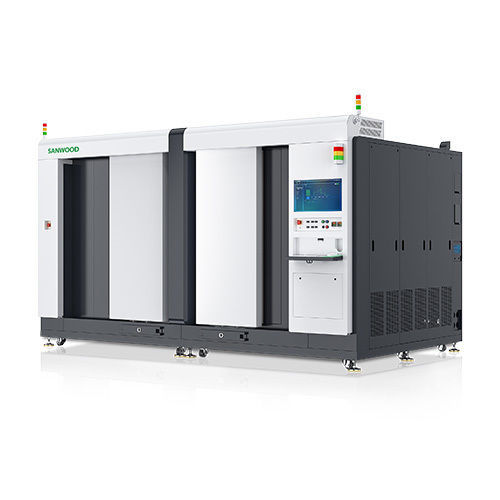
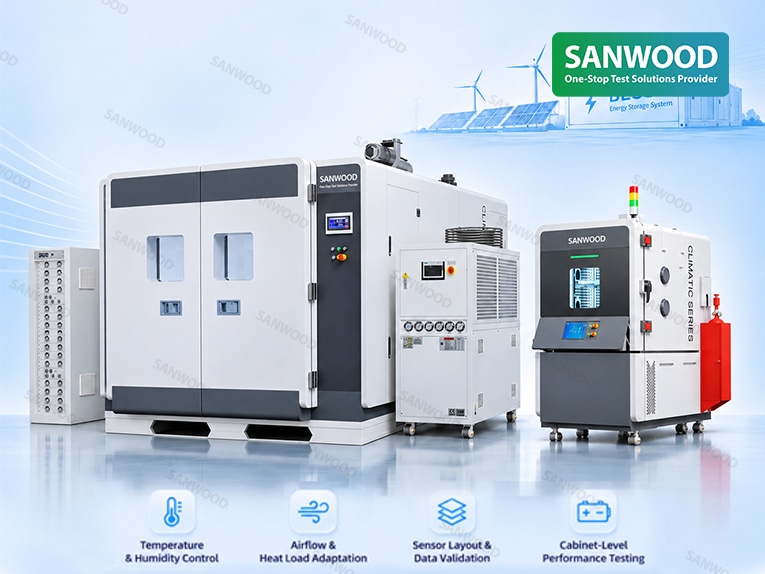
For the SANWOOD Walk-In Battery Pack Test Chamber, those details help SANWOOD assess air duct layout, refrigeration capacity and sensor placement against the planned cabinet configuration. The cabinet drawing and sensor map show where space and measurement access are needed. The operating heat estimate and temperature profile show when the chamber must remove heat and under what conditions. Together, these inputs make it possible to assess the proposed chamber against the assembled test setup.
For more details, read the full article on SANWOOD’s website:https://www.sanwood.com/news/226.html.
To learn more about SANWOOD test equipment, contact us at [email protected].