
#Product Trends
SpatiX Positioning Technology Enables Robotic Tea Harvesting in China
High-precision spatiotemporal services help intelligent robots navigate and operate reliably in real-world agricultural environments.
The future of agriculture is becoming increasingly automated, with intelligent machines taking on tasks that traditionally require significant manual effort.
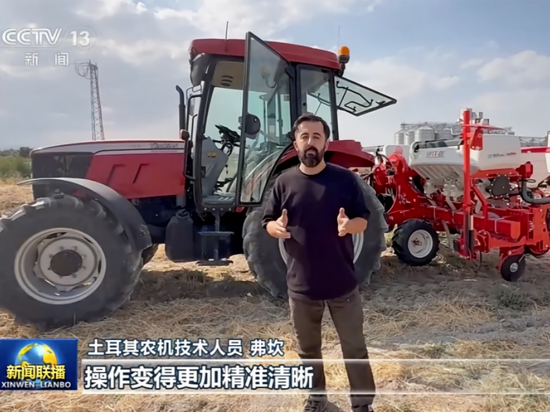
A recent application in China's tea-growing regions demonstrates how high-accuracy positioning and spatiotemporal services can support the development of agricultural robotics. The application was recently featured by Globo Rural, one of Brazil's leading agricultural media outlets.
From Tea Fields to Smart Agriculture
Tea harvesting presents a demanding environment for automation. Uneven terrain, dense vegetation and changing field conditions can make it difficult for autonomous machines to maintain reliable positioning and navigation.
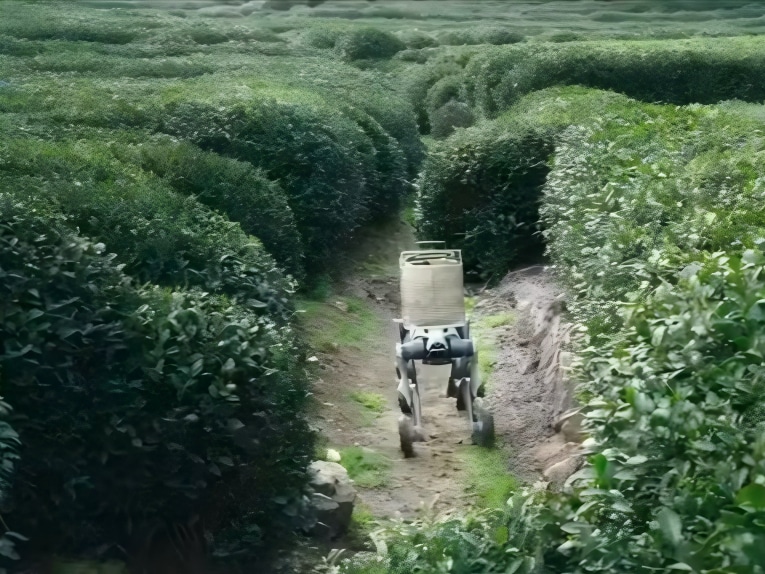
In this application, a robotic dog is being used to support tea harvesting operations in China. By combining robotic mobility with high-precision positioning technologies, intelligent machines can better understand their position within the working environment and perform tasks with greater consistency.
For agricultural robotics, positioning is more than simply knowing where a machine is. Accurate and reliable spatial information provides an important foundation for navigation, task execution and machine coordination.
Enabling Intelligent Machines in Real-World Environments
Laboratory environments can provide relatively controlled conditions. Agricultural fields are very different.
Real-world farming environments can include slopes, vegetation, irregular terrain and other obstacles. These conditions place higher demands on the positioning technologies used by autonomous machines.
SpatiX provides high-accuracy spatiotemporal services designed to deliver reliable positioning information for applications where conventional positioning may not be sufficient.
By providing accurate spatial references, positioning services can serve as an important component of the technology stack behind autonomous agricultural equipment, mobile robots and other intelligent machines.
Positioning as a Foundation for Agricultural Automation
As agriculture becomes more intelligent, positioning technology is increasingly moving from standalone GNSS applications toward deeper integration with robotics and automation.
High-precision positioning can support applications such as:
Autonomous agricultural robots
Precision farming machinery
Automated navigation and guidance
Field mapping and surveying
Machine-to-machine coordination
Smart agriculture and autonomous operations
The tea-harvesting application illustrates this broader trend: accurate positioning is becoming an essential infrastructure layer for intelligent machines operating in the physical world.
Connecting Precision Positioning with Smart Agriculture
The development of agricultural robotics requires the integration of multiple technologies, including robotics, sensors, artificial intelligence, navigation and high-precision positioning.
SpatiX is focused on providing high-accuracy spatiotemporal services that help bridge the gap between positioning technology and real-world intelligent applications.
From agricultural fields in China to emerging smart farming applications around the world, accurate positioning can help machines operate with greater spatial awareness, reliability and autonomy.
The application was recently featured by Globo Rural, highlighting how advances in positioning technology are contributing to the evolution of smart agriculture.
As autonomous machines continue to enter agricultural environments, high-accuracy positioning will play an increasingly important role in enabling machines to move, navigate and work precisely in the real world.