#Product Trends
Buyer's Guide for Room Temperature Plastic Grinding Machines
Core Differences and Selection Criteria Between Disc Type (PE Grinders) and Rotor Type (PVC Grinders)
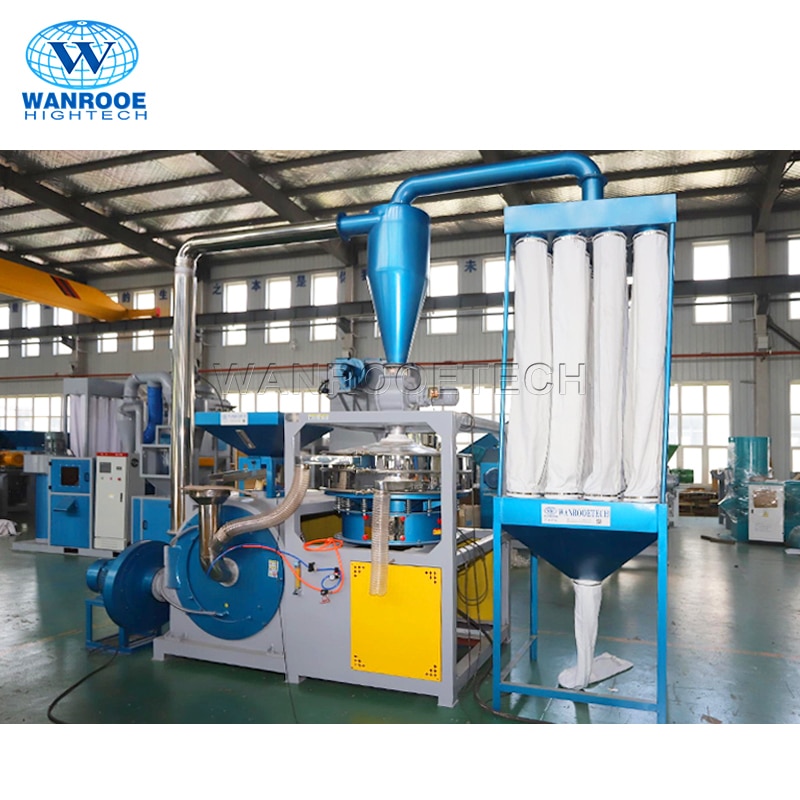
Plastic grinding machines are critical equipment in the plastic processing industry, where their selection directly impacts production efficiency and product quality. Currently, ambient-temperature plastic grinding machines primarily fall into two categories: disc-type grinding machines (typically used for PE) and rotor-type grinding machines (primarily for PVC). These two types exhibit significant differences in terms of applicable materials, working principles, and performance characteristics. This article will explore key selection factors, comparative analysis of the equipment, and application scenarios to provide industry users with a scientific reference for selection decisions.
Three Core Dimensions for Plastic Grinding Machine Selection
1.Types of Plastic Materials
The molecular structure and physical properties of plastics determine equipment compatibility. For example:
Flexible plastics (e.g., PE [polyethylene], PP [polypropylene]): Require avoiding excessive frictional heat to prevent agglomeration.
Rigid or high-melting-point materials (e.g., PVC [polyvinyl chloride], SPC waste): Demand stronger shear forces for fine pulverization.
2.Plastic Hardness and Ductility
Hard plastics (e.g., PVC sheets/pipes): Need the high-speed impact crushing capability of rotor-type grinders.
Soft/stretchable plastics (e.g., PE films, masterbatches): Disc-type grinders’ gentler grinding better preserves molecular structure.
3.Material Hardness and Melting Point Thresholds
High-hardness materials (e.g., PET bottle flakes): Require rotor-type machines with wear-resistant components.
Low-melting-point plastics (e.g., PE, ~110–130°C): Need temperature control to prevent disc-type grinders from causing melt adhesion due to frictional overheating.
The selection of ambient-temperature plastic grinding machines fundamentally hinges on the precise alignment between material properties and equipment performance. Disc-type grinders excel at gentler grinding for soft plastics, while rotor-type grinders deliver powerful fragmentation for rigid materials, creating complementary applications in plastic recycling, modification, and pelletizing. To optimize selection, users should first clarify material attributes (hardness, melting point, ductility), then factor in production scale (capacity) and particle size requirements—ultimately choosing a solution that balances efficiency and cost-effectiveness.