#Product Trends
Efficient Process Flow for Municipal Solid Waste Treatment: From Mixed Waste to Resource Utilization
Waste Reduction and Recycling
Traditional waste disposal primarily relies on landfills and incineration, which poses problems such as land occupation, soil and water contamination, and energy wastage. The fundamental principle of modern waste treatment technology is "separation before utilization" — using physical methods to segregate waste into recyclables, non-combustible inorganics, and combustible organics. This ensures each waste stream finds its appropriate destination: non-combustible materials are used for construction backfill; recyclable metals are reintroduced into production cycles; combustible components are converted into Refuse-Derived Fuel (RDF). Ultimately, this achieves the dual objectives of waste reduction and resource recovery.
The entire process centers on the core sequence of "shredding/crushing - screening - sorting - deep processing (refinement)," utilizing specialized equipment to achieve precise waste treatment. It can be specifically broken down into four key stages:
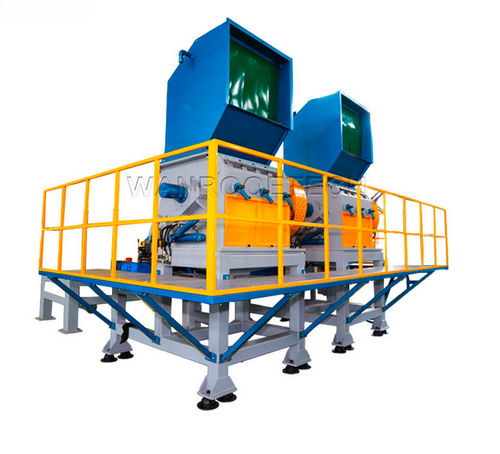
1.Pre-treatment: Dual-shaft Shredder — Breaking the "Waste Barrier" to Pave the Way for Subsequent Processing
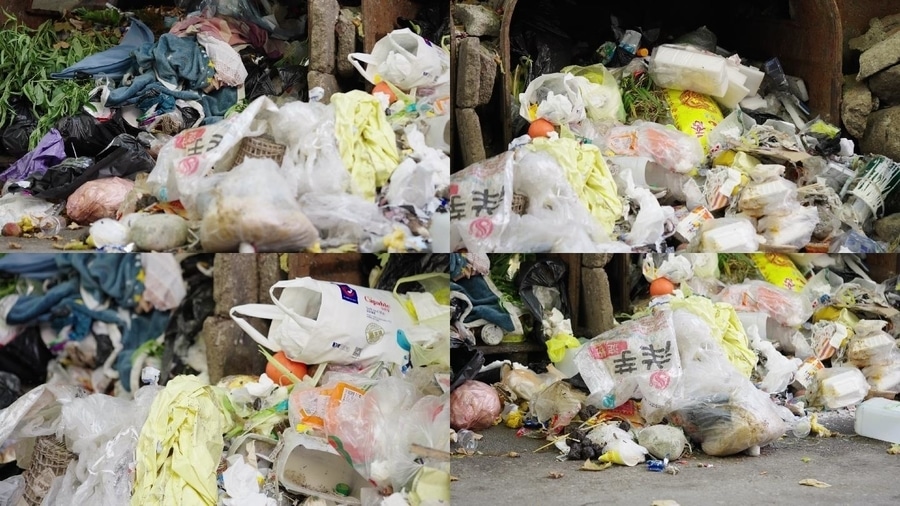
Municipal solid waste (MSW) consists of complex components including plastic bags, cardboard boxes, food waste, and bulky items, with varying forms and significant volume differences. Direct feeding into downstream equipment can easily cause clogging. At this stage, the dual-shaft shredder serves as the "first checkpoint" in pre-treatment.
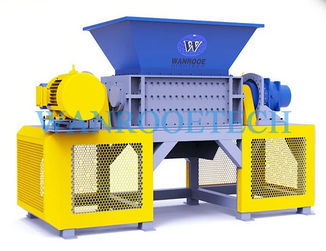
Working Principle: Utilizing dual-shaft shear shredding technology, the machine employs two counter-rotating blades to compress and shear mixed waste. This effectively breaks open garbage bags (solving the "difficult bag-breaking" problem) while reducing bulky waste (such as plastic barrels and old furniture fragments) into uniformly small pieces (typically with particle size controlled at 10-30cm).
Core Functions:
①Volume Reduction: Decreases waste volume to improve processing efficiency of subsequent equipment
②Material Liberation: Breaks open waste encapsulation, fully exposing mixed internal components to establish a foundation for next-stage screening
2. Screening: Trommel Screen — Separating Non-combustible Inorganics to "Sift Out" Backfill Resources
After pre-treatment by the dual-shaft shredder, the waste enters the trommel screen for "size-based separation", with the core objective of removing non-combustible inorganics such as debris, gravel, and glass.
Working Principle: The trommel screen achieves separation through an inclined rotating cylinder — The cylinder interior is equipped with mesh screens. As waste tumbles during rotation, materials smaller than the screen apertures (typically 5-10mm) like soil and small stones fall into the "undersize" collection zone, while larger items such as plastics, paper, and incompletely shredded food waste remain in the "oversize" stream for subsequent processing.
Resource Destination: The screened undersize (primarily inorganic residues), being chemically stable and non-corrosive, can be directly blended with "heavy materials" (high-density impurities like small rocks and non-metallic fragments) from the downstream air separation process. This mixture is suitable for engineering backfill (e.g., roadbed construction) or landscaping base soil (to improve soil aeration), achieving resource utilization of non-combustible waste and reducing landfill volumes.
3. Sorting: Magnetic Separation + Air Classification — Precision Metal Recovery and Segregation of Combustibles vs. Heavy Materials
The oversize stream (containing plastics, paper, limited metals, and heavy impurities) requires further material classification. Through the integrated operation of magnetic separators and air classifiers, this stage achieves metal recovery + light/heavy material separation.
(1) Magnetic Separator: "Capturing" Recyclable Metals for Resource Circulation
Operating Principle: Utilizing magnetic adsorption, ferrous metals (nails, cans, wires) in the oversize stream are extracted when passing through the magnetic field zone, while non-magnetic materials proceed to the air classifier.
Recycling Value: Recovered metals are transported to scrap yards for smelting, enabling "scrap-to-recycled metal" closed-loop production and reducing ore mining.
(2) Air Classifier: Density-Based Separation for "Combustibles" and "Heavy Materials"
Working Mechanism: By generating directional airflow, low-density combustibles (plastic films, paper, shredded organics) enter the "combustible light materials" channel, while high-density residues (non-ferrous metals, large stones) fall into the "heavy materials" collection zone.
Material Routing: Heavy materials merge with trommel screen undersize for engineering backfill/landscaping; combustibles become feedstock for refuse-derived fuel (RDF) production.
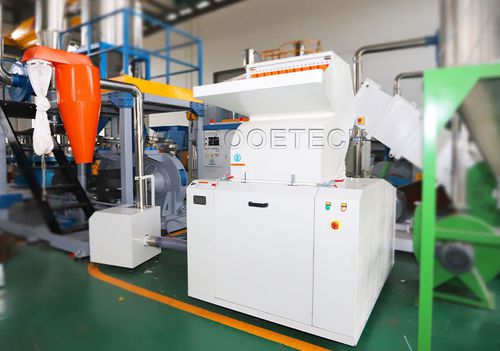
4. Refinement: Fine Shredder — Transforming Combustible Light Materials into Qualified Alternative Fuel
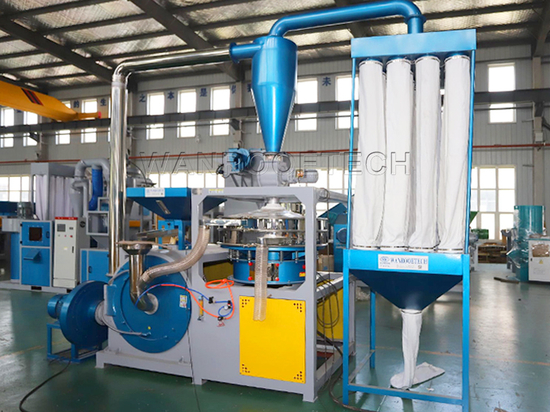
Industrial facilities (power plants, cement kilns, paper mills) require strict fuel specifications regarding particle size and homogeneity. Thus, the air-classified combustible light materials undergo secondary shredding in fine shredders to complete the "raw material-to-fuel" conversion.
Process:
Employs high-speed rotating blades/impact plates to shred combustibles into uniform 5-20mm particles
Ensures complete heat release during combustion without clogging industrial boilers/incinerators
Final Product:
The shredded material becomes Refuse-Derived Fuel (RDF) with coal-comparable calorific value (10-18MJ/kg). It directly substitutes coal for:
✓ Power generation
✓ Cement kiln heating
✓ Paper drying processes
Environmental Benefits:
① Reduces fossil fuel consumption
② Minimizes dioxin emissions (via pre-removal of soil/metal impurities)
Why the "Dual-Shaft Shredding → Trommel Screening → Magnetic Separation → Air Classification → Fine Shredding" Process Prevails Over Traditional Methods?
1. Superior Environmental Performance
✓ Landfill reduction >60%: Non-combustible inorganics/heavy materials repurposed for backfill, combustibles converted to fuel
✓ Pollution control: Pre-removal of soils/metals minimizes hazardous emissions (dioxins) and slag generation during incineration, ensuring compliance with EPA/CEWEP standards
2. High Processing Efficiency
Fully automated system (conveyors, shredders, screens in synchronized operation)
Daily capacity 100-500 tons/line, adaptable to cities of varying scales
3. Demonstrated Economic Value
① Metal recovery generates revenue streams
② Marketable alternative fuel (RDF) creates additional income
③ Reduced landfill construction/operation costs decrease municipal environmental budgets
"Municipal solid waste is not 'trash', but a 'misdirected resource'. This article analyzes a treatment process that employs the scientific workflow of shredding - screening - sorting - refinement to achieve maximized utilization for every waste stream: soil residues become backfill materials, metals transform into recycled resources, and combustibles convert to Refuse-Derived Fuel (RDF)."