
#Industry News
Electromagnets vs. Electric Motors: Key Differences Explained
Learn the differences between electromagnets and electric motors, including working principles, structure, applications, advantages, disadvantages, and selection guide.
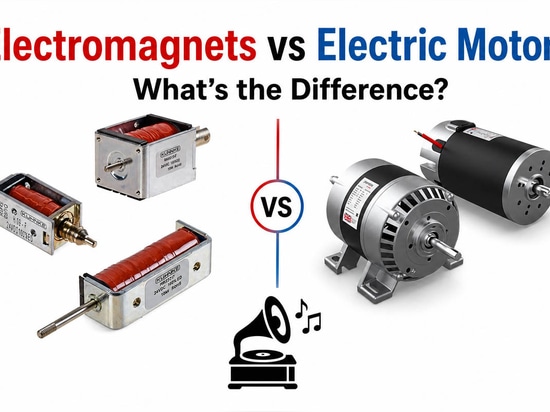
Electromagnets vs Electric Motors: What’s the Difference?
Chapter 1 : introduction of Electromagnets vs Electric Motors
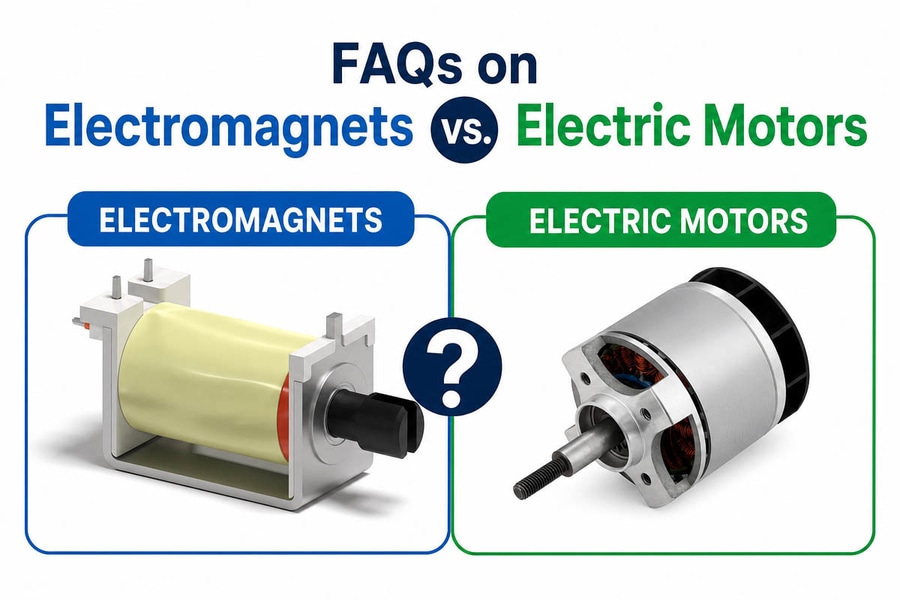
Among the most widely used electromagnetic devices in industrial automation, consumer electronics, medical equipment and manufacturing machinery are electromagnets and electric motors. Both of these devices operate using electricity and magnetic fields. However, the purposes of both of these technologies are extremely different. The electromagnet is a device transforming electricity into the magnetic field that can be switched on and off. The electric motor is a device transforming electricity into rotational mechanical motion .
The structures of both devices include coils and magnetic materials; therefore, a lot of engineers, purchasing managers and product designers tend to confuse these two technologies . However, the distinction between them plays an important role in choosing the proper component for a project.
The working principles, structures, applications, advantages, disadvantages and tips on how to choose an appropriate component for your project will be discussed in this guide on electromagnets and electric motors.
Chapter 2: What is an Electromagnet?
An electromagnet is a magnet that operates only if current flows through its coil producing a magnetic field. Electromagnets can be instantly turned on and off [in contrast to permanent magnets that cannot be] . Therefore, they are ideal for automated control systems.
The magnetic force is dependent on:
Number of turns of wire
Current flowing through the coil
Content of the core
Air space
Voltage supplied
Electromagnets are widely used in:
Solenoids
Electromagnetic lock
Magnets for lifting
Industrial actuators
Medical equipment
Sorting equipment
Chapter 3: What Is Electric Motor?
An electric motor is an electro-mechanical device transforming electrical energy into the continuous mechanical rotational energy.
Unlike the electromagnet, an electric motor produces rotating magnetic fields that drive a shaft.
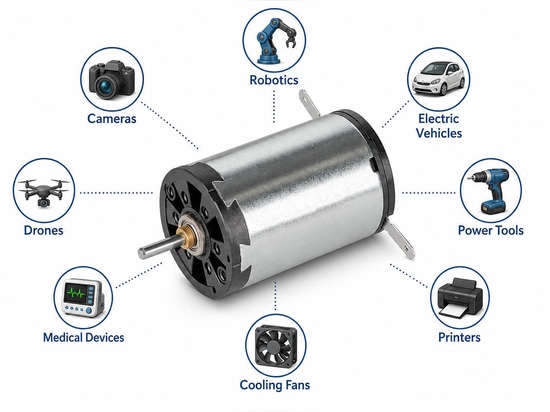
Electric motors are widely used in:
Fans & Pumps
Conveyance system
CNC machine
Robots
Electric cars
Home appliances
Chapter 4: How Does an Electromagnet Work?
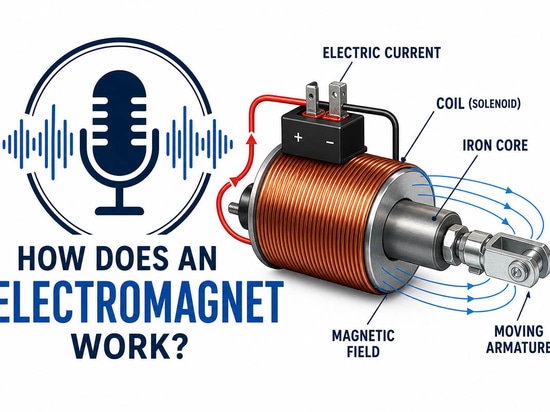
The working principle of an electromagnet lies in the Ampere Law.
Passing an electric current through a copper coil, we produce the magnetic field around the conductor.
The magnetic field is significantly enhanced by the presence of a soft iron core. The magnetic permeability of iron is high.
If the power is cut off:
The magnetic field disappears.
The gravity or the spring will return the plunger or attracted object to its initial position.
Due to the simple ON/OFF operation, electromagnets are excellent for linear actuation.
Components
Housing
Plunger (if any)
Copper coil
Soft iron core
Spring (if any)
3.
Manipulated by the magnetic force
Current
Voltage
Resistance of the coil
Air gap
Number of turns
Chapter 5: Principle of operation of electric motors
Electric motors work according to the Lorentz Force principle.
The passing of current through the coils in the magnetic field produces the force.
The interaction of the magnetic fields of the stator and rotor produces a constant torque of rotation.
Commutation is performed in different ways depending on the type of the motor:
Paintbrushes
Electronic Control Unit
Frequency regulation of AC
Electric motors are not only producing a pulling force, but they rotate all the time.
Primary Output
Speed
Torque
Mechanical energy
Industrial Applications
Applications of an Electromagnet
There is almost no automation system where there is no need for controlled linear motion or magnetic holding; and therefore, electromagnets are widely used for these purposes.
Examples of typical applications are:
Electromechanical valves
Door locks
Automatic cash machines
Textile machines
Medical analysis equipment
Packaging machines
Sorting systems
Automation industry
Magnetic lifts
Fuel injection systems
Automotive actuators
The response time of milliseconds makes electromagnets ideal for fast switching.
Chapter 6 : Electromagnets vs Electric Motors : structure and Feature comprison
6.1 Structure Comparison
Component Electromagnet Electric Motor
Coil Yes Yes
Iron Core Yes Yes
Permanent Magnet Optional Often
Rotor No Yes
Shaft No Yes
Bearings No Yes
Commutator No Sometimes
Motion Linear attraction Continuous rotation
Controller Simple ON/OFF Speed & torque control
Electric motors have significantly more mechanical components than electromagnets.
6.2 feature
Feature Electromagnet Electric Motor
Purpose Create magnetic force Create rotational motion
Output Pull, hold, push Rotation
Motion Linear Rotary
Response Extremely fast Fast
Control Simple More complex
Energy Conversion Electrical → Magnetic Electrical → Mechanical
Maintenance Very low Moderate
Lifespan Very long Depends on bearings
Cost Lower Higher
Chapter 7 : Applications of Electric Motors
In order to have continuous mechanical motion, electric motors are used.
Industries, where electric motors are widely used include:
Production
Heating, Ventilation, Air Conditioning and Refrigeration
Robotic agricultural machinery
Electric Vehicles Electric Vehicles
Aerospace
Household appliances
Water pumps
Conveyor belts.
Machine tools
Compressors &
Electric motors produce continuous torque and have high mechanical efficiency during long-term operation.
Chapter 8 : Advantages of Electromagnets
Simple construction
Low cost produced
Fast response time
Basic ON/OFF control
High reliability
Compact size
Little care needed
Long life
Easy integration with automation systems
High holding force for the size
Chapter 9 : Disadvantages of Electromagnets
Cannot perform perpetual rotation
The bigger stroke, the smaller the force
Continuous power consumption and heat generation
Timely for large forces
Short travel distance
Loss of holding force in case of the power loss (unless latching design)
Chapter 10 : Advantages of Electric Motors
Unlimited motion
High efficiency
High torque production
Variable speed drive
Long service life
Excellent for heavy-duty applications
Full range of sizes
Proven technology
Good automation friendly properties
Chapter 611: Disadvantages of electric motors
More costly
Large size
Wear and tear
Bearings need maintenance
More complicated control circuits
Higher purchase price
Vibrations and noises
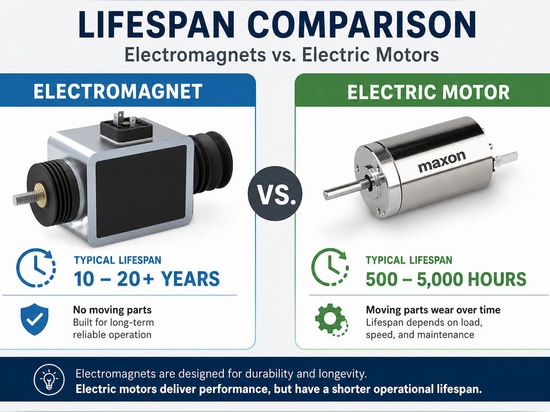
Chapter 12 : what is the different in lifespan between the electromagnets vs. electric motors
Electromagnets and electric motors have different mechanical structures so they have different lives. Electromagnets tend to last longer in general, as they have few or no moving parts, whereas electric motors have wear and tear on bearings, brushes (in brushed motors) and other mechanical parts. Why Do Electromagnets Last Longer
Electromagnets are relatively simple devices consisting of:
Copper wire coil Iron core Case Optional plunger and return spring
There is little mechanical wear as there are no constantly rotating components. When properly designed and operated within their rated duty cycle and temperature limits, the primary failure causes are:
Coil insulation breakdown
Overheat Corrosion
Mechanical fatigue of the return spring (if fitted)
Plunger wear in high cycles
Industrial solenoids for example are often rated for:
Standard-duty models: 500,000 to 5,000,000 cycles.
10 million to over 100 million cycles for high-end designs using optimized materials and lubrication.
Electromagnets, operated by others, have almost no moving parts and can be depended on to work for more than 20 years.
How electric motors wear out
Electric Motors have a lot more moving parts like:
Rotor Shaft Bearings Cooling fan Couplings Seals
Brushes and commutator (for brushed DC motors)
These parts are continuously exposed to friction, vibration and thermal cycling, which gradually reduces service life.
Typical failure modes are:
Wear of bearing (commonest problem)
Insulation failure
Rotor unbalance
Getting too hot
Contamination by dust or moisture
Brush wear (brush motors only)
Industrial motors are used continuously, so they are normally rated in operating hours, not cycles.
Typical life spans are:
Small DC motors: 2,000–10,000 hours
Brushed DC motors 1,000-8,000 hours (brushes wear out)
Brushless DC motors (BLDC) 20,000-50,000 hours
AC induction motors: 30,000-60,000 hours or more with good maintenance.
How long is it for?
For intermittent linear actuation, the practical life of electromagnets is generally longer because there are fewer parts that can wear out.
For continuous rotary motion , electric motors are the suitable option . They require periodic maintenance ( bearing replacement and in case of brushed motors , brush replacement ) for the full service life .
Factors That Influence Longevity
The same operating conditions influence electromagnets and electric motors:
Duty cycle (
Ambient air temperature
Voltage stability
Operating (working) current
Cooling performance
Loading conditions
Dust and moisture exposure
Vibration of Corrosion
Installation and maintenance
Keeping these factors within the limits specified by the manufacturer can increase the service life significantly.
Electromagnets and electric motors differ in the structure of mechanical components and therefore have different life spans. In general, electromagnets tend to last longer because they consist of very few or even no movable components, unlike electric motors, which include moving parts such as brushes and bearings. Why Do Electromagnets Last Longer
Electromagnets are rather simple devices containing the following components:
Copper wire coil Iron core Case Optional plunger and return spring
There are no movable parts, which means the electromagnets experience minimal mechanical wear and tear. Under proper design and within the range of operating parameters set by the manufacturer, the most frequent reasons of failure may be:
Lifespan Comparison
Feature Electromagnets Electric Motors
Typical Service Life 5–20+ years 5–15+ years
Operating Cycles 500,000 to over 100 million cycles (depending on design) 10,000–60,000 operating hours (typical industrial motors)
Moving Parts Only optional plunger Rotor, shaft, bearings, cooling fan
Mechanical Wear Very low Moderate
Maintenance Minimal Regular bearing lubrication and inspection
Main Failure Mode Coil insulation aging or overheating Bearing wear, insulation aging, brush wear (if applicable)
Insulation deterioration of the coil
Overheat Corrosion
Fatigue of the return spring (if present)
Wear of the plunger in case of high cycle rates
Industrial solenoids, for instance, can be rated as follows:
Standard duty units: 500,000 - 5,000,000 cycles
10 million - over 100 million cycles for advanced designs.
Electromagnets operated by someone else have few moving parts and are expected to perform for over 20 years.
Wear and Tear of Electric Motors
In contrast to the electromagnets, electric motors contain many movable components, including:
Rotor Shaft Bearings Cooling fan Couplings Seals
Brushes and commutator (only in brushed DC motors)
These parts experience friction, vibration and thermal cycling, which inevitably leads to gradual wear.
Common failure modes are:
Wear of bearing (the most frequent reason)
Insulation deterioration
Unbalance of the rotor
Excessive heat
Dust contamination or moisture
Brush wear (only brushed DC motors)
Industrial motors operate continuously and thus are typically rated by the number of hours of operation.
Typical service lifespans:
Small DC motors: 2,000 – 10,000 hours
Brushed DC motors: 1,000-8,000 hours (the brushes will wear out)
Brushless DC motors (BLDC): 20,000-50,000 hours
AC Induction motors: 30,000-60,000+ hours, depending on maintenance.
How long is it for?
The practical service life of electromagnets is longer in case of intermittent linear movement because fewer parts are exposed to wear and tear.
Continuous rotary motion, in its turn, is done better by electric motors, which require regular maintenance (replacing bearings and brushes in brushed motors).
Factors That Influence Lifespan
Operating parameters that influence electromagnets and electric motors are:
Duty cycle (
Air ambient temperature
Voltage stability
Operating (load) current
Cooling efficiency
Loading conditions
Exposure to dust and moisture
Vibration and corrosion
Installation and maintenance
Staying within manufacturer's recommendations regarding these factors can considerably prolong the lifespan of both devices.
Chapter 13 : Electromagnet or Electric Motor: Which One to Choose
The choice of the proper device depends on the desired motion, force, speed and conditions of operation.
When to Choose an Electromagnet:
There must be linear motion.
Need control of instant ON/OFF.
It is needed to grab or release the object.
Space is limited.
Maintenance should be minimal.
Price is the key factor.
Typical examples are:
Solenoid valves *
Door locks
Automated vending machines
Medical instruments.
Sorting Machines
When to Choose an Electric Motor:
The continuous rotation is necessary.
It must work at high speed.
It is needed to transmit mechanical power.
Torque is high.
Operating cycles are expected to be long.
Typical examples are:
Fans Pumps
Conveyor systems
Robotics
Electric motor vehicles
Industrial machinery
Project Selection Checklist
Before choosing an electromagnet or electric motor, answer the following questions:
✔ Is it linear or rotational motion that is required?
✔ What is the force or torque needed?
✔ How long will the device work after one charging?
✔ What is the source of the supplied voltage (DC or AC)?
Do you want speed control?
✔ What is the permissible temperature rise?
✔ What duty cycle does it need (10%, 25%, 50% or 100%)?
What environmental conditions (dust, humidity, vibrations) will the device be exposed to?
✔ How much space do I have for the installation?
✔ What is the budget of the project?
The correct choice of the equipment at the design stage will reduce the maintenance costs, improve the system efficiency and increase the equipment life span.
Chapter 14 : Electromagnets and Electric Motors Future Trends
Both of these technologies are constantly being improved due to advancements in materials, electronics and manufacturing.
Recent developments are:
Brushless motors of high efficiency
Smart electromagnets with integrated sensors
Motor control systems based on artificial intelligence
Permanent magnets free of rare earths
Miniaturized actuators for medical devices
Industrial automation high speed
Electromagnetic solutions for energy efficiency
Predictive maintenance and Industry 4.0 integration
As factories become smarter and more connected, electromagnets and electric motors will remain indispensable elements of industrial automation.
Chapter 15 : FAQ: Frequently Asked Questions
1. What is the difference between an electric motor and an electromagnet?
An electromagnet is a device producing the controllable magnetic field for attracting or holding an object . An electric motor is a device converting electrical energy into the continuous rotation of the shaft.
2. Can I replace an electric motor with an electromagnet?
No. An electromagnet produces a linear magnetic force, an electric motor produces continuous rotary motion.
3. Which device consumes more power?
Electric motors have a tendency to consume more power because they produce continuous mechanical motion. Electromagnets usually require power only when they are energized (even though there are continuous duty designs with significant power consumption).
4. Are electromagnets reliable?
Electromagnets are highly reliable and need very little maintenance as they consist of few moving parts.
5.Which one is better for industrial automation?
It depends on the application. Electromagnets are ideal for switching, locking and actuation . Electric motors are great for driving rotary machines.
6. Can electromagnets be energized continuously?
Yes, if they have the rating of 100% duty cycle and are provided with a good heat dissipation.
7. Which industries use electromagnets and electric motors?
Both of these technologies are widely used together in automotive, robotics, packaging, medical devices, factory automation, aerospace, logistics and manufacturing.
8. How do I choose the right solution for my project?
First, you should define the required motion (linear or rotary), force or torque, duty cycle, power supply, operating environment and available installation space. These factors will define whether you should choose an electromagnet or electric motor.
Chapter 16 : Conclusion
Even though electromagnets and electric motors are based on electromagnetic principles, they are designed for very different purposes. Electromagnets produce a controllable magnetic field for linear motion, holding or switching. Electromagnets are perfect for solenoids, valves, locks and automation systems. Electric motors transform electrical energy into the continuous rotation of the shaft. They are used for driving industrial machinery, conveyor systems, electric vehicles and home appliances.
Your choice between electromagnets and electric motors is finally determined by the requirements to the motion of your application.