
#Industry News
Custom Air Core Coil Winding Guide for Engineers & Buyers
Learn how custom air core coil winding works, including design, materials, manufacturing processes, applications, and key factors for engineers and buyers.
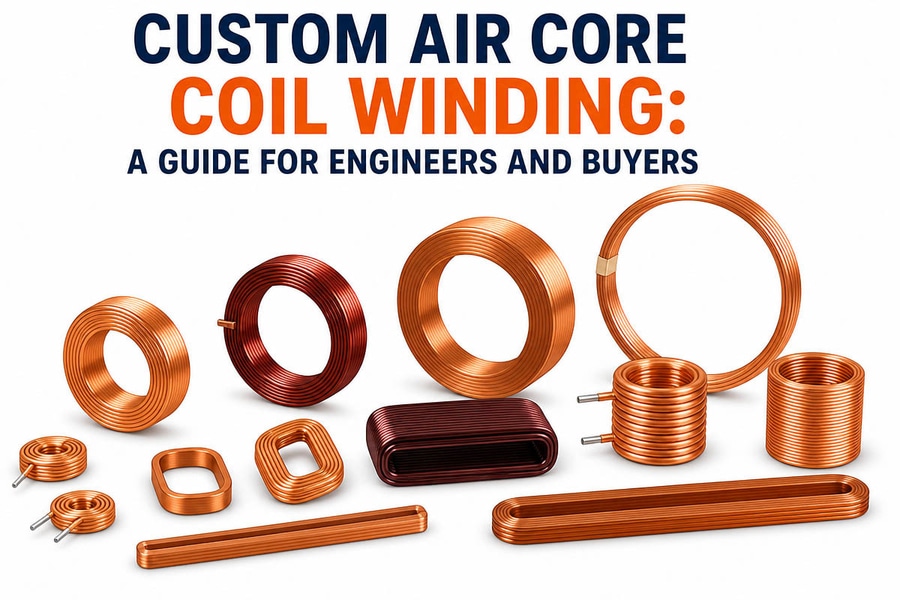
Custom Air Core Coil Winding: A Guide for Engineers and Buyers
Custom air core coils are highly demanded in high frequency electronics industry where signal loss is minimal, efficiency and accuracy of electromagnetic behavior is very high. Unlike the ferrite or iron core coils the air core coil has air in its composition which is magnetic core material of the coil.
Choice of custom air core coil producer is an important decision for engineers and buyers who should meet the necessary values of inductance, resistance, size and power rating and reliability of the coil. In this guide we will describe the process of custom air core coil winding and how to select a buyer. _
Chapter 1: What is a Custom Air Core Inductor?
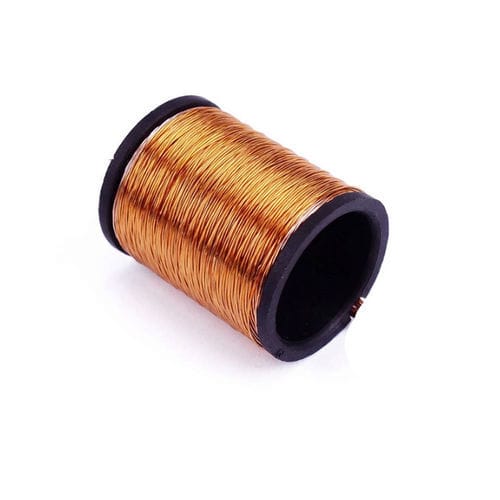
Custom air core coil A custom air core coil is a kind of electromagnetic component that is formed by the process of winding the insulated copper wire in a certain form without a magnetic core. Due to the current passing through the winding the magnetic field arises.
Since the air core coil has no iron or ferrite core, it means that it possesses the following properties:
LOW MAGNETIC LOSS
High Frequency Performance: Excellent
Inductance feature stability
Not saturated
High linearity.
Lightweight design
Typical custom air core coils are designed in accordance with customer’s requirements such as:
Inductance value (mH, uH)
Frequency of operation
Diameter of wire
Diameter of coil
Turns number
Current Rating
Resistance
Mounting method
Chapter 2: How Do Air Core Coils Work?
In order to produce an air core coil the copper wire is carefully shaped in a calculated form of a coil.
The basic steps in winding the air core coil are:
1. Calculation of the coil
Before the process of manufacture the engineers should calculate the necessary parameters of the coil:
2 Inductance.
Turns number
Diameter of coil
Wire gauge
Pitch windings
Running current
The inductance is mainly defined by the following parameters:
Number of turns
Length of coil
Wire pitch
Diameter of coil
The accuracy of calculation provides satisfaction of electrical requirements of the future coil.
2. Selection of the copper wire
The wire is a critical parameter of coil operation.
There are several options for copper wire:
Copper Wire, Enamelled
The wire is often used for the following purposes:
Excellent insulation
High temperature resistant
Winding capacity
Litz Wire
High frequency applications because of the following advantages of the wire:
Reduced skin effect losses.
Reduced AC resistance
Reduced losses of energy
Special Wire Materials.
There is a need in such wire in some applications:
High temperature cable
Self-bonding wire
Special insulating coatings
3. Precision-coil winding
The copper wire is wound into the desired form of the coil by the automated winding machines.
Control of the winding process:
Tension of wire
Turn number
Accuracy of pitch.
Diameter of coil
Layers organization
Precise control of the winding process is required to produce high-performance custom air core coils.
4. Attachments and protection of the coil
After the winding of the coil there are some additional procedures which should be carried out:
Bonding procedure
Epoxy coating
Curing at the heat
Housing (protection)
Terminals for installation
These procedures improve:
Mechanical strength
Resistance to vibrations
Long-term reliability
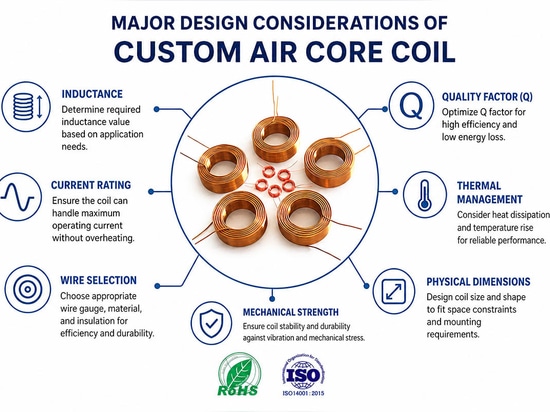
Chapter 3: Major Design Considerations of Custom Air Core Coil
There are several important parameters of the coil which engineers should pay attention to while designing the custom air core coil.
1. Inductance value
The value of inductance is the most critical parameter.
Increased inductance usually requires:
More turns of wire
Larger size of coil
Greater length to wind
Design should consider the requirements of inductance in view of the physical limitations.
2. Turn number
Air-core coils are especially suitable for high frequency applications.
Typical applications are:
RF circuits
Inductive charging systems
Communications Equipment
Sensors
Oscillators .
Geometry of the coil is critical factor at high frequencies.
3. Size and geometry of the coil
Several forms of coils can be built for custom air core coils:
Circular loops
Spiral coils
Coils – cylindrical
Flat coils
Multi-layer coiling
Form depends on:
Area of installation
Requirements of magnetic field
Environment of application
4. Current carrying capacity
The diameter of the wire defines the value of maximum current .
The larger diameter provides:
Less resistance
Higher current carrying capacity
Lower heating
Engineers should define:
Direct electric current
Maximum current
Duty cycle
Temperature rise limitations
Chapter 4: Advantages of Custom Air-Core Coil Winding
1. High Frequency Response Better
Air core coils are good for high frequency applications due to absence of magnetic core losses.
2. No magnetic saturations
Air-core coils do not suffer from magnetic saturations in the strong magnetic field unlike ferrite or iron-core coils.
3. High Design Versatility
Custom producer can tune:
Dimension of form
Type of wire
Inductance
Terminals To satisfy special requirements of application.
4. Reliable Electrical Properties
Air core coils are reliable because of stable electrical properties regardless of core material.
Chapter 5 : Applications of Custom Air Core Coils
Custom air core coils are widely applied in many different industries.
1. Wireless Charging Technologies
Air core coils are used in the following applications:
Power transmission
Charging pads
Energy transfer device
2. RF & Communication Equipments
Usage of air core coils:
Antenas
Filter signal
Frequency circuits
3. Medical Devices
Usage of air core coils:
Medical sensors
Imaging Devices
Detection systems
4. Industrial Control Systems
Usage of air core coils:
Sensors
Electromagnetic devices
Control units .
5. Automotive electronics
Usage of air core coils in:
System of EV charging
Battery management system
Automotive sensors
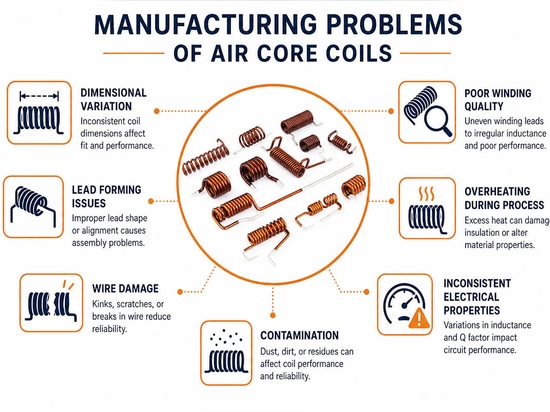
Chapter 6 : Manufacturing Problems of Air Core Coils
1. Maintaining Inductance Accuracy
Small variations in the following parameters may affect the value of inductance:
Spacing of wire
Diameter of coil
The number of turns
The strict control of manufacturing process is required.
2. Wire Tension Control
The incorrect wire tension leads to:
Uneven winding
Deformation of coil
Distortion of electrical parameters
Quality control of the process is provided by professional winding facility.
3. Temperature regulation
The heating of the coil involves the following factors:
Current level
Wire resistance
Operation environment
Thermal testing is a must for high power applications.
Chapter 7 : How To Choose A Custom Air Core Coil Manufacturer?
There are several important criteria that engineers and buyers should take into account while selecting custom air core coil manufacturer:
1. Design Capability
A suitable manufacturer should provide the following services:
Coil design support
Electrical simulations
Prototype building
Engineering recommendations
2. Production Machinery
Suppliers that have the following facilities are preferred:
Automatic winding machine
Testing equipment, high accuracy
Quality control systems
3. Test Ability
Important tests are:
Inductance testing
Resistance measuring
Insulation test
Temperature rise test
Reliability test
4. Customization Experience
The trusted supplier should provide support in the following areas:
Low volume production
Engineering samples
Mass production
Special requirements.
Chapter 8 : Buyer Checklist for Custom Air Core Coil Projects
Selecting the correct custom air core coil supplier is crucial to guarantee that the products will function properly and reliably. The buyer needs to have some technical requirements prepared and check the engineering ability of the supplier before making a decision on collaboration.
First of all, buyers need to understand what electrical parameters should be taken into consideration. In particular, inductance value, operating frequency, resistance, current rating, and voltage requirement are among the most common parameters. They impact the performance of the coils significantly and must be verified at the design stage.
The buyers need to think about mechanical requirements as well. It may include dimensions of the coil, its winding structure, wire type, terminals design, and available space for the installation.
In addition, the supplier must have certain customization ability. It means that the professional custom air core coil manufacturer must provide assistance with the design, prototyping, engineering optimization, and mass production.
Quality control should be considered too. It is necessary to check whether the supplier has inductance testing, resistance measurement, insulation test, temperature rise test, and reliability verification in the list of their activities.
Moreover, buyers should verify the production capacity, lead time, minimum order quantity, and cost structure of the supplier before collaboration. The supplier must be able to produce prototypes and large volumes of products.
Finally, the buyer must evaluate the industry experience, communication ability, and technical support of the manufacturer.
Before the purchase buyer should clarify the following information:
✓ Required inductance value
✓ Operating frequency
✓ Maximum current
✓ Coil dimensions
✓ Wire specification
✓ Temperature requirements
✓ Quantity of production
✓ Testing requirements
✓ Schedule of delivery
Well-defined specifications help to prevent design changes and delays in production.
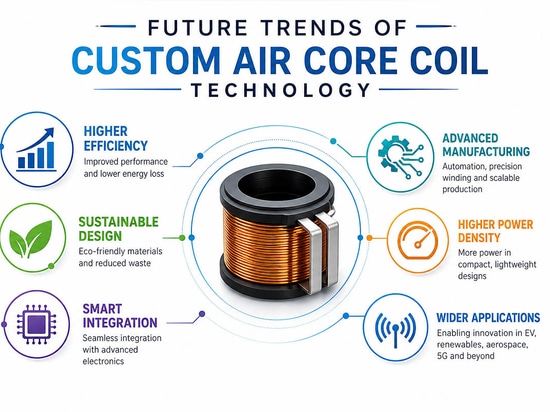
Chapter 9: Future Trends of Custom Air Core Coil Technology
Moreover, there is a high likelihood that the demand for custom air core coils will increase significantly because of the tendency for electronic gadgets to reduce in size and become more effective in terms of power usage. The future directions of custom air core coils should be aimed at ensuring better electrical properties along with minimizing size and cost.
First, one of the key trends in the development of air core coils will be their application in the areas of high-frequency wireless power transmission, 5G communications, Internet of Things and sensors. Since the frequency of operations is growing in this direction, there will be a need for new winding techniques as well as for novel material combinations to ensure stable inductance and decrease losses of energy.
Second, another major trend will be miniaturization and customization of the coil. Namely, there will be the need to develop more compact and powerful air core coils for use in wearable electronics, medicine, automotive industry and semiconductors.
Third, thermal properties of custom air core coils will be another crucial aspect, especially taking into account the need for higher current loads and continuous operations of coils.
Finally, smart manufacturing and quality monitoring technologies will provide additional means of increasing efficiency of the production process due to real-time inspections and automatic testing.
Thus, being one of the important parts of next-generation electronic systems, custom air core coils will allow providing reliable and efficient electromagnetic solutions.
Chapter 10: Custom Air Core Coil Winding - FAQ
1. What is an air core coil?
Custom air core coil is a special winding coil without magnetic core, core material is air, with stable inductance and high frequency performance.
2. What materials are used for air-core coils?
Most air core coils are made from enamelled copper wire, Litz wire or special high temperature copper wire.
3. Why to choose air core coil instead of ferrite core coil?
The air core coils have lower losses, better high frequency performance and lack of magnetic saturation.
4. Can air core coils be custom made?
Yes. The size, form, inductance, wire type and electrical parameters can be done in accordance with the customer’s specifications.
5. In which industries are custom air core coils used?
They are widely used in automotive electronics, medical devices, RF equipment, wireless charging and industrial systems.
6. How to test the quality of air core coil?
Typical tests include inductance measuring, resistance test, insulation test and temperature rise test.
7. What defines the inductance of an air core coil?
Main factors are number of turns, diameter of coil, length of winding, wire pitch and geometry of the coil.
8. How long does it take to build a custom air core coil?
The time of production of the prototype depends on complexity of the design but usually several weeks are required for prototype development, production and testing.
Chapter 11: Conclusion
Custom air core coil provides excellent performance for high frequency stability, low loss and flexible electromagnetic design applications. Knowing the winding process, design requirements and supplier capabilities helps engineers and buyers to make the proper choice.
Choosing an experienced custom air core coils manufacturer allows ensuring high quality and reliable performance of the product, from prototype development to mass production.
About Weilong Technology
Founded in 2007, Weilong Technology has over 20 years of experience in solenoid and electromagnetic coil manufacturing. We specialize in the design, development, and production of customized electromagnetic solutions for customers worldwide.
Our manufacturing capabilities include a professional testing laboratory, metal stamping workshop, CNC machining, tooling development, precision coil winding, and assembly production lines. Supported by advanced equipment, experienced engineers, and strict quality control systems, we deliver reliable prototypes and high-quality production solutions for various industrial applications.
For more information, please visit: www.smartsolenoid.com