#Product Trends
How to Achieve Screw Fastening on Different Planes and Angles for Automatic Screw Driving in Automotive Lamps
Automatic Screw Driving, automatic screwdriver, electric screwdriver with data traceability
1. Existing Pain Points in Traditional Fastening Processes for Automotive Lamps
The housing of automotive lamps has a complex, curved, and multi-stepped irregular structure. The assembly fastening points are distributed across multiple different-level planes and inclined surfaces. The screw fastening angles required for different positions vary. Traditional fastening solutions mostly use a single-station fixed fixture combined with a screwdriver. The fastening stroke and working angle of the equipment are fixed, allowing it only to fasten screws on a single plane. Facing the assembly requirements of multi-angle and cross-plane lamps, there are several common production shortcomings.
1. Incompatibility with automated production for multi-angle points.
Inside the lamp assembly, lenses, brackets, bases, and other components are arranged alternately. Screw positions are scattered on vertical surfaces, inclined surfaces, and surfaces with height differences. Conventional fixed-axis fastening equipment cannot flexibly change its working inclination angle. A large number of inclined screw points can only be handled manually by operators using hand-held screwdrivers. Manual hole seeking has low efficiency, and due to the influence of hand force application, defects such as crooked screws, floating screws, and damaged threads are very common.
2. Risk of interference and collision when working in narrow cavities.
The internal assembly space of automotive lamps is tight, with components and wiring harnesses densely arranged. Conventional split-type tightening modules have messy tubing/cabling and a bulky structure. During the fastening process, they are very likely to collide with the surrounding plastic housing and electronic components. Frequent interference issues hinder the implementation of automation.
3. Inability to finely adjust tightening pressure as needed.
Small self-tapping screws used in lamps are sensitive to downward pressure (plunge load). Manual tightening relies on feel, easily leading to cracked plastic bases due to excessive pressure or incomplete fastening due to insufficient pressure. Ordinary older tightening units lack a stepped pressure adjustment structure, making it difficult to match the differentiated downward pressure processes for different screw specifications.
4. Lack of process control capability during fastening.
Traditional manual tightening and simple fixed electric screwdrivers lack data acquisition functionality. The quality of multi-angle fastening processes cannot be quantitatively controlled. If batch fastening defects occur, the tightening parameters cannot be traced back, making it difficult to meet the strict full-process traceability standards of the automotive parts industry.
2. Danikor's Solution: Tightening Module Combined with Screwdriver for Multi-Angle Fastening
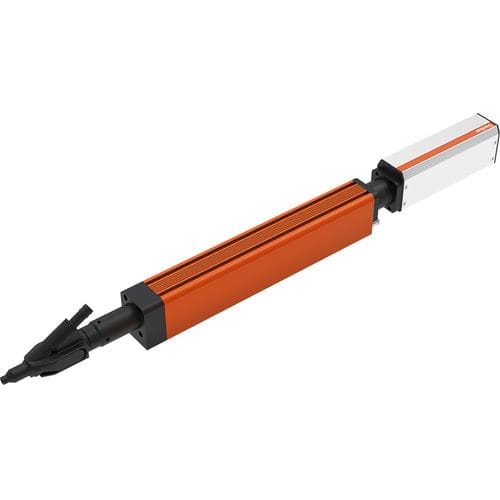
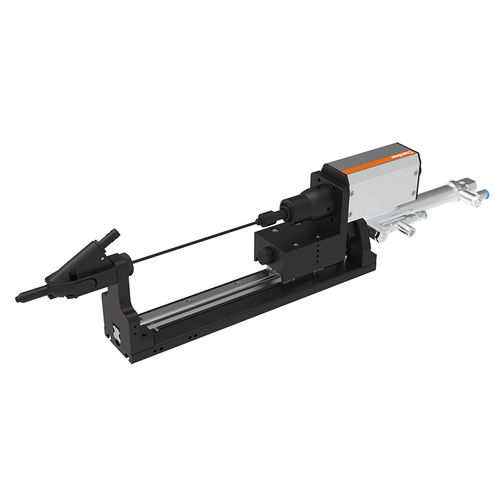
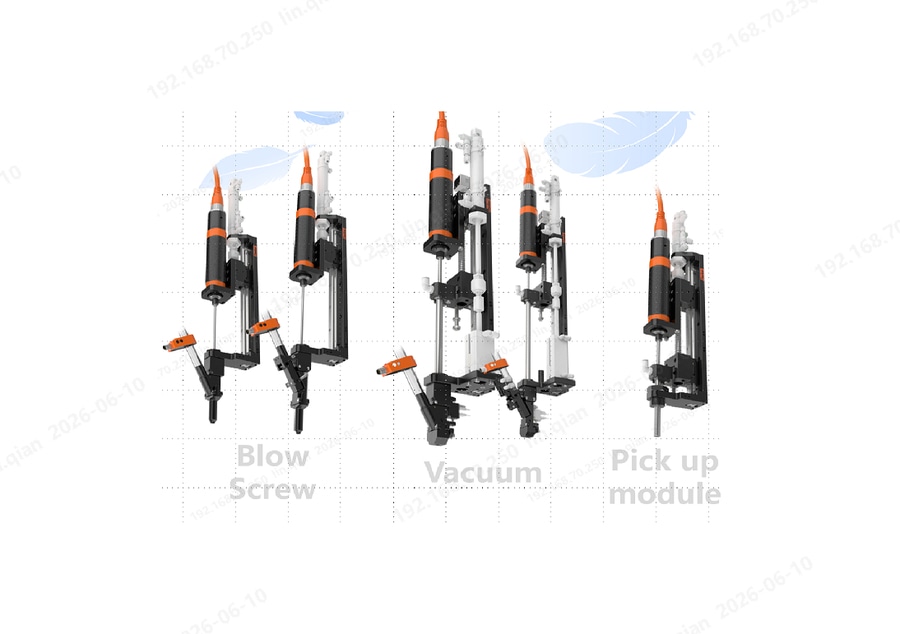
To address the challenges of cross-plane, multi-angle fastening for automotive lamps, a solution combining a 6-axis collaborative robot equipped with a Danikor tightening module and an intelligent screwdriver can be used. Leveraging four major product advantages of the module, and combined with the robot's flexible positioning capability, this solution solves the pain points of multi-angle, multi-plane fastening in one integrated approach, balancing production cost and mass production stability.
1. Optimized Compact Structure, Suitable for Interference-Free Operation by Robots in Tight Spaces
The Danikor tightening module has a compact structure and can be easily fixed to the end arm of a collaborative robot. In the tight cavity of the lamp with densely packed components, when the robot moves to change the working angle of the screwdriver, the module can flexibly avoid surrounding structural parts, preventing collision and interference issues. This enables obstacle-free fastening at multi-angle points within complex internal cavities.
2. Stable Module Performance, Pneumatic Pressure Regulation Adapts to Differentiated Downward Pressure Processes for Small Screws
Paired with an intelligent screwdriver, the module uses a pneumatic pressure regulation structure to flexibly adjust the downward fastening pressure, adapting to the requirements for fastening small self-tapping screws in lamps. The bit and screw suction tube have an active stop function, enabling faster and more stable screw holding and greater durability of wear parts. By regulating the downward load with air pressure, the reaction force on the operation is smaller. When the robot changes its inclination angle for fastening, the downward pressure of the screwdriver remains stable without interference from the angle change. For plastic bases, the pressure can be lowered to prevent cracking; for metal brackets, the pressure can be increased to ensure the correct insertion depth. This prevents defects like housing cracking and incomplete fastening at the hardware level.
3. Easy-to-Use Module, Optimizing Efficiency of Robot's Multi-Angle Hole Seeking
The module includes a guide sleeve structure, which, combined with the robot's motion path, helps the screwdriver accurately locate the hole. Screws are fed automatically via blow feeding, eliminating manual screw picking and loading. When the collaborative robot moves the module to any inclined plane point, the guide sleeve assists the bit in quickly aligning with the threaded hole, preventing the problem of screw tilting or jamming during multi-angle operation. This significantly improves the robot's autonomous hole-seeking success rate and reduces the need for custom non-standard guide tooling.
4. Full-Production Process Control, Enabling Digital Traceability of Multi-Angle Fastening Quality
The Danikor tightening module, paired with the intelligent screwdriver, can interface with the robot control system to monitor production data for the entire process in real-time. The screw suction structure has excellent stability, reliably preventing screw tilt caused by gravity under multi-angle fastening conditions, and ensuring screw perpendicularity. It also helps remove machining debris generated during operation. The system simultaneously collects fastening data, including screw count, fastening sequence, and torque data. Whether on horizontal surfaces, inclined surfaces, or points with height differences, the fastening parameters for every screw can be completely saved and archived. This can interface with the vehicle parts MES system, meeting the stringent quality traceability and control standards of the automotive lamp industry.
The automated solution of a tightening module combined with a screwdriver can also be applied to multi-angle fastening processes for other complex curved, irregularly shaped components such as new energy vehicle lamps, vehicle center console housings, and automotive plastic interior parts, providing automotive parts manufacturers with a lightweight, highly flexible option for implementing automated fastening.