#Product Trends
Pain Points and Solutions for Micro Screw Feeding in Mobile Phone Assembly
Micro Screw Feeding in Mobile Phone Assembly
I. Core Feeding Difficulties in the Mobile Phone Micro Screw Assembly Industry
The fastening screws used inside mobile phones are mostly extremely small, short and stocky, with a length-to-diameter ratio (L/D) of ≤ 1. The following difficulties are common in production:
Frequent jamming leads to production line stoppages.
Micro screws have small diameters, thin heads, and short threads. Common screw feeding equipment is prone to screw stacking and jamming. Once a jam occurs, manual disassembly and cleaning are required, interrupting automated continuous production.
Poor adaptability for short, stocky screws leads to unstable feeding.
The short screws used for mobile phone batteries, middle frames, and camera modules often have an L/D ratio ≤ 1. Traditional vibratory bowls and linear vibratory feeders have a weak ability to separate these short, low-head screws, making them prone to tipping and stacking during transport, resulting in intermittent material supply.
Troubleshooting is complicated and maintenance is time-consuming.
When micro screw jams or other faults occur, the process of disassembling and replacing components is complex, leading to lengthy equipment downtime for maintenance.
No advance warning for material shortages, causing production interruptions.
Manual inspection of the material hopper has a lag time. When the hopper runs empty, the equipment stops, and the assembly line must wait for re-supply, causing station idleness and wasted takt time.
Insufficient positioning accuracy leads to a high rate of fastening defects.
The assembly tolerances for mobile phones are very tight. Positioning deviation during screw feeding and delivery can cause the suction nozzle to pick up the screw at an angle, leading to cross-threading, floating screws, or missing screws, which directly impacts the overall product yield.
High cleanliness requirements for screws.
3C (Computer, Communication, and Consumer Electronics) mobile phone workshops have stringent cleanliness standards. Vibration and friction from ordinary screw feeders can generate metal shavings and oil contaminants. If these shavings adhere to the screws, they can scratch the phone's housing or motherboard contacts, causing cosmetic defects and potential circuit issues.
Risk of mixing screws of different lengths.
A single mobile phone assembly requires various types and lengths of micro screws. If screws of different lengths are mixed during assembly, it can lead to complete product scrappage.
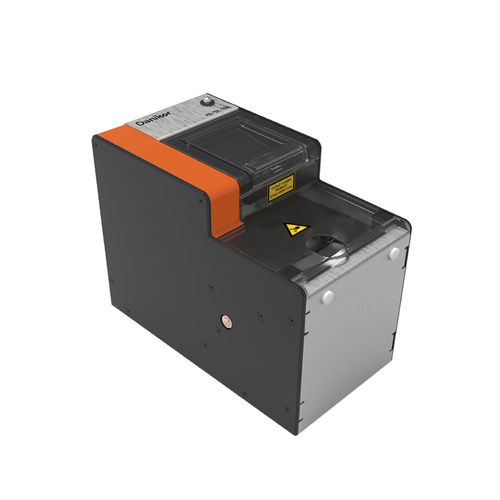
II. Targeted Advantages of the Danikor Disc Feeder
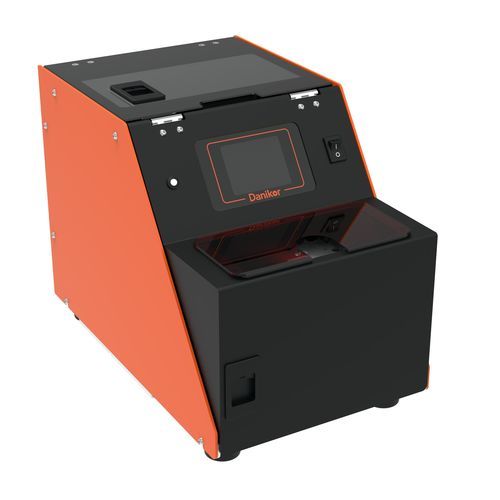
0% jam rate, resolving the issue of production stoppages caused by micro screw jams.
The equipment features a proprietary patented disc feeding structure. For mobile phone micro screw feeding, it achieves a 0% jam rate, eliminating problems like screw stacking and material jamming, ensuring stable and continuous supply without frequent stoppages for jam clearing.
Wide range of applicable length-to-diameter ratios, adaptable to short and stocky mobile phone screws.
It supports stable feeding of short, low-head micro screws with an L/D ratio of ≤ 1, covering all short fastening screws for mobile phone cameras, screens, batteries, and motherboards. This solves the industry pain point of traditional equipment being unable to transport short screws without them tipping over. A single device can adapt to multiple types of micro fasteners used in mobile phones.
Intelligent, low-fault design for simple and reassuring operation and maintenance.
Equipped with an intelligent fault alarm system that clearly indicates the fault point. This significantly shortens equipment downtime for inspection and repair, making it suitable for high-volume, continuous assembly operations in factories.
Standard with material shortage detection to ensure uninterrupted production.
The entire unit is equipped with a high-precision material shortage sensor as standard. It provides an early warning to replenish material when the hopper level is low, preventing production stoppages and station idling due to an empty hopper, thus maintaining a stable assembly takt time.
High-precision positioning reduces fastening defects in mobile phones.
The disc's outlet positioning structure is optimized, achieving higher screw outlet positioning accuracy of up to ±0.05mm for more precise screw pickup. The structure is wear-resistant and durable for long-term operation, ensuring the suction nozzle's pickup position remains stable without deviation, preventing skewed screws or cross-threading during fastening. This effectively reduces floating or missing screws, improving the overall product yield.
Dust-free and clean feeding meets the standards of 3C mobile phone clean workshops.
The entire unit features a dust-free feeding optimization design. The disc's low-friction transport structure significantly reduces the generation of metal dust and shavings, with no oil or grease emission. This meets the high cleanliness requirements for assembling precision mobile phone components, preventing screws carrying impurities from scratching the motherboard, screen, or middle frame, thus reducing rework costs associated with cosmetic defects.
Optional length detection to prevent scrap due to mixed screws.
An optional length detection module can differentiate screw lengths automatically during the feeding process. Screws with abnormal lengths are sorted and rejected at the source, preventing the mixing of different screw lengths and avoiding assembly scrap caused by such errors. This is suitable for flexible production lines that assemble multiple screw specifications on the same line.
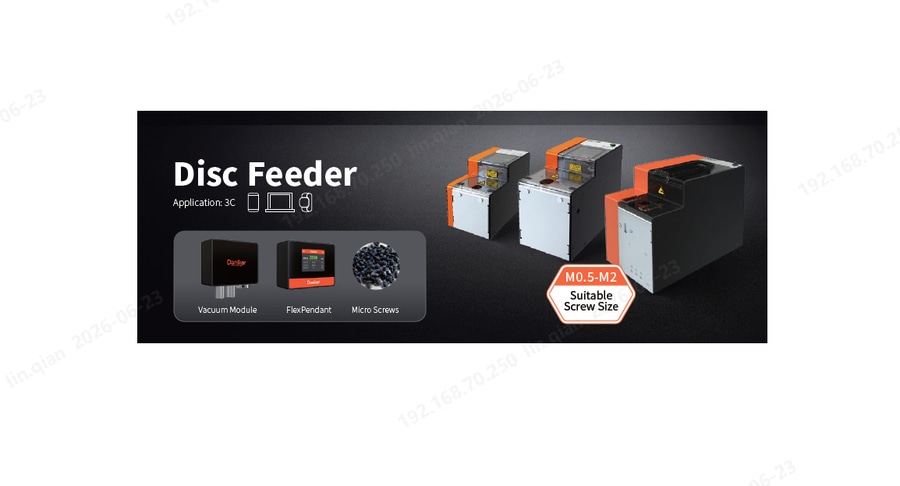
To address the pain points of micro screw feeding in mobile phones, the Danikor disc feeder provides an integrated solution covering aspects such as jam prevention, adaptability to various screw lengths, cleanliness, precision, intelligent warning, prevention of mixed screws, and low maintenance. It is ideally suited for automated screw fastening stations in mobile phone assembly, reducing downtime, lowering defect rates, cutting manual maintenance costs, and enhancing the automation stability and overall production capacity of 3C mobile phone assembly lines.