#Product Trends
Ceramic-to-Metal Welding: How to Prevent Cracks Delamination
Ceramic-to-Metal Welding
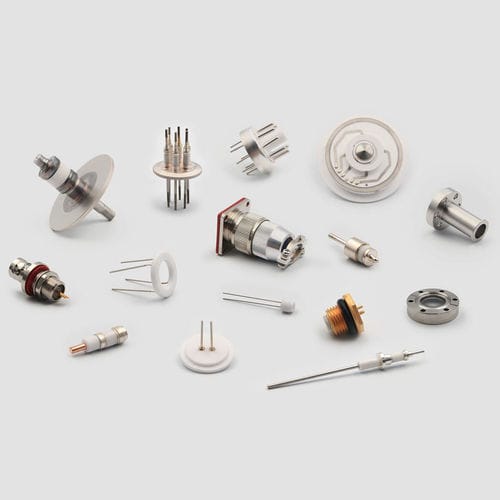
Ceramics possess the properties of heat resistance, insulation, wear resistance and corrosion resistance. They are suitable for use in high-temperature, vacuum and corrosive environments and are widely applied in semiconductors, optoelectronics and various industrial equipment. However, they cannot independently perform load-bearing, conductive and sealing operations and need to be assembled with metals.
The difference in thermal expansion coefficients between the two is significant. After welding, stress cracking, interface separation and weak bonding force problems are prone to occur. To achieve a stable connection, it is necessary to select appropriate metal materials reasonably, along with compatible metalization treatment and welding processes. This article, based on actual application scenarios, sorts out material selection, welding processes and implementation suggestions to help optimize product design.
I. Thermal expansion-matching metals: The best choice
This type of metal has a thermal expansion coefficient similar to that of ceramics, with low welding stress and excellent temperature stability. It is the preferred material in vacuum packaging, semiconductor, and precision optics fields.
1.Kovar Alloy(Fe-Ni-Co)
Its thermal expansion performance is compatible with alumina ceramics, and the application technology is mature. Combined with ceramic nickel plating and activation brazing processes, the sealing performance, thermal cycling performance, and interface stability of the connection components are excellent, and it is mostly used in vacuum packaging, optoelectronics, and semiconductor device supports. The surface metallization of welding must be uniform, and the selection of the filler metal determines the reliability of use.
2. Iron-Nickel Alloys (Invar, etc.)
The expansion rate is extremely low, and the welding thermal stress is extremely small. It is suitable for high-precision usage scenarios and is often used in precision ceramic packaging, optical components, and supporting structures for detection instruments.
II. High Conductivity/Thermal Conductivity Metals: Stress Treatment Requires Attention
In applications requiring strict electrical or thermal conductivity, copper and its alloys are commonly used; however, due to the significant difference in thermal expansion between these materials and ceramics, process optimization is essential to avoid cracking issues.