#White Papers
Stainless Steel Shackles: Types, Materials and Selection
How to choose the right stainless steel shackle for marine, offshore and rigging applications.
A stainless steel shackle provides a corrosion-resistant connection between chains, wire ropes, slings and other rigging components. It is particularly useful in marine, offshore, chemical and other environments where conventional carbon steel fittings may require additional corrosion protection.
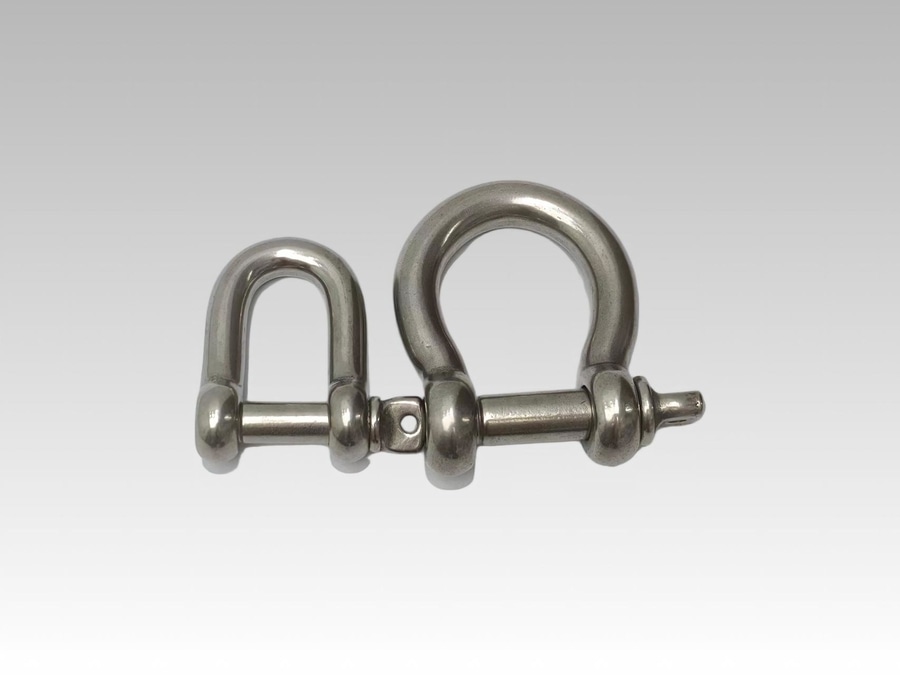
AISI 316 stainless steel is commonly used for marine stainless steel shackles because its molybdenum content improves resistance to chloride environments. A highly polished surface also provides a clean finish suitable for marine and industrial applications. (TopOneChain)
The two common body designs are Dee Shackles and Bow Shackles. A Dee Shackle has a narrower body and is primarily suited to straight-line connections. A Bow Shackle provides more internal space, making it useful when connecting sling eyes or multiple rigging components.
Pin design is another important consideration. Screw Pin Shackles allow quick installation and removal, making them convenient for temporary connections and applications requiring frequent assembly. Safety Bolt Shackles use a bolt, nut and cotter pin arrangement and are better suited to long-term installations or applications requiring secondary retention. (TopOneChain)
When selecting a stainless steel shackle, consider four main factors:
Working environment → Required WLL → Shackle body type → Pin type
For example, a Bow Shackle may be preferable when additional connection space is required, while a Dee Shackle offers a more compact arrangement for inline loading. For permanent installations, a Safety Bolt design may be more appropriate, whereas a Screw Pin design is convenient when the connection must be assembled and removed frequently. (TopOneChain)
Capacity must always be checked from the rated Working Load Limit (WLL) rather than shackle size alone. The TOPONE stainless steel shackle range described in the full guide covers WLLs from 0.4 t to 10 t with a 6:1 design factor, with test and traceable 3.1 certification available upon request. (TopOneChain)
For marine, offshore and lifting applications, also consider the loading direction, environmental exposure and required certification before making the final selection. The correct stainless steel shackle should provide both adequate load capacity and a connection configuration suited to the actual application.