#White Papers
3 Ton vs 5 Ton Chain Block: Key Differences Explained
Compare 3 ton and 5 ton chain blocks by capacity, size, headroom and operating requirements.
Choosing between a 3 ton and 5 ton chain block starts with the actual load, but rated capacity is not the only difference. Equipment size, weight, headroom, operating effort, supporting structure and frequency of use should also be considered.
The basic capacity rule is:
Required Chain Block WLL ≥ Total Suspended Load
The total suspended load should include not only the machine or main item being lifted but also applicable below-the-hook equipment such as chain slings, shackles, lifting beams and other attachments.
For example, if a machine weighs 2,600 kg and the rigging adds 200 kg, the total suspended load is 2,800 kg. A properly rated 3 ton chain block may be suitable if the complete lifting conditions meet its requirements.
If the machine weighs 2,900 kg and the rigging adds 250 kg, the total becomes 3,150 kg. This exceeds a 3 ton WLL, so a higher rated capacity such as a 5 ton chain block should be evaluated.
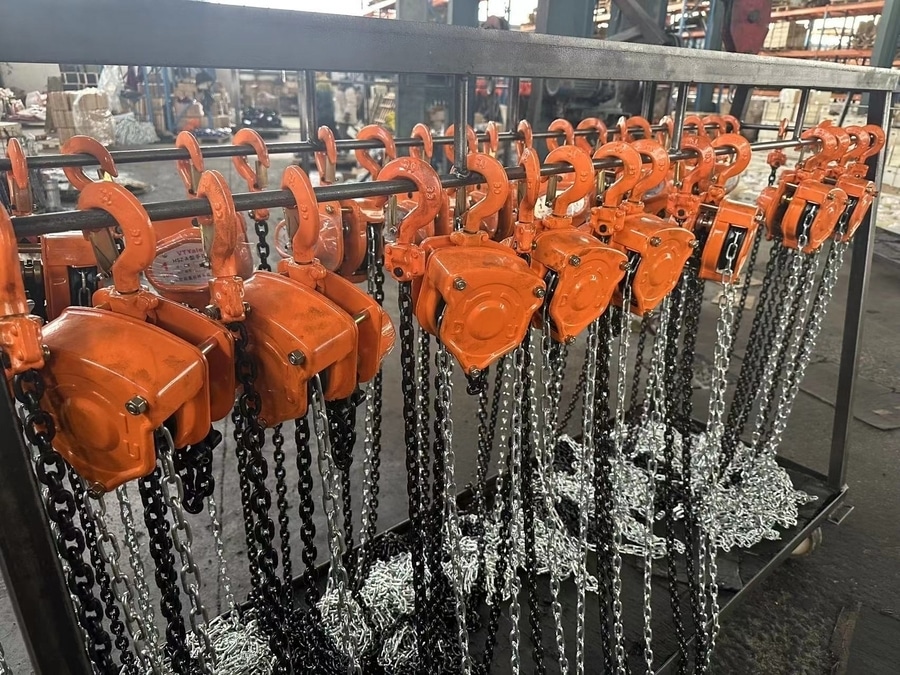
A 5 ton chain block is not automatically better simply because it has a higher capacity. Compared with a similar 3 ton model, it will generally be larger and heavier and may require different headroom, supporting equipment and manual operating characteristics.
This makes a 3 ton model practical when the total suspended load remains within its rated capacity and portability or installation space matters. A 5 ton model becomes necessary when the required capacity exceeds the 3 ton rating or the lifting system is specifically designed for heavier loads.
The complete lifting system must also be checked:
Supporting Structure → Beam or Trolley → Chain Block → Sling and Rigging → Load
Installing a 5 ton chain block does not automatically make the entire lifting system suitable for 5 tons. Every load-bearing component must be appropriate for the intended load.
For frequent heavy lifting, also consider whether a manual chain block remains practical or whether a powered hoist would be more suitable.
The final selection process is:
Calculate Total Suspended Load → Determine WLL → Compare 3T and 5T Models → Check Headroom and Lifting Height → Verify Supporting System → Consider Operating Frequency
Choose the capacity that safely covers the actual lifting requirement without unnecessary oversizing.