
#Industry News
Demand-Driven and Technology Integrated: The Design Philosophy Behind XY-TEK Ultrasonic Flow Sensors
How application-oriented product architecture addresses diverse fluid measurement challenges
In the field of precision fluid measurement and control, a sensor must not only provide accurate data but also adapt to the specific integration requirements and environmental constraints of its application. An effective product design ensures measurement performance while minimizing any additional impact on the customer’s existing system. This not only tests a company’s technical execution capabilities but also reflects its deep understanding of diverse application scenarios and its core design strategy.
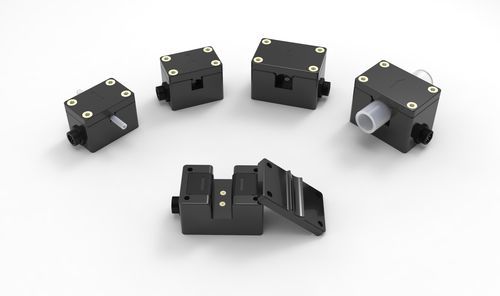
XY-TEK’s portfolio of ultrasonic flow sensors—ranging from clamp-on to in-line, integrated to split-architecture, and standard flow paths to U-shaped designs, embodies this “application-oriented” design strategy. This approach aims to provide targeted solutions for a wide variety of fluid control demands through distinct product architectures.
1. Non-Invasive Design: Application Considerations of the Clamp-On Series
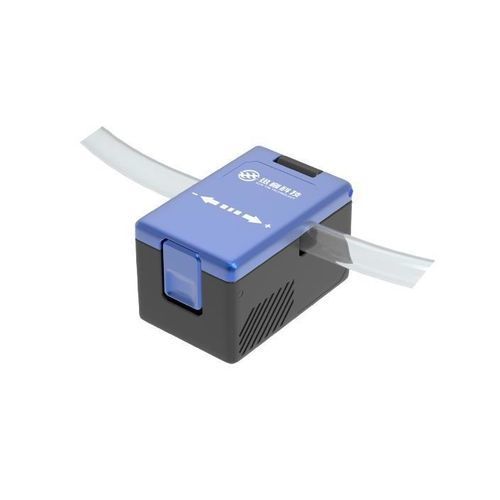
Avoiding fluid contamination is a fundamental requirement in the biopharmaceutical, medical device, and food industries. Any component in direct contact with the fluid introduces contamination risks and increases the complexity of cleaning validation. XY-TEK’s clamp-on series (CPD, CS, CG, CM) is specifically engineered to address this challenge.
By installing the sensor on the outside of the fluid tubing, complete physical isolation from the fluid is achieved. This method reduces contact-induced contamination risks, making it highly suitable for applications requiring strict sterility and Single-Use Systems, while significantly simplifying the installation process.
Scenario-Specific Configurations: Building upon the “clamp-on” principle, functions are differentiated based on specific application needs:
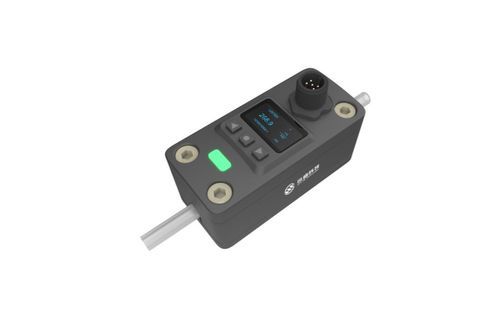
→ CPD Series: Designed for rigid plastic tubing, offering an accuracy of up to ±2% and repeatability of ±0.1% F.S. (Full Scale). It integrates a display screen and processing circuit for intuitive data reading, and features flow switch, dosing control, and bubble detection capabilities.
→ CS Series: Also targeted at rigid plastic tubing but designed without a display. The circuitry is fully built into a compact housing, making it ideal for space-constrained equipment integration where data is output directly to the main control system.
→ CG/CM Series: Designed exclusively for flexible plastic tubing. The highly integrated circuits of the CG and CM series can accurately measure flow velocity and detect bubbles in the fluid without compromising the integrity of the soft tubing.
→ BG Bubble Sensor: Also utilizing a clamp-on design, this sensor focuses exclusively on bubble detection, providing a critical safety safeguard for applications like IV infusion and extracorporeal circulation.
2. System Integration Design: The Performance Advantage of In-Line Sensors
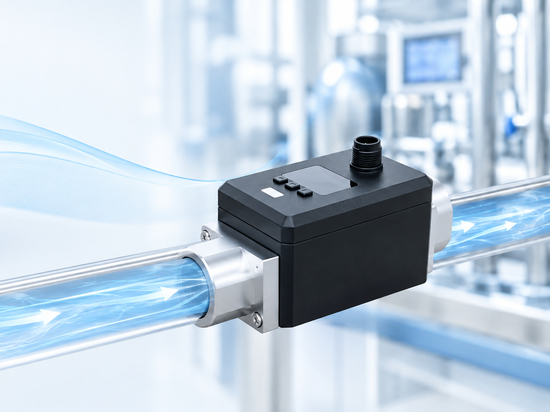
When an application demands higher measurement accuracy and repeatability, or when external tubing conditions are unsuitable for clamp-on measurement, in-line sensors offer a superior alternative. XY-TEK’s in-line series (TPK, TAD, TPD) utilizes standardized internal flow channels to provide the system with stable measurements unaffected by external pipe parameters.
Their internal flow paths feature a smooth, straight-through design with no moving parts. This helps maintain the original fluid dynamics, minimizes pressure drop, and facilitates easy cleaning. Consequently, they deliver reliable and stable flow data for fields like ultrapure water monitoring in industrial manufacturing, chemical dosing control, and various R&D testing platforms.
3. Targeted Solutions: Technological Pathways for Low Flow and High-Speed Dynamic Measurement
Beyond conventional applications, certain special scenarios impose extreme technical demands on flow measurement. XY-TEK’s TGU and TH series provide dedicated solutions for the challenges of low flow and high-speed pulsatile flow, respectively.
3.1 Low Flow Measurement: The U-Shaped Channel of the TGU Series
In applications such as titration and laboratory micro-dosing, accurately measuring flow rates down to the mL/min level is a recognized technical hurdle. At such low velocities, the transit-time difference of ultrasonic signals is extremely weak, resulting in a low signal-to-noise ratio.
The TGU series employs a U-shaped flow channel design. By extending the propagation path (L) of the ultrasonic wave within the fluid, a relatively easier-to-detect time difference signal (Δt) can be acquired even when the fluid velocity (v) is extremely low. This structural design enables the TGU series to stably measure flows as low as 1 mL/min, making it highly applicable for microfluidics and related fields.
3.2 High-Speed Dynamic Flow: The Split Architecture of the TH Series
Conversely, in applications like artificial hearts and organ transplant perfusion systems, the fluid often exhibits high-frequency, large-amplitude pulsations. This requires the sensor to possess an ultra-fast dynamic response capability.
For conventional integrated sensors, the processing speed and heat dissipation of internal circuits may be limited by their compact volume. To overcome this, the TH series adopts a split architecture.
It separates the sensing probe from the signal processing unit. The probe can be miniaturized to focus solely on raw signal capture, while the independent processing unit can be equipped with a more powerful processor and dedicated algorithms for high-speed data acquisition and signal resolution, effectively tracking rapid flow variations.
4. Integrated Design: Reducing System Integration Complexity
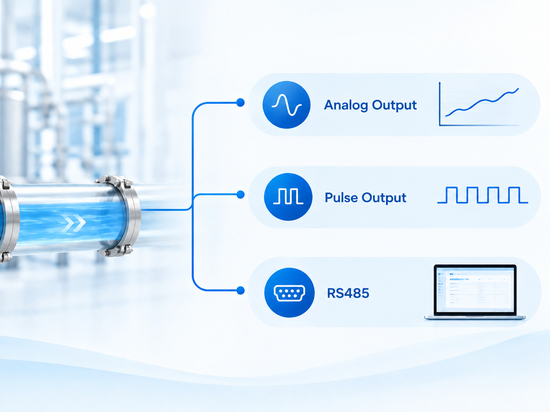
During the system integration process for equipment manufacturers, sensors should minimize reliance on external supporting devices. With the exception of the TH series, all of XY-TEK’s products feature an integrated design, integrate the signal processing circuitry directly into the sensor body. Users do not need to configure external transmitters or processing modules and can acquire standard output signals directly. This design simplifies the system architecture, reduces cable connections, and minimizes potential points of failure.
5. Conclusion: An Application-Driven Product Ecosystem
From clamp-on designs for sterile environments to in-line models pursuing stable precision; from U-shaped channels tackling low flow to split architectures designed for high-speed pulsatile dynamics; and the overarching strategy of integration. XY-TEK’s product ecosystem reflects a design philosophy that delivers specific technological solutions tailored to the unique demands of diverse application scenarios.
This product design strategy demonstrates that development begins with the analysis of application challenges and culminates in meeting market demands by providing stable, highly adaptable solutions. This is the core methodology by which XY-TEK serves its clients in the precision measurement and control industry.