#Product Trends
Fluid Measurement Selection Guide for Industrial Automation
How to Choose the Right Ultrasonic Flow Sensor for Your Equipment
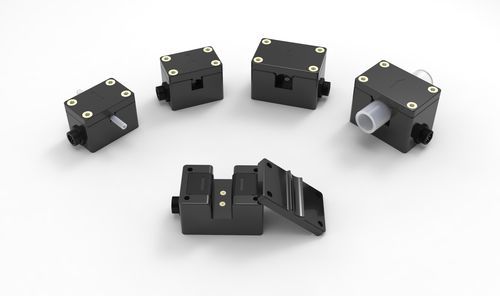
In industrial automation, measurement anomalies often stem not from insufficient sensor precision, but from a mismatch between the initial product selection and actual site conditions. Site constraints—such as pipe materials, installation conditions, and media properties—are the core factors in any evaluation. Without fully assessing these operational boundaries beforehand, even a high-precision sensor cannot perform to its full potential. Based on frequently discussed selection queries from daily customer interactions, this guide outlines the selection logic for seven core XY-TEK products in industrial automation, serving as a reference for equipment engineers and project planners.
1.Confirm the Installation Method: Clamp-on vs. In-line
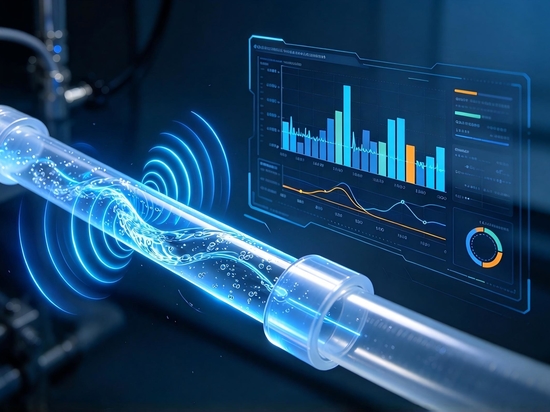
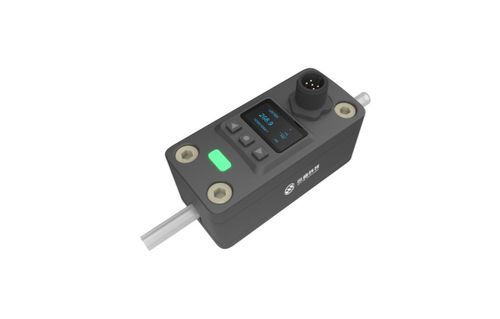
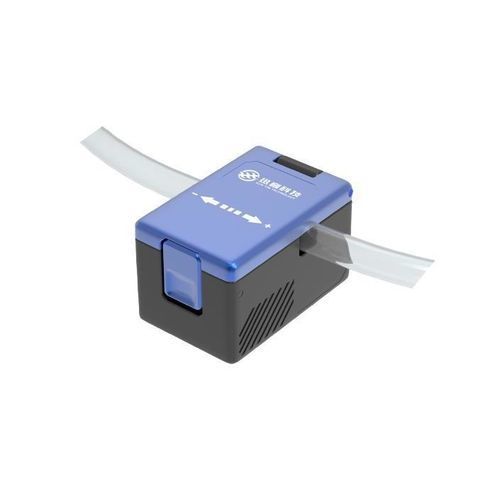
Installation method is the first constraint to confirm during sensor selection. If the existing tubing cannot be disassembled, the process cannot be interrupted, or the medium requires non-contact, high-cleanliness measurement, a clamp-on sensor is a suitable solution. In this category, XY-TEK recommends the CS and CPD series for industrial automation. Apart from their different standard tube diameter ranges, the key difference is the integrated display: the CS series has a compact structure with built-in measurement and signal output circuits, making it suitable for embedded installation; the CPD series adds a local display to the CS platform, allowing direct reading during routine inspection. If engineers need on-site access to instantaneous and totalized flow values, the CPD is more convenient. If the sensor is installed in a confined space or inside equipment where local reading is not required, the CS is a better fit.
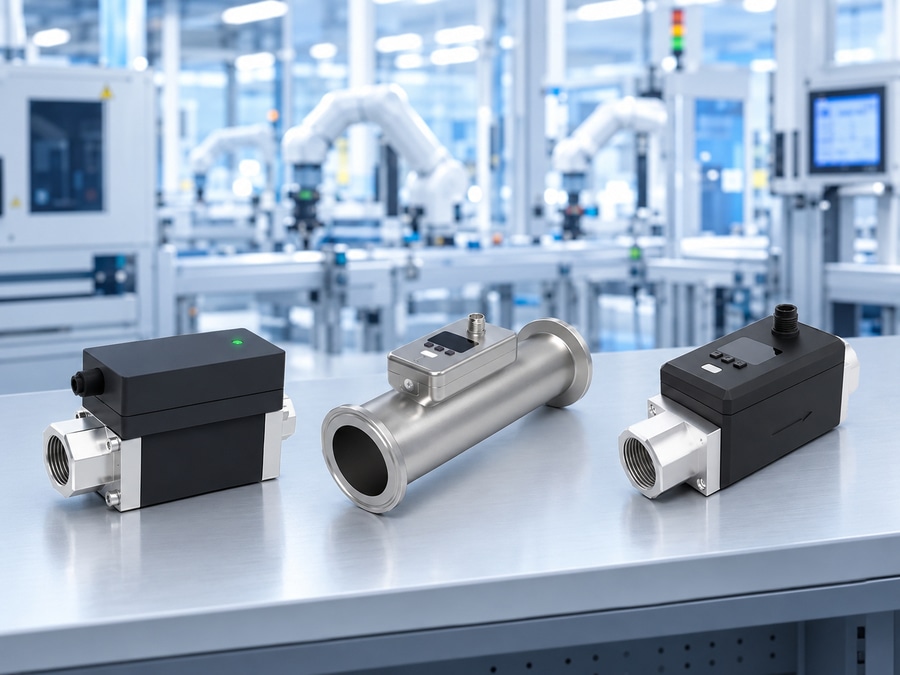
If the piping can be cut and the sensor inserted, an inline sensor is generally a more economical choice. The advantage of inline sensors is that calibration does not depend on the site pipe material or dimensional tolerances; once installed, they are ready to measure. XY-TEK's inline product line covers three typical needs: the TPK series is a classic model with a straight-through, no-moving-parts design, offering extremely low pressure loss. In systems where long-distance transfer or pump energy consumption is a concern, the TPK effectively reduces the additional system load caused by sensor intervention, and is less prone to fouling — making it an ideal choice for media such as cooling water and clean water. The TPD integrates a display for fluid monitoring applications that require local reading. The TAD features an all-stainless-steel structure with higher pressure rating, making it suitable for high-pressure conditions, and also supports local display and operation.
2.Confirm the Flow Range: Standard Flow vs. Micro Flow
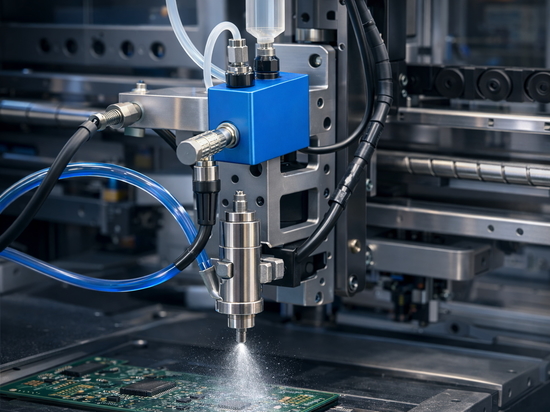
Flow rate requirements vary widely across industrial automation. Many circulation systems operate in the range of several to tens of liters per minute, which the aforementioned in-line products can easily cover. However, for micro-flow applications—such as fine chemical additive dosing, small-scale pilot devices, or instrument-integrated cooling loops—sensors specifically engineered for ultra-low flow rates are required.
The TGU Series adopts a U-shaped flow channel structure, maintaining stable ultrasonic signals and measurement performance even under low-flow velocities. It is ideal for closed-loop process control sensitive to minor flow fluctuations. In such scenarios, general-purpose sensors often face challenges with insufficient resolution and signal-to-noise ratio degradation; utilizing a micro-flow-dedicated sensor like the TGU ensures much more stable and reliable performance.
3. Confirm Additional Requirements: Is Bubble Detection Needed?
Beyond flow rate values, certain processes require monitoring for entrained bubbles, which can disrupt downstream equipment operation or cause product quality defects. If real-time monitoring of bubble presence in pipelines is required, a dedicated bubble sensor rather than a general flow meter should be considered.
XY-TEK’s BG Series utilizes ultrasonic pulse technology specifically designed to detect bubbles or gas-liquid interfaces in plastic tubing, featuring adjustable sensitivity thresholds and non-invasive clamp-on installation that does not contact the medium. Unlike flow meters, the core output of the BG Series is a bubble status signal, making it ideal for direct integration into control systems as an interlock or alarm signal source.
4. Evaluate Interface and System Integration Requirements
Beyond the sensor's inherent performance, output signals must be compatible with existing control systems. XY-TEK’s products support standard signal interfaces such as RS485, analog current output, and pulse output, allowing seamless integration into PLCs, industrial PCs, or dedicated display meters. When paired with host software, users can simultaneously collect instantaneous flow, cumulative flow, and bubble status data from multiple sensors. It is recommended to confirm signal types and communication protocols (such as RS485 supporting Modbus) early in the selection stage to significantly streamline subsequent system debugging.
There is no "one-size-fits-all" solution in industrial automation selection. When evaluating options, engineers should weigh multiple dimensions, including tubing material, flow range, output interfaces, maintenance costs, etc. Choosing a sensor that matches the actual operating conditions is always more critical than simply choosing the highest precision available.