#Product Trends
Guarding the "Last Mile" of Biopharma
Ultrasonic Flow Monitoring in Aseptic Filling Processes
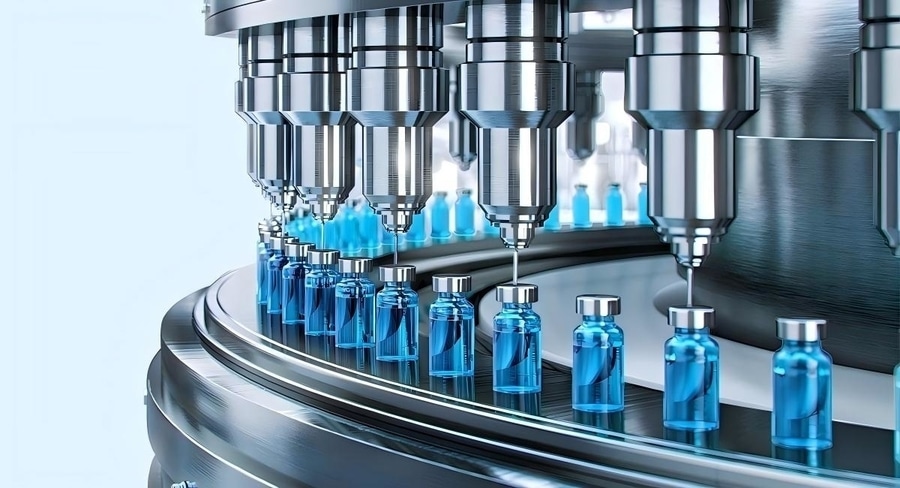
In the long biopharmaceutical manufacturing chain, aseptic filling is often called the “last mile.” For products such as monoclonal antibodies, recombinant proteins, and vaccines, the highly purified drug substance—after upstream processing and downstream purification—must ultimately be dispensed into vials, pre-filled syringes, or cartridges with extreme precision and under sterile conditions.
1.Flow Monitoring in Aseptic Filling
Introducing flow monitoring into an aseptic filling process should resolve two core challenges: ensuring flow-rate accuracy and maintaining process compliance. For high-value biologics, a deviation at the milliliter level can lead to significant financial loss and may also push the process beyond the regulatory limits set for fill-volume variation. Moreover, biological products are generally sensitive to mechanical shear. This means the measurement method must not introduce additional obstruction inside the tubing, nor create complex internal geometries that could disturb the fluid—preserving the activity of the drug product while monitoring is underway.
2.The Advantages of Ultrasonic Flow Sensors
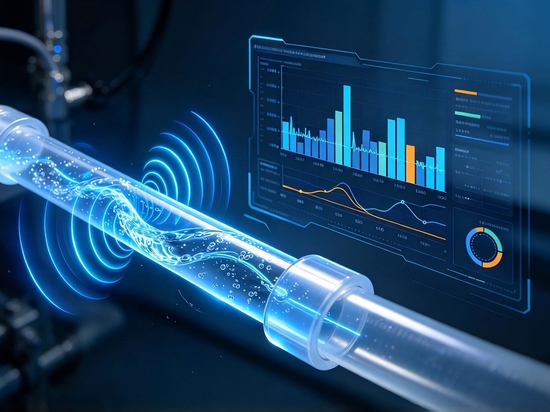
Ultrasonic flow sensors based on the Transit-Time Method demonstrate exceptional adaptability in these scenarios. They calculate flow velocity by measuring the time difference of ultrasonic waves traveling upstream and downstream through the fluid. The sensor itself does not require any flow-disrupting elements to be placed inside the pipe, ensuring an unobstructed flow path that effectively minimizes pressure drop and the risk of blockage.
When employing a clamp-on configuration, the sensor attaches directly to the exterior wall of tubing. The fluid remains completely isolated, maintaining zero physical contact with the sensor body. This non-invasive measurement approach preserves the integrity and sterility of the fluid path. Consequently, the sensor can be used before filling to non-destructively verify whether the lines are primed, and during transfer to continuously monitor the instantaneous flow rate to assess pump stability. For Single-Use Systems (SUS), which are now widely adopted across the industry, achieving precision monitoring without altering the original flow path or increasing CIP/SIP validation burdens is a highly practical solution.
3.Multi-Scenario Application: Tailored Sensor Solutions by XY-TEK
To meet the diverse application requirements of the aseptic filling line, XY-TEK mainly recommends three core series -CM, TGU, and TAD—to match various tube materials, fluid characteristics, and flow ranges.
3.1 CM Series:
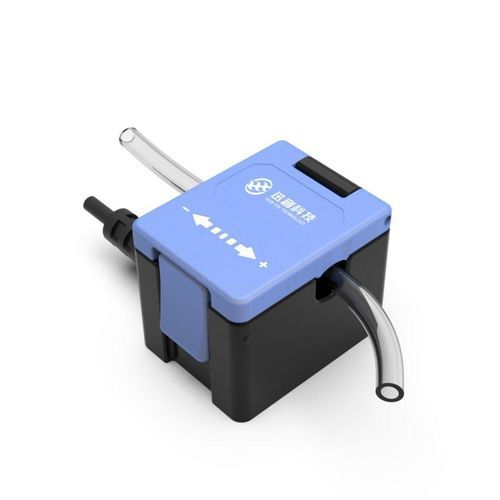
The CM Series features a clamp-on design ideal for flexible tubing. Installation requires no tube cutting or extra fittings, avoiding leakage and contamination risks. With its signal processing electronics fully integrated into a compact housing, the CM series easily integrates into space-limited automated filling machine modules.
3.2 TGU Series:
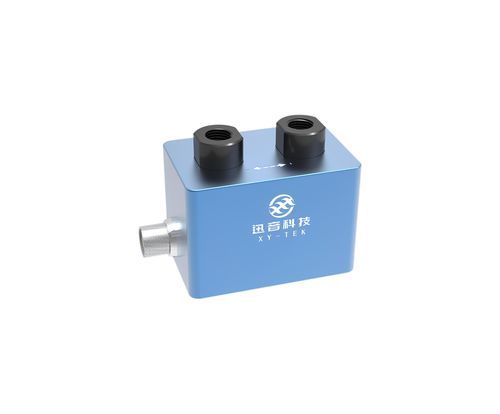
For applications that require measurement of very low flow rates—such as certain R&D pilot lines or micro-dosing processes—the TGU series may be more appropriate. Its U-shaped internal flow channel effectively increases the ultrasonic path length through the liquid in a limited space, allowing the sensor to extract a valid transit-time signal even at very low flow rates, with a lower detection limit of approximately 1 mL/min. The flow channel and seals are manufactured from corrosion-resistant materials, ensuring chemical compatibility with pharmaceutical fluids.
3.3 TAD Series:
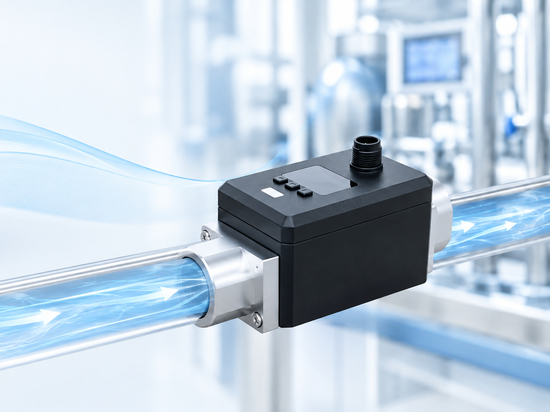
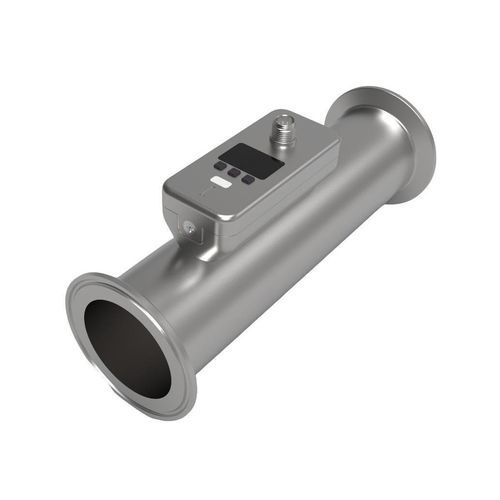
For fixed stainless-steel supply lines, the TAD Series offers a robust inline solution. Featuring a straight-through flow design encased in full stainless steel, the TAD series has no moving parts, preventing signal drift caused by mechanical wear over extended operation. Its straight-through structure maintains an exceptionally low pressure drop, making it an ideal candidate for continuous monitoring on centralized filling equipment manifolds.
Through the combination of the CM, TGU, and TAD series, XY-TEK not only adapts to varying operating conditions ranging from single-use tubing to fixed stainless steel pipes but also empowers pharmaceutical companies to achieve refined cost control and efficiency enhancements while guaranteeing stringent process compliance.