#Industry News
From Single-Point Measurement to System Diagnostics
The Evolution of Flow Monitoring in Industrial Integration
1. The Limitations of Single-Point Monitoring
In traditional industrial automation control, flow sensors were once regarded merely as basic measurement terminals. In most engineering scenarios, their primary function was to capture real-time flow readings at specific points on pipelines and transmit the collected signals to host computers for simple logic control or closed-loop regulation. This single-point monitoring model delivered reliable performance and played a vital role in fluid systems with simple structural designs and stable, singular operating conditions.
In actual industrial settings, fluid system anomalies rarely occur abruptly; instead, they develop gradually from microscopic deviations to macroscopic failures. Typical early-stage issues include minor wear on internal pump components, tiny leakage from incompletely closed valves, accidental bubble entrainment in pipelines, and localized flow fluctuations caused by changes in fluid resistance. In their initial phases, these latent hazards only manifest as subtle pulsations in instantaneous flow rates or minor flow discrepancies between parallel pipelines.
Under the traditional single-point monitoring framework, such faint dynamic variations are easily filtered out by sensor sampling intervals or overlooked due to the absence of multi-dimensional comparative data analysis. These unaddressed minor deviations eventually escalate into unplanned shutdowns or significant process deviations, compromising production stability and efficiency.
2. The Core of Systematic Fluid Diagnostics
To enhance system reliability, fluid control technology is evolving from mere "flow measurement" to "systematic diagnostics." Systematic fluid diagnostics does not necessarily mean installing sensors at every point in the pipeline and then performing big data analysis on some cloud platform. In a practical engineering sense, system diagnostics is more of a shift in mindset: flow data is no longer used just for process control but is also utilized to observe the long-term behavioral characteristics of the system, thereby identifying potential issues.
This multi-dimensional diagnostic capability is reflected in three key aspects. First is the detection of inconsistency: it evaluates whether flow rates across multiple parallel pipelines in the same system are evenly distributed, with uneven distribution typically indicating inconsistent pipeline impedance or component performance degradation. Second is the identification of slow drift: gradual baseline flow variations in a fluid circuit over weeks or months usually stem from evolving equipment aging or performance changes, rather than intentional adjustments to process setpoints. This enables predictive maintenance before visible failures occur. Third is aiding in anomaly localization: when flow fluctuations occur in the system, multi-point data can help determine whether the fluctuation originates from the upstream supply, downstream back-pressure, or the sensor itself. All these diagnostic functions rely on a stable network of continuous monitoring points and consistent, comparable long-term data. In short, the core prerequisite for effective system diagnostics is long-term data stability and consistency, rather than merely the instantaneous measurement accuracy of individual sensors.
3.What Kind of Technological Support is Needed at the Sensor Level?
Since system diagnostics rely on multiple monitoring points and long-term data trends, the sensors, as the underlying nodes for data acquisition, need to possess corresponding characteristics.
First and foremost is exceptional long-term measurement stability. System diagnostics focuses on trend changes over time; sensor drift will directly distort data trends and undermine diagnostic credibility. For traditional mechanical flow meters, performance degradation caused by mechanical wear can be offset by regular calibration in single-point monitoring scenarios. However, in multi-point monitoring systems, offline calibration for every sensor entails exorbitant time and labor costs, making this solution impractical. In contrast, ultrasonic flow sensors feature no internal mechanical wearing parts. Their measurement stability is primarily determined by circuit design and signal processing algorithms, enabling sustained data consistency over extended periods with minimal calibration requirements — a critical advantage for long-term systematic monitoring.
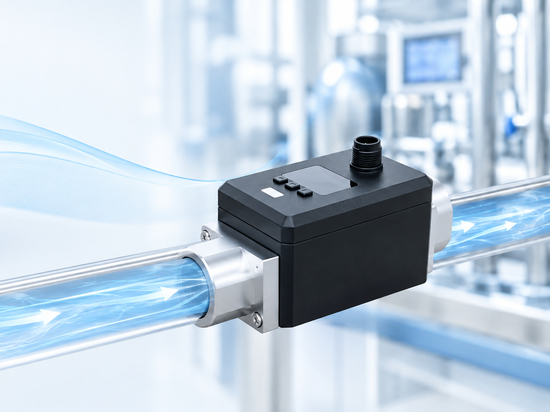
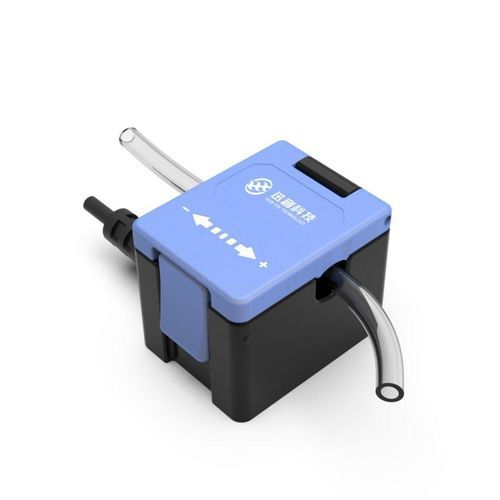
Second is flexibility of installation. System diagnostics requires distributed monitoring points across pipeline networks. For in-service production pipelines where drilling and piping modifications are unfeasible, clamp-on ultrasonic sensors deliver unique value. They enable rapid deployment of multi-point monitoring on existing pipelines without damaging pipeline integrity or interrupting normal production, significantly lowering the deployment threshold for systematic fluid monitoring systems.
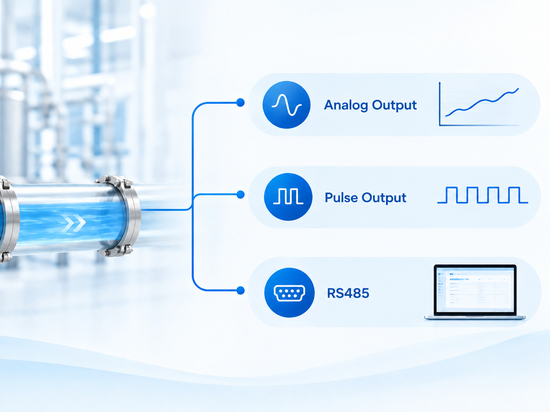
Third is integrated data aggregation and centralized monitoring. When monitoring point quantities expand to four or more, independent data reading for each sensor drastically increases on-site operational workload. XY-TEK addresses this pain point with its dedicated Flow Viewer software, which supports synchronous connection to multiple sensors and centralized collection of real-time flow rates, cumulative flow data, and bubble condition information. Instead of checking individual meters separately, users can overview the operating status of all monitoring points on a single unified interface. Furthermore, for high-precision scenarios such as pulsatile flow testing and fluid dynamic research, the TH series sensors can be configured with up to four acquisition channels. This enables synchronous multi-point dynamic flow data collection via a single device, fully meeting the rigorous data acquisition demands of R&D and industrial testing applications.
4.XY-TEK's Product Philosophy in Systematic Fluid Diagnostics
At XY-TEK, sensor design prioritizes practical industrial engineering challenges beyond basic measurement accuracy. We firmly believe that a sensor’s core value lies far beyond converting fluid flow into electrical signals. More importantly, it serves as a reliable data source that delivers stable, credible long-term data, providing a solid foundation for system control logic and operational decision-making.
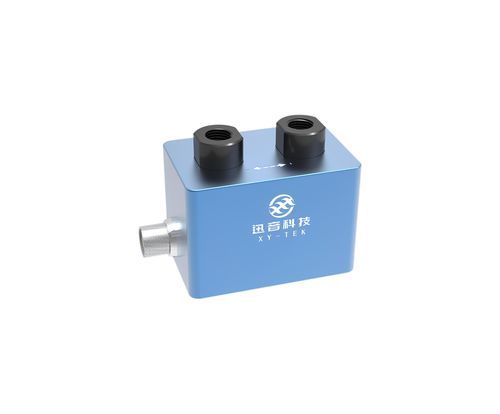
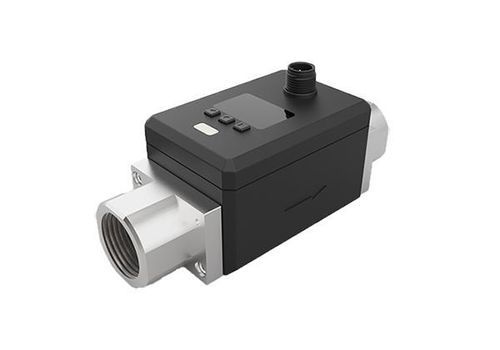
In our current product line, clamp-on sensors ((e.g., CPD, CS, CG, CM series) allow for flexible placement of monitoring points without altering the pipeline; in-line sensors ((e.g., TPK, TAD, TPD series) are used where a straight-through flow path can be inserted; and the TGU series covers the monitoring needs for micro-flow and low-velocity applications. These products can serve as different types of monitoring nodes, combined to form a multi-layered fluid data acquisition network. Through the Flow Viewer software, users can connect multiple measurement points to a single data management interface, continuously recording flow, cumulative flow, and bubble information, and gradually building their own fluid operation database. The TH series is specifically designed for pulsatile flow testing, providing four-channel synchronous acquisition capabilities for dynamic fluid measurement scenarios.
Ultimately, the industry’s shift from single-point measurement to systematic fluid diagnostics is not a blind pursuit of superficial smart technology concepts. Instead, it is a practical, engineering-driven upgrade that solves real on-site pain points in industrial maintenance and production efficiency through rational sensor layout, high-reliability data acquisition, and efficient data management software.