#Product Trends
Which matters more for the environmental footprint of reusable packaging: the box itself - or how many times you actually reuse it?
Reuse Cycles and Environmental Footprint
Which matters more for the environmental footprint of reusable packaging: the box itself - or how many times you actually reuse it?
A reusable pallet box normally starts with a higher production footprint than a one-way alternative.
But that impact is spread over every completed cycle.
The real environmental performance increasingly depends on what happens after you buy it:
▪️ How many cycles does it actually complete?
▪️ How efficiently does it return empty?
▪️ How often is it repaired instead of replaced?
▪️ How many units are lost from the pool?
▪️ What happens at end of life?
A box designed for 200+ cycles does not automatically deliver the environmental benefit of 200 cycles.
It has to actually make those trips.
That makes one number particularly interesting for procurement: actual completed cycles per packaging unit.
The higher that number becomes, the further the original manufacturing impact is spread across your shipments.
So before asking only: "What is this packaging made from?" it is worth also asking: "How many useful cycles are we realistically going to get from it?"
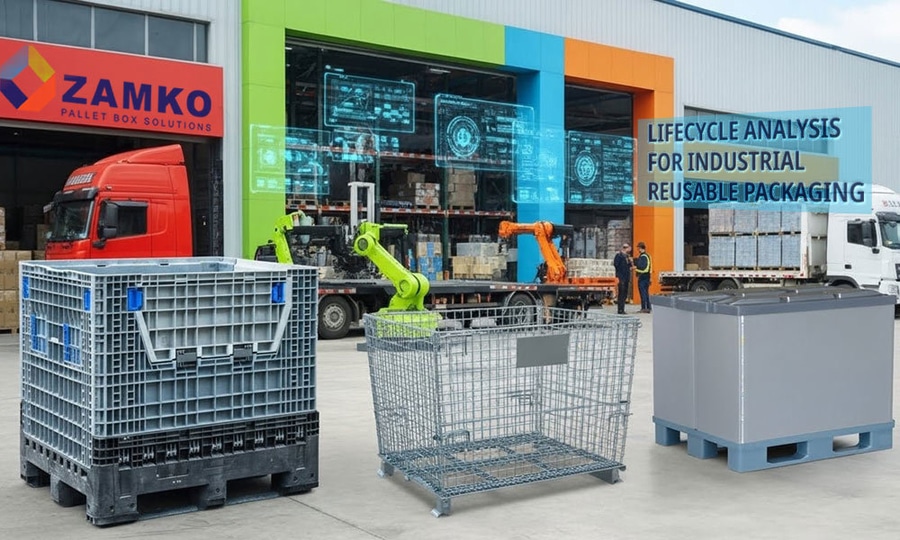
Our practical LCA guide shows procurement which data to compare when choosing between reusable packaging options - including cycle count, return transport, repair, loss rate and end-of-life.
#ReturnablePackaging
#SustainableLogistics
#IndustrialPackaging
Choosing between reusable packaging options?
This guide gives procurement a practical framework to compare:
▪️Actual reuse cycles
▪️Return transport
▪️Repair and loss rates
▪️CO₂ break-even
▪️End-of-life
▪️Evidence to keep in the procurement file
https://zamko.eu/lifecycle-analysis-lca-for-industrial-reusable-packaging/