#Product Trends
Four-Pillar Hydraulic Press Machine: Robust Non-Standard Design for Industrial Applications
Exploring Hydraulic Press Functions and the Mechanics Behind the Largest Hydraulic Press Systems
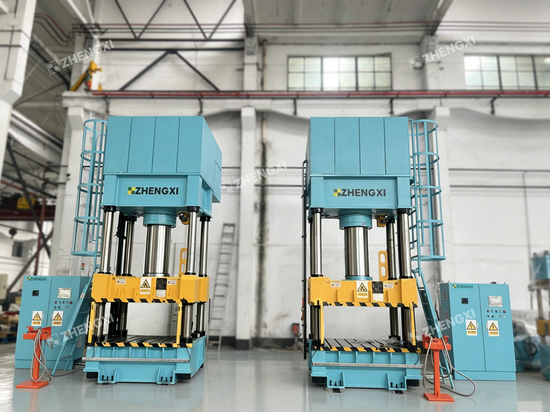
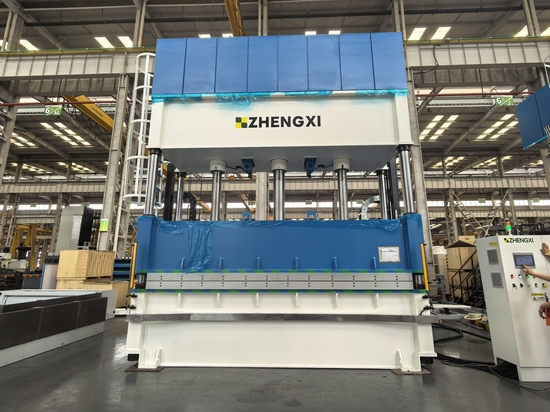
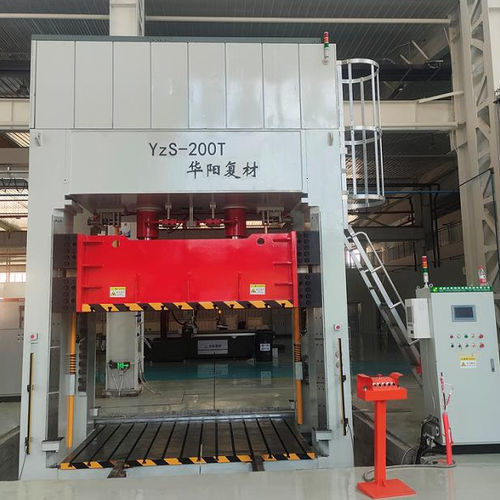
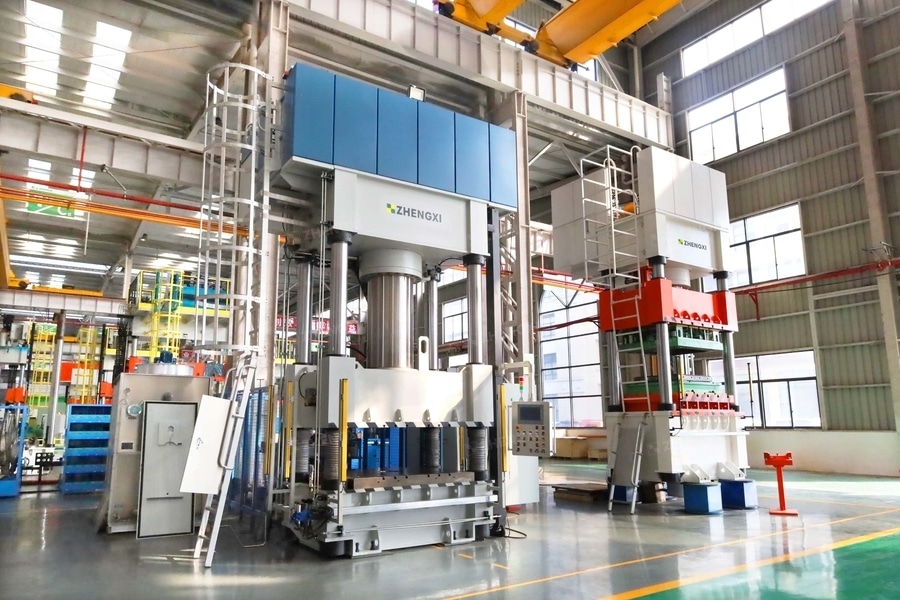
The four-pillar hydraulic press machine adopts a classic "three-beam, four-column" host structure, comprising a main cylinder, beams, a sliding block, guide pillars, and a worktable. This integrated frame bears the entire workload, ensuring stability during pressure processing. The pillars, typically made of 45# round steel or forgings, undergo heat treatment like quenching and tempering to enhance surface hardness and wear resistance. Their structural design includes adjustable nuts and locking mechanisms to maintain rigidity.
The beams—upper, movable, and lower—are critical for distributing force. Crafted from cast or welded materials like ZG35, they undergo stress-relief heat treatment in an annealing furnace. Precision requirements include perpendicularity tolerances below 0.2mm between cylinder axes and shoulder planes. The sliding block, connected to the piston rod, moves along the pillars with guidance from bushings, emphasizing strength and low-deformation design.
The worktable serves as the foundation for mounting molds and auxiliary components like ejector cylinders. It features T-slots for mold fixation and strict flatness tolerances (e.g., 0.1mm per JB1293-73). Hydraulic systems integrate pumps, cylinders, valves, and pipelines to enable fast idle strokes and controlled working speeds, prioritizing leak-free operation and compliance with GB/JB standards.
Electrical control relies on PLCs for precision, housed in GGD low-voltage cabinets with optimized ventilation. This combination of mechanical robustness, hydraulic efficiency, and smart automation defines how a hydraulic press works, supporting diverse industrial tasks.