
#Product Trends
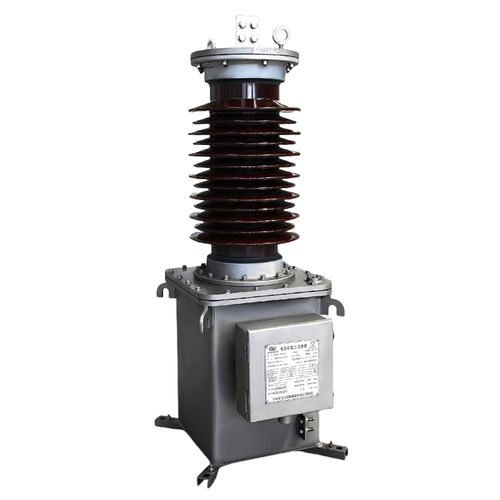
36kV Capacitor Voltage Transformer
36kV CVT
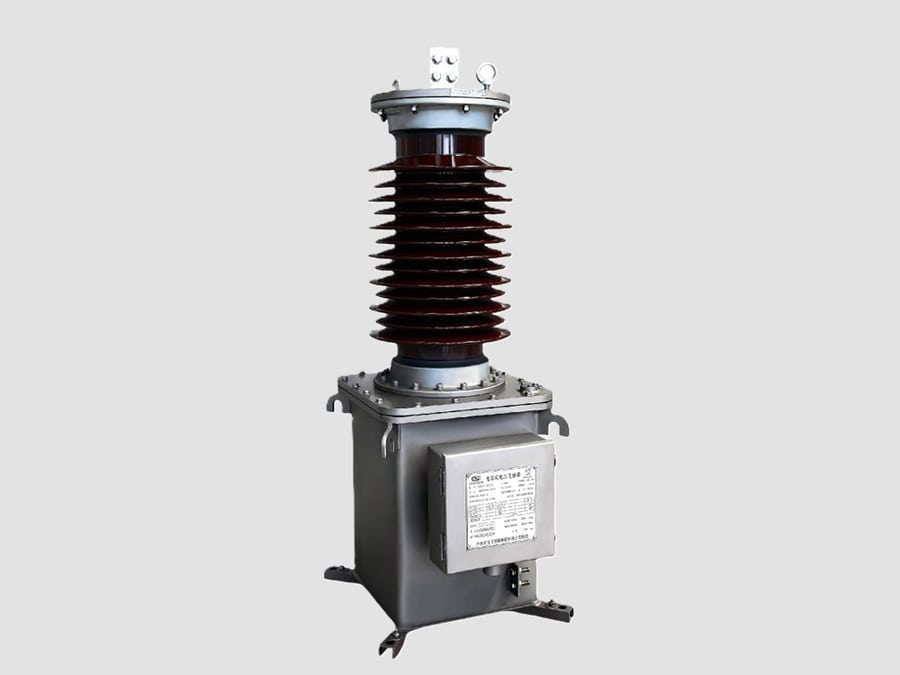
36kV Capacitor Voltage Transformer (CVT), also called a Capacitive Voltage Transformer or Capacitor Potential Transformer (CPT), is a voltage instrument transformer that uses a capacitive voltage divider combined with an electromagnetic transformer unit to reduce medium-voltage system voltage to standardized low-voltage outputs for metering, protection, control, and communication applications.
Unlike an inductive voltage transformer, a CVT uses capacitors to step down the voltage first, making it suitable for voltage measurement and power system applications.
Working Principle
A 36kV CVT consists of:
·Capacitor Voltage Divider (CVD)
·Two series-connected capacitors divide the high system voltage.
·Intermediate Transformer (IT)
·Further reduces the divided voltage to a standard secondary voltage.
·Compensation Reactor
·Compensates capacitive reactance and improves accuracy.
·Damping Circuit
·Suppresses ferroresonance and transient oscillations.
Main Components
·High-voltage capacitor stack
·Capacitive voltage divider
·Intermediate electromagnetic transformer
·Compensation reactor
·Damping resistor and protection circuit
·Insulating oil or SF6 insulation system
·Porcelain or composite insulator housing
·High-voltage terminal
·Secondary terminal box
·Grounding terminal
·Mounting structure
Typical Technical Specifications
·Highest System Voltage: 36 kV
·Rated Primary Voltage: 33 kV / 34.5 kV
·Rated Secondary Voltage: 100 V, 110 V, 100/√3 V, 110/√3 V
·Frequency: 50 Hz / 60 Hz
·Accuracy Class: 0.2, 0.5, 1.0, 3P, 6P
·Rated Burden: 10–200 VA
·Voltage Factor: 1.2 continuous, 1.5–1.9 short time
·Insulation Level: 70/170 kV (Typical)
·Installation: Outdoor
·Insulation Type: Oil-paper / SF6 / Dry type
Applications
A 36kV capacitor voltage transformer is commonly used in:
·Medium-voltage substations
·Distribution networks
·Industrial power systems
·Renewable energy plants
·Wind and solar collector substations
·Railway power supply systems
·Medium-voltage switchgear systems
Functions
1. Voltage Measurement
·Provides an accurate reduced voltage signal for:
·Energy meters
·Panel meters
·Power quality analyzers
2. Protection
·Provides voltage signals for:
·Overvoltage protection
·Undervoltage protection
·Synchronizing protection
·Distance protection (where applicable)
3. Power System Monitoring
·Used for:
·SCADA systems
·Automation systems
·Fault recording
·Voltage monitoring
Advantages
·Provides high-voltage isolation
·Compact structure compared with conventional VT designs
·Good transient response
·Suitable for outdoor installations
·Can support communication coupling functions in higher-voltage CVT designs
·Reliable voltage measurement
Typical Secondary Outputs
Common secondary voltages:
·100 V
·110 V
·100/√3 V
·110/√3 V
Secondary outputs are connected to:
·Protection relays
·Measuring instruments
·Synchronizing equipment
·SCADA/RTU systems
·Automation controllers
Common Standards
A 36kV capacitor voltage transformer is generally designed according to:
·IEC 61869-5 – Additional requirements for Capacitor Voltage Transformers
·IEC 61869-1 – General requirements for instrument transformers
·IEEE C57.13 – Instrument Transformer Standards
Typical Applications in a 36kV Substation
·Busbar voltage sensing
·Feeder voltage measurement
·Protection relay voltage input
·Grid monitoring
·Synchronization circuits
·SCADA voltage acquisition
·Power quality monitoring
A 36kV Capacitor Voltage Transformer (CVT) provides reliable voltage transformation and isolation for medium-voltage power systems. Its capacitor divider technology offers a compact and efficient solution for voltage measurement, protection, and automation applications in modern substations.