
#Product Trends
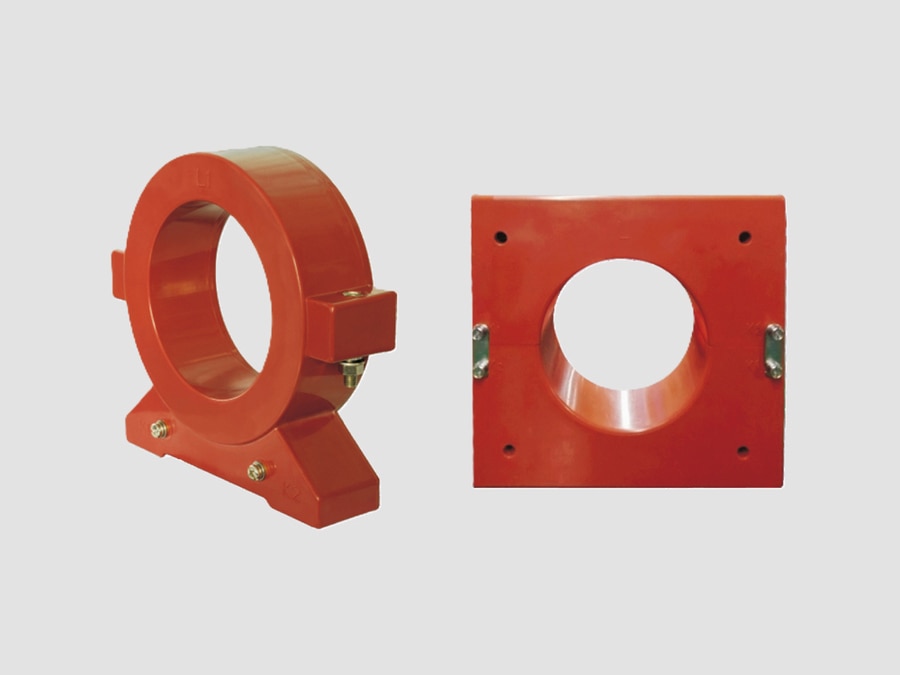
Residual Current Transformer (RCT) designed to detect residual (earth leakage) current in electrical systems
Residual Current Transformer (RCT)
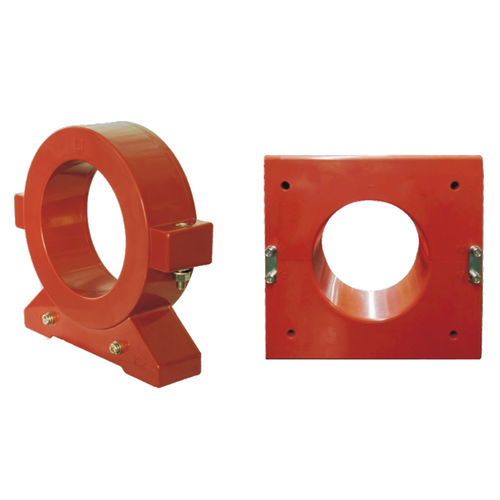
Residual Current Transformer (RCT), also known as a Core Balance Current Transformer (CBCT) or Zero Sequence Current Transformer (ZSCT), is a specialized instrument transformer designed to detect residual (earth leakage) current in electrical systems. Unlike conventional current transformers that measure load current, an RCT measures the vector sum of all phase currents and the neutral current. Under normal operating conditions, this sum is zero. If an insulation failure or earth fault occurs, the resulting imbalance (residual current) is detected and used to operate protective relays or residual current devices.
RCTs are widely used in low-voltage and medium-voltage distribution systems, motor feeders, generators, transformers, switchgear, and industrial installations to provide sensitive earth fault protection.
Main Functions
·Detects earth leakage (ground fault) current.
·Provides sensitive earth fault protection.
·Supplies residual current signals to protection relays.
·Enhances personnel and equipment safety.
·Prevents fire hazards caused by insulation failures.
·Supports selective protection coordination.
Construction
A typical residual current transformer consists of:
Toroidal Magnetic Core
-High-permeability silicon steel or nanocrystalline core.
-Detects the magnetic flux created by residual current.
Secondary Winding
-Wound uniformly around the toroidal core.
-Produces a proportional secondary current or voltage for protection relays.
Primary Circuit
-No dedicated primary winding.
-All phase conductors (and neutral, if applicable) pass through the center of the toroidal core.
Epoxy Resin or Thermoplastic Housing
-Provides electrical insulation and mechanical protection.
-Suitable for indoor switchgear and control panels.
Secondary Terminal Block
-Provides connections to earth fault or residual current relays.
-Clearly marked polarity and grounding terminals.
Typical Technical Specifications
·Rated System Voltage: Up to 36 kV (insulated installation)
·Frequency: 50/60 Hz
·Rated Secondary Current: 1 A or 5 A (relay type)
·Operating Residual Current: 30 mA to several hundred amperes (depending on application)
·Accuracy Class: 1, 3, 5P, PX (application dependent)
·Core Material: Silicon steel or nanocrystalline
·Insulation: Epoxy resin or thermoplastic
·Installation: Indoor
·Window Diameter: 35–300 mm or larger
Advantages
·Extremely sensitive earth fault detection.
·Detects very small leakage currents.
·High immunity to balanced load currents.
·Compact toroidal design.
·Maintenance-free operation.
·Easy installation around existing cables or busbars.
·High reliability and long service life.
·Improves electrical safety and system reliability.
Typical Applications
·Medium-voltage switchgear
·Low-voltage distribution panels
·Motor protection systems
·Transformer protection
·Generator protection
·Ring Main Units (RMUs)
·Industrial plants
·Commercial buildings
·Renewable energy systems
·Data centers and critical power infrastructure
Applicable Standards
·IEC 61869-2 – Current Transformers
·IEC 61869-1 – General Requirements for Instrument Transformers
·IEC 60044-1 – Legacy standard (superseded by IEC 61869-2)
·IEC 60947-2 – Low-voltage switchgear and controlgear
·IEC 60255 – Measuring relays and protection equipment
Key Features
·Measures only residual (zero-sequence) current rather than individual phase current.
·All phase conductors (and neutral, where applicable) pass through a single toroidal core.
·Available in solid-core and split-core designs for new installations or retrofits.
·Compatible with digital protection relays, earth fault relays, and residual current devices (RCDs).
·High resistance to electromagnetic interference and external magnetic fields.
·Maintenance-free construction with excellent long-term stability.
A Residual Current Transformer (RCT) is a highly sensitive protective device used to detect earth leakage and ground faults by measuring the imbalance of currents flowing through all conductors. Its compact toroidal design, high sensitivity, and compatibility with modern protection relays make it an essential component for ensuring electrical safety, protecting equipment, and improving the reliability of low-voltage and medium-voltage power systems.