
#Product Trends
Vertical Knee Disconnector (Vertical Knee Break Isolator)
Vertical Knee Disconnector
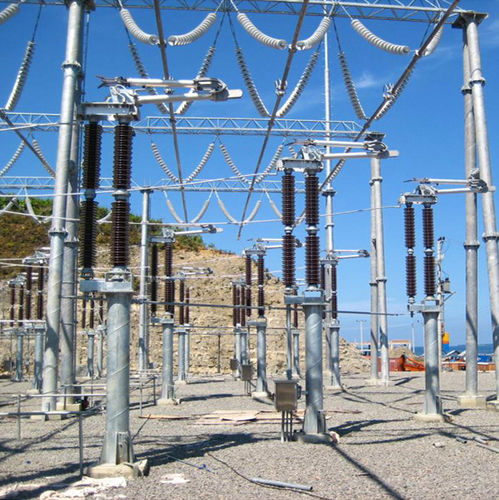
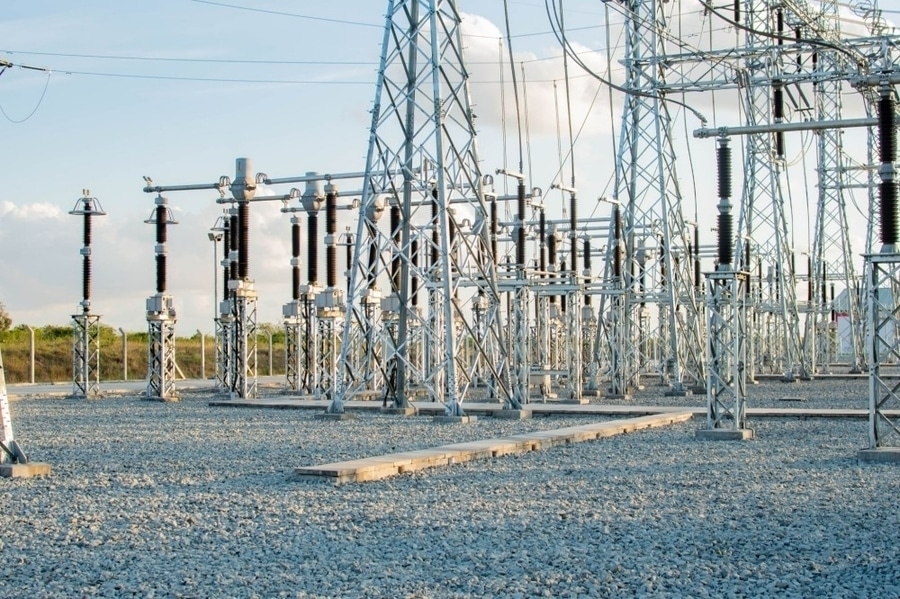
Vertical Knee Disconnector (Vertical Knee Break Isolator) is a high-voltage disconnector used in outdoor substations to provide visible electrical isolation of equipment after the associated circuit breaker has interrupted the current. It features a hinged "knee" joint that folds upward or downward during operation, making it suitable for substations where horizontal space is limited.
Working Principle
The vertical knee disconnector consists of two conducting arms connected by a hinged knee joint.
·Closed position: The arms are aligned, forming a continuous electrical path between the terminals.
·Open position: The operating mechanism bends the knee joint, causing the upper arm to move upward (or downward, depending on the design) and creating a visible air gap for isolation.
Like all disconnectors, it is not designed to interrupt load current or fault current. The associated circuit breaker must first de-energize the circuit.
Normal Operating Sequence
1.Open the circuit breaker.
2.Verify the circuit is de-energized.
3.Open the vertical knee disconnector.
4.Close the earthing switch if maintenance is to be performed.
Main Components
·Fixed contacts
·Upper and lower conducting arms
·Hinged knee joint
·Post insulators
·Operating linkage
·Motor-operated or manual operating mechanism
·Base frame
·Position indicator
·Auxiliary switches
Features
·Foldable knee-joint mechanism provides a compact operating movement.
·Visible isolation gap enhances maintenance safety.
·Suitable for substations with limited horizontal clearance.
·High mechanical reliability.
·Available with manual or motor operation.
·Designed for outdoor service in air-insulated substations (AIS).
Typical Voltage Ratings
·72.5 kV Distribution and sub-transmission
·110 kV Transmission substations
·132 kV Utility transmission
·145 kV High-voltage substations
·220 kV Transmission systems
·330 kV Extra-high-voltage substations
·400 kV EHV transmission
Advantages
·Compact design requiring less horizontal space.
·Clear visible isolation for operator safety.
·Reliable mechanical operation.
·Well suited to constrained substation layouts.
·Long service life with relatively low maintenance.
Limitations
·Cannot interrupt load or fault current.
·Must only be operated after the circuit breaker has opened.
·Mechanically more complex than some conventional disconnector designs.
Applications
Vertical knee disconnectors are widely used for:
·Air-insulated substations (AIS)
·Transmission line isolation
·Transformer isolation
·Circuit breaker isolation
·Busbar sectionalizing
·Industrial and utility substations
·Installations with limited horizontal clearance
Typical Applications by Voltage
·72.5–145 kV: Distribution and sub-transmission substations with limited space.
·220–400 kV: High-voltage transmission substations where compact layouts are required.
Industrial power systems: Isolation of transformers, circuit breakers, and busbars.
The Vertical Knee Disconnector combines reliable visible isolation with a compact operating mechanism, making it an effective choice for air-insulated substations where space constraints make traditional horizontal-opening disconnectors less suitable.