
#Product Trends
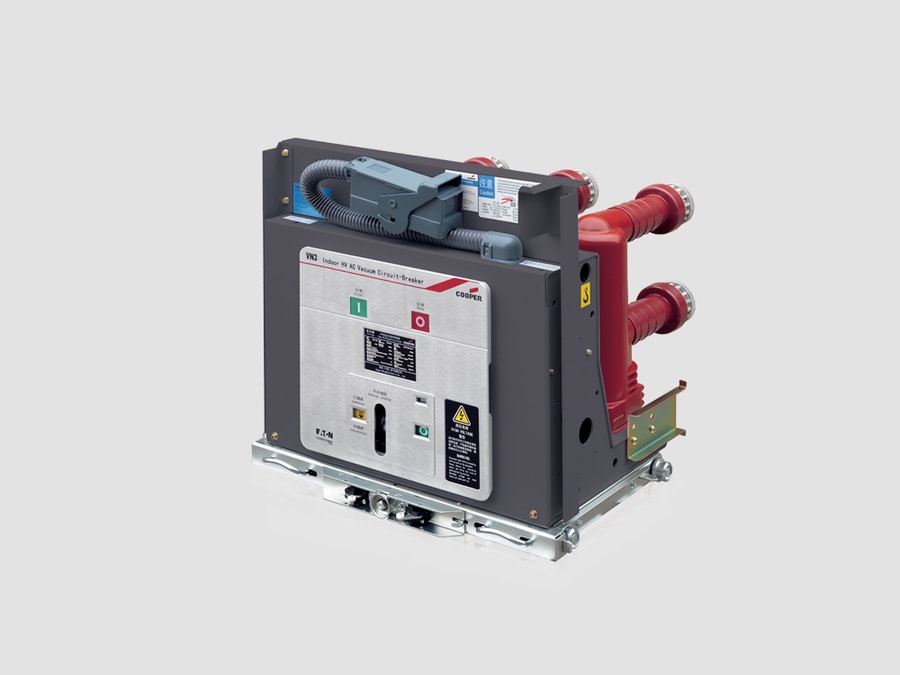
Indoor Vacuum Circuit Breaker (VCB)
VCB
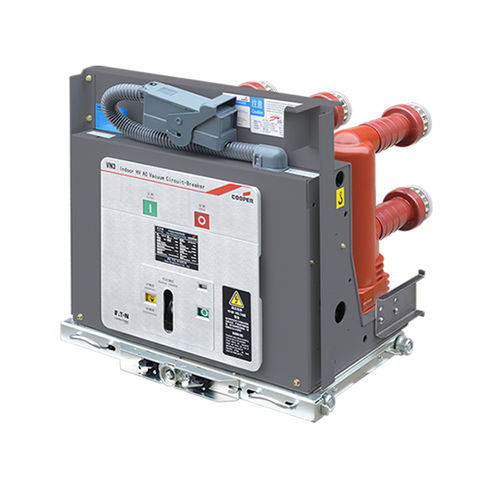
Indoor Vacuum Circuit Breaker (VCB) is a medium-voltage switching device that uses vacuum interrupters to interrupt normal load currents and fault currents within indoor electrical distribution systems. Because the arc is extinguished inside a sealed vacuum bottle, VCBs provide high reliability, long service life, and very low maintenance.
Indoor VCBs are commonly installed in metal-clad switchgear, metal-enclosed switchgear, and ring main units (RMUs) for systems typically operating from 3.3 kV to 36 kV.
Construction
The main components include:
·Vacuum interrupters – Hermetically sealed vacuum bottles containing fixed and moving contacts.
·Main contacts – Conduct load current under normal operation.
·Operating mechanism – Spring-operated or magnetic actuator for opening and closing the breaker.
·Insulating poles – Epoxy resin or other solid insulation supporting the interrupters.
·Breaker frame – Mechanical structure supporting the interrupters and operating mechanism.
·Primary disconnect contacts – Connect the breaker to the switchgear busbars and cable circuits (withdrawable types).
·Secondary plug – Connects control and protection circuits.
·Auxiliary contacts – Provide status indication and interlocking.
·Control unit – Includes trip coil, closing coil, motor charging system, and position indicators.
Working Principle
1.During normal operation, the contacts remain closed and carry load current.
2.When a fault is detected, the protection relay energizes the trip coil.
3.The operating mechanism rapidly separates the contacts inside the vacuum interrupter.
4.A short-lived metal-vapor arc forms between the contacts.
5.At the next AC current zero, the vacuum extinguishes the arc because there is no gas to sustain ionization.
6.The vacuum regains dielectric strength almost instantly, preventing restrike.
7.The faulted circuit is isolated safely.
Types of Indoor VCB
1. Fixed Type
·Permanently mounted in the switchgear.
·Lower installation cost.
·Used where frequent removal is unnecessary.
2. Withdrawable (Draw-out) Type
·Mounted on a movable truck.
·Can be withdrawn for inspection or maintenance without dismantling the switchgear.
·Provides Service, Test, and Disconnected positions with mechanical interlocks.
·Widely used in industrial facilities and utility substations.
Key Features
·Installation: Indoor
·Voltage range: Typically 3.3–36 kV
·Interrupting medium: Vacuum
·Arc extinction: At current zero in vacuum
·Operating mechanism: Spring or magnetic actuator
·Maintenance: Very low
·Environmental impact : No SF6 gas required
Advantages
·Excellent arc-quenching capability.
·Long electrical and mechanical life.
·Minimal maintenance requirements.
·Compact size.
·High operating reliability.
·Fast interruption and dielectric recovery.
·No fire hazard associated with insulating oil.
·Environmentally friendly due to the absence of greenhouse insulating gases.
·Suitable for frequent switching operations.
Disadvantages
·Primarily intended for medium-voltage systems.
·Vacuum interrupters are sealed units and are typically replaced rather than repaired.
·Higher initial cost than some legacy air or oil circuit breakers, although lifecycle costs are generally lower.
Typical Applications
·Indoor substations
·Industrial power distribution
·Commercial buildings
·Manufacturing plants
·Mining facilities
·Data centers
·Hospitals
·Airports
·Renewable energy plants
·Utility distribution substations
Typical Ratings
·Rated voltage: 3.3–36 kV
·Rated frequency: 50/60 Hz
·Rated current: 630–4,000 A
·Short-circuit breaking current: 16–50 kA
·Mechanical endurance: 10,000–30,000 operations or more
·Interrupting medium: Vacuum
Common Voltage Classes
·3.3 kV
·6.6 kV
·7.2 kV
·11 kV
·12 kV
·15 kV
·17.5 kV
·24 kV
·33 kV
·36 kV
Relevant Standards
·IEC 62271-100 – Specifies requirements and testing for AC high-voltage circuit breakers, including vacuum circuit breakers.
·IEC 62271-200 – Covers indoor medium-voltage switchgear assemblies incorporating VCBs.
·IEEE C37.04 – Defines ratings and performance requirements.
·IEEE C37.09 – Specifies testing procedures for circuit breakers.
Typical Installation
A withdrawable indoor VCB is usually installed inside a metal-clad switchgear lineup, where it occupies a dedicated breaker compartment. The draw-out mechanism allows the breaker to move safely between connected, test, and isolated positions, enabling maintenance while minimizing disruption to the rest of the switchgear.
Summary
An Indoor Vacuum Circuit Breaker (VCB) is the preferred circuit breaker technology for medium-voltage indoor power distribution systems. Its use of sealed vacuum interrupters provides fast fault interruption, long service life, low maintenance, high reliability, and environmentally friendly operation, making it the standard choice for modern industrial, commercial, and utility switchgear.