
#Product Trends
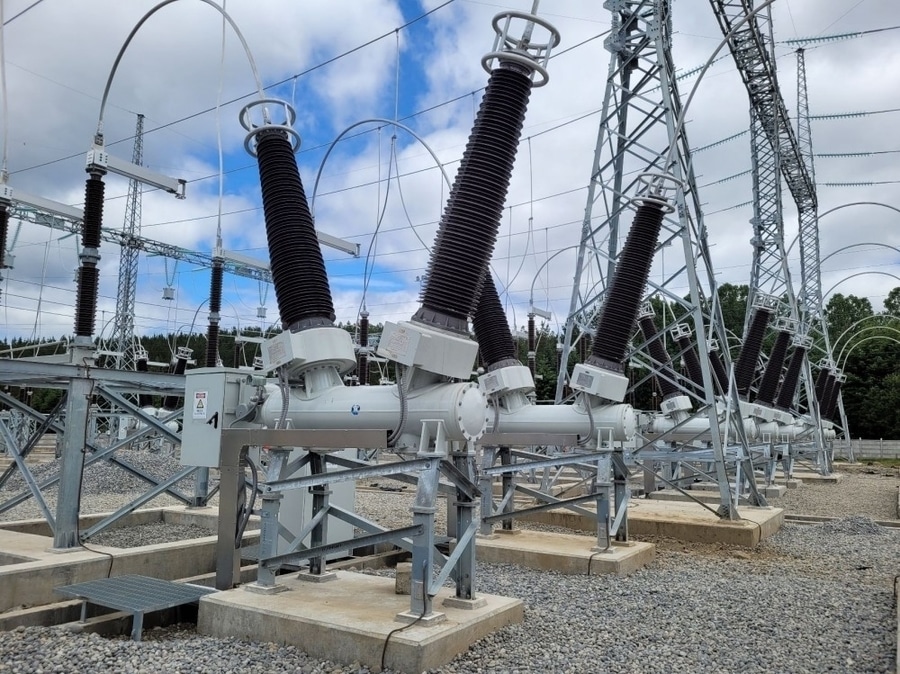
Dead Tank Circuit Breaker used in transmission and distribution substations
Dead Tank Circuit Breaker
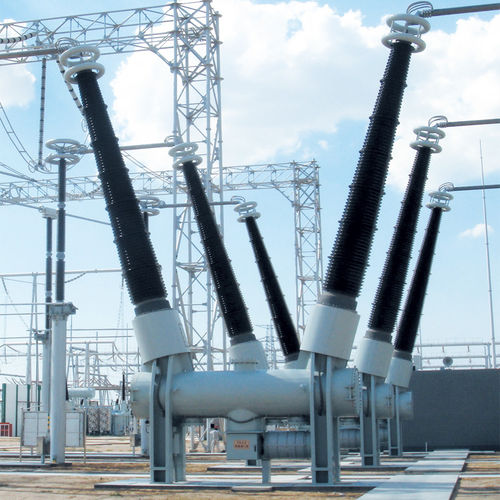
Dead Tank Circuit Breaker (DTC) is a high-voltage outdoor circuit breaker in which the interrupter tank is at ground potential (earth potential). The energized conductors enter the grounded metal tank through insulated bushings, and the interruption of current takes place inside the grounded enclosure.
Dead tank circuit breakers are widely used in transmission and distribution substations, particularly where integrated current transformers, enhanced safety, and ease of maintenance are priorities.
Construction
The main components include:
·Grounded metal tank – Houses the interrupter and remains at earth potential.
·Bushings – Insulated terminals that allow the live conductors to enter and exit the grounded tank.
·Interrupter unit – Contains the moving and fixed contacts and the arc-quenching medium (typically SF6 gas or, increasingly, alternative gases or vacuum depending on voltage class).
·Operating mechanism – Spring, hydraulic, or motor-operated mechanism for opening and closing the contacts.
·Current transformers (CTs) – Often integrated within the bushings or tank, reducing external equipment.
·Control cabinet – Contains control, protection, monitoring, and auxiliary circuits.
·Gas monitoring system – Monitors gas pressure and density for reliable operation.
Working Principle
1.Under normal conditions, the breaker contacts are closed and carry the load current.
2.When a fault occurs, protective relays issue a trip command.
3.The operating mechanism separates the contacts inside the grounded tank.
4.An electric arc forms as the contacts part.
5.The insulating medium extinguishes the arc:
SF6 gas uses its high dielectric strength and gas flow to quench the arc.
Vacuum interrupters extinguish the arc in a sealed vacuum bottle at suitable voltage levels.
6.After current interruption, dielectric strength recovers rapidly, preventing restrike.
7.The faulty section of the network is isolated.
Key Features
·Tank potential: Grounded (dead)
·Installation: Outdoor transmission and distribution substations
·Voltage range: Approximately 72.5 kV to 800 kV and above
·Interrupting medium: Primarily SF6 gas; vacuum or alternative gases in some designs
·Current transformers: Frequently integrated
·Operating mechanism: Spring, hydraulic, or motor-operated
·Bushings: Porcelain or composite insulation
Advantages
·Grounded tank improves personnel safety during maintenance.
·Integrated CTs reduce equipment count and substation footprint.
·Excellent mechanical strength and fault-current capability.
·Well suited for high seismic applications due to robust construction.
·Lower electromagnetic interference around the grounded enclosure.
·Reliable performance under severe environmental conditions.
·Easier maintenance because the enclosure is at ground potential.
Disadvantages
·Higher purchase cost than a comparable live tank breaker.
·Heavier equipment requiring stronger foundations.
·Larger footprint in some installations.
·Transportation and installation can be more demanding due to greater weight.
Typical Applications
·Transmission substations
·Extra-high-voltage substations
·Utility grid networks
·Gas-insulated and hybrid substations
·Power generation switchyards
·Industrial transmission systems
·Areas with high seismic requirements
Typical Ratings
·Rated voltage: 72.5–800 kV+
·Rated frequency: 50/60 Hz
·Rated current: 1,250–6,000 A
·Short-circuit breaking current: 25–80 kA
·Operating time: Approximately 2–3 cycles for modern breakers
·Insulation level (BIL): According to IEC or ANSI standards
Common Voltage Classes
72.5 kV
123 kV
145 kV
170 kV
245 kV
362 kV
420 kV
550 kV
800 kV
Relevant Standards
·IEC 62271-100 – Specifies ratings, design requirements, testing, and performance for AC high-voltage circuit breakers.
·IEEE C37 Series – Covers ratings, testing, application, and performance requirements commonly used in North America.
Summary
A Dead Tank Circuit Breaker is designed with its interrupter enclosed in a grounded metal tank, providing enhanced safety, easy maintenance, and the ability to integrate current transformers. Although it is generally heavier and more expensive than a live tank circuit breaker, it is widely chosen for high-voltage transmission systems where reliability, protection integration, and robust performance are essential.