
#Product Trends
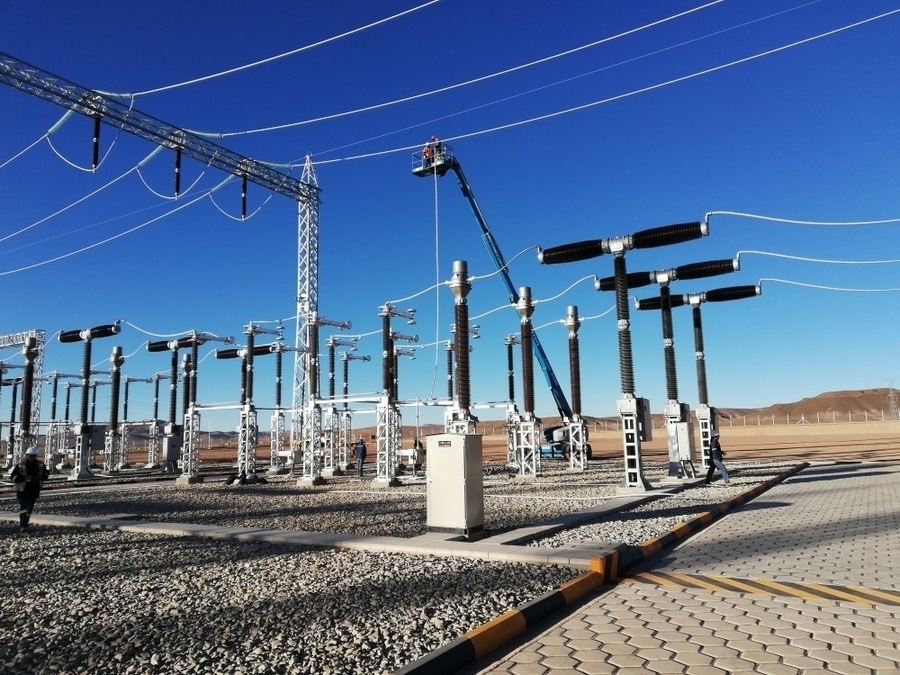
Live Tank Circuit Breaker the most widely used breaker types for 72.5 kV to 800 kV transmission systems
Live Tank Circuit Breaker
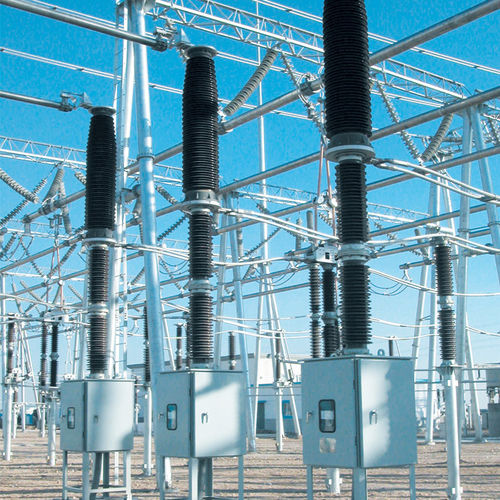
Live Tank Circuit Breaker is a high-voltage outdoor circuit breaker in which the interrupter chamber (tank) is at the same electrical potential as the energized conductor (line voltage). The interrupter is mounted on an insulated support column, isolating it from the grounded structure below.
Live tank circuit breakers are widely used in transmission substations because they offer excellent performance, compact design, and relatively low cost compared with dead tank circuit breakers.
Construction
The main components include:
·Interrupter tank – Contains the arc-quenching medium (typically SF6 gas or vacuum in newer designs).
·Insulator column – Supports the live interrupter while providing insulation from ground.
·Operating mechanism – Spring, hydraulic, or motor-operated mechanism that opens and closes the contacts.
·Main contacts and arcing contacts – Carry normal current and interrupt fault current.
·Current transformers (optional) – May be externally mounted rather than integrated.
·Control cabinet – Houses protection, control, monitoring, and auxiliary equipment.
·Terminals – Connect the breaker to incoming and outgoing transmission lines.
Working Principle
1.Under normal operation, the main contacts remain closed and carry load current.
2.When a fault is detected, protective relays send a trip command.
3.The operating mechanism rapidly separates the contacts.
4.An electric arc forms between the contacts.
5.The interrupting medium extinguishes the arc:
SF6 gas uses high dielectric strength and gas flow.
Vacuum interrupters extinguish the arc when current passes through zero.
6.After arc extinction, insulation strength quickly recovers, preventing restrike.
7.The transmission line is isolated from the fault.
Key Features
·Tank potential: Energized (live)
·Installation: Outdoor transmission substations
·Voltage range: Approximately 72.5 kV to 800 kV and above
·Interrupting medium: Primarily SF6 gas; vacuum technology is increasingly used at some voltage levels
·Operating mechanism: Spring, hydraulic, or motor-operated
·Insulation: Porcelain or composite insulators
·Mounting: Pole-mounted insulated support
Advantages
·Compact and lightweight design.
·Lower foundation and structural requirements.
·Lower initial cost than comparable dead tank breakers.
·Good seismic performance due to lower mass.
·High interrupting capability.
·Suitable for high-voltage and extra-high-voltage applications.
·Easier transportation and installation.
Disadvantages
·The interrupter is energized, increasing insulation requirements during maintenance.
·Current transformers are usually separate, increasing equipment count.
·Maintenance personnel must take additional precautions because the tank is at line potential.
·Generally offers less integrated protection equipment than dead tank designs.
Typical Applications
·Transmission substations
·High-voltage switching stations
·Utility grid networks
·Renewable energy grid interconnections
·Industrial power systems
·Power plants
·Interconnection substations
Common Voltage Classes
·72.5 kV
·123 kV
·145 kV
·170 kV
·245 kV
·300 kV
·362 kV
·420 kV
·550 kV
·800 kV
Relevant Standards
·IEC 62271-100 – Requirements and testing for AC high-voltage circuit breakers.
·IEEE C37 Series – North American standards covering ratings, testing, and application.
A live tank circuit breaker is one of the most widely used breaker types for 72.5 kV to 800 kV transmission systems, offering a combination of high interrupting performance, compact construction, and economical installation, making it a preferred choice for many utility substations worldwide.